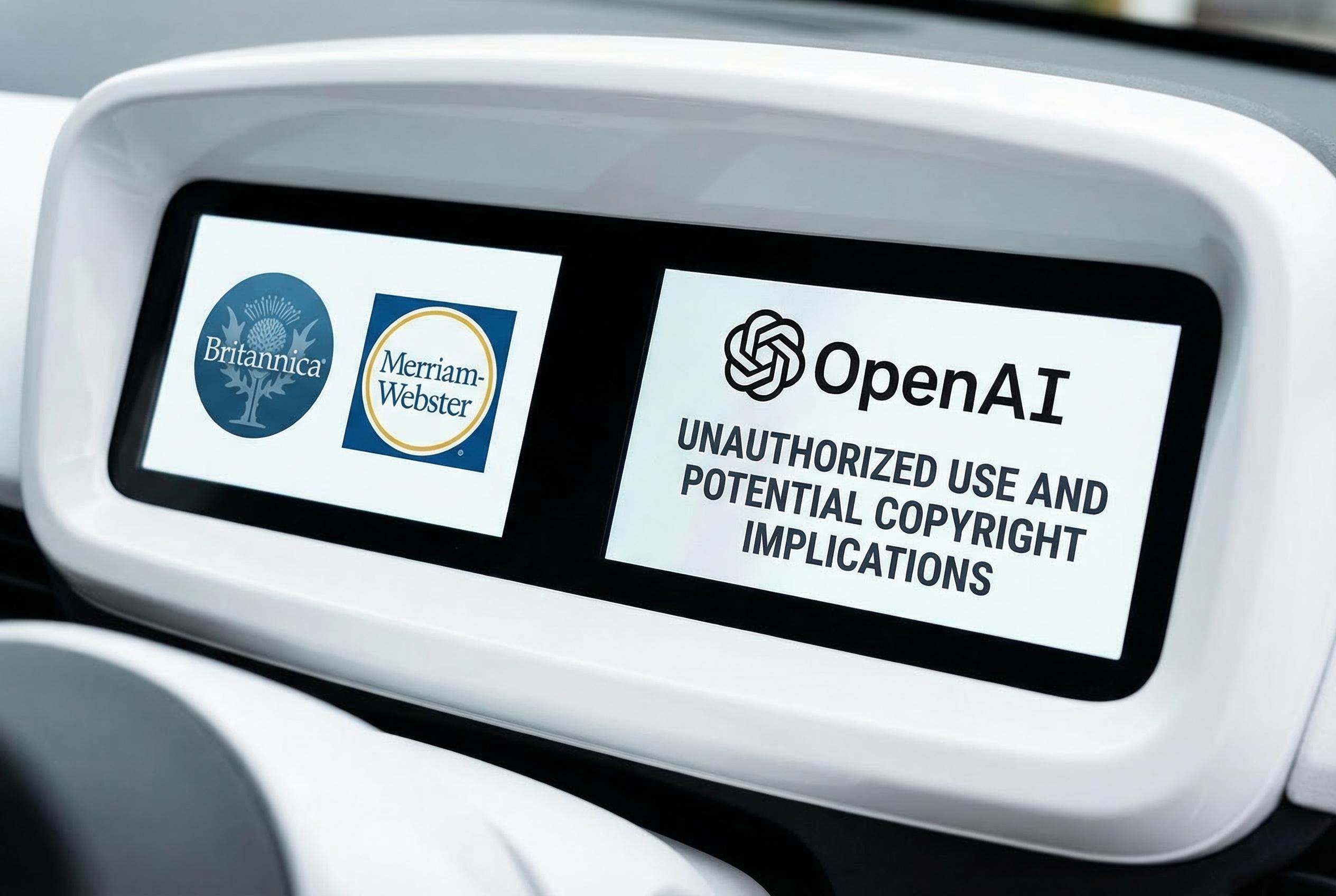
Encyclopaedia Britannica and Merriam-Webster have launched a federal lawsuit in Manhattan accusing OpenAI of using their reference content without permission to train its generative AI systems, a legal move they say has eroded visits to their sites. According to the complaint filed on 13 March 2026, the publishers allege OpenAI incorporated online encyclopedia and dictionary entries into models that power ChatGPT and that the company's AI-produced summaries have "cannibalised" their web traffic. Industry observers note this follows a pattern of publishers taking tech firms to court over alleged unauthorised use of copyrighted material. Sources by paragraph: [2],[7]
The suit frames the dispute as part of a wider industry clash over how large language models are built, with Britannica arguing the defendants copied substantial portions of its content rather than merely transforming it. The plaintiffs say that, beyond lost traffic, the extraction and replication of curated reference material undermines the commercial value of professionally produced scholarship and lexicography. Sources by paragraph: [2],[5]
Legal fights over training data have multiplied in recent years. High-profile authors filed claims against Microsoft that alleged the company used large collections of books without consent to develop its AI, and multiple copyright suits against OpenAI and Microsoft were consolidated in New York to streamline pretrial proceedings. Tech companies have defended their practices by invoking fair use, arguing model training produces new, transformative outputs rather than direct substitutions. Sources by paragraph: [3],[4]
Britannica is not new to litigation over AI use: last year it sued the AI answer engine Perplexity, accusing that service of scraping and reproducing its articles and dictionary entries and thereby diverting readers. That earlier complaint similarly charged that AI-generated answers were substantially similar to the plaintiffs' original material and harmed site traffic; the Perplexity case remains active. Sources by paragraph: [5],[6]
Legal analysts say the OpenAI suit could sharpen judicial guidance on whether large-scale ingestion of copyrighted reference works for model training is permissible and, if not, what remedies publishers may obtain. The outcome could influence licensing practices, model-development workflows and the balance between free public access to knowledge and the rights of content creators and curators. Sources by paragraph: [2],[7]
For publishers, authors and technology firms alike, the coming months may determine whether courts endorse broad fair-use protections for model builders or require negotiated licences and clearer attribution or remuneration mechanisms. Industry consolidation of related cases means rulings in New York could set precedent with wide commercial and technological consequences. Sources by paragraph: [2],[3]
Source Reference Map
Inspired by headline at: [1]
Sources by paragraph:
- Paragraph 1: [2], [7]
- Paragraph 2: [2], [5]
- Paragraph 3: [3], [4]
- Paragraph 4: [5], [6]
- Paragraph 5: [2], [7]
- Paragraph 6: [2], [3]
Source: Noah Wire Services