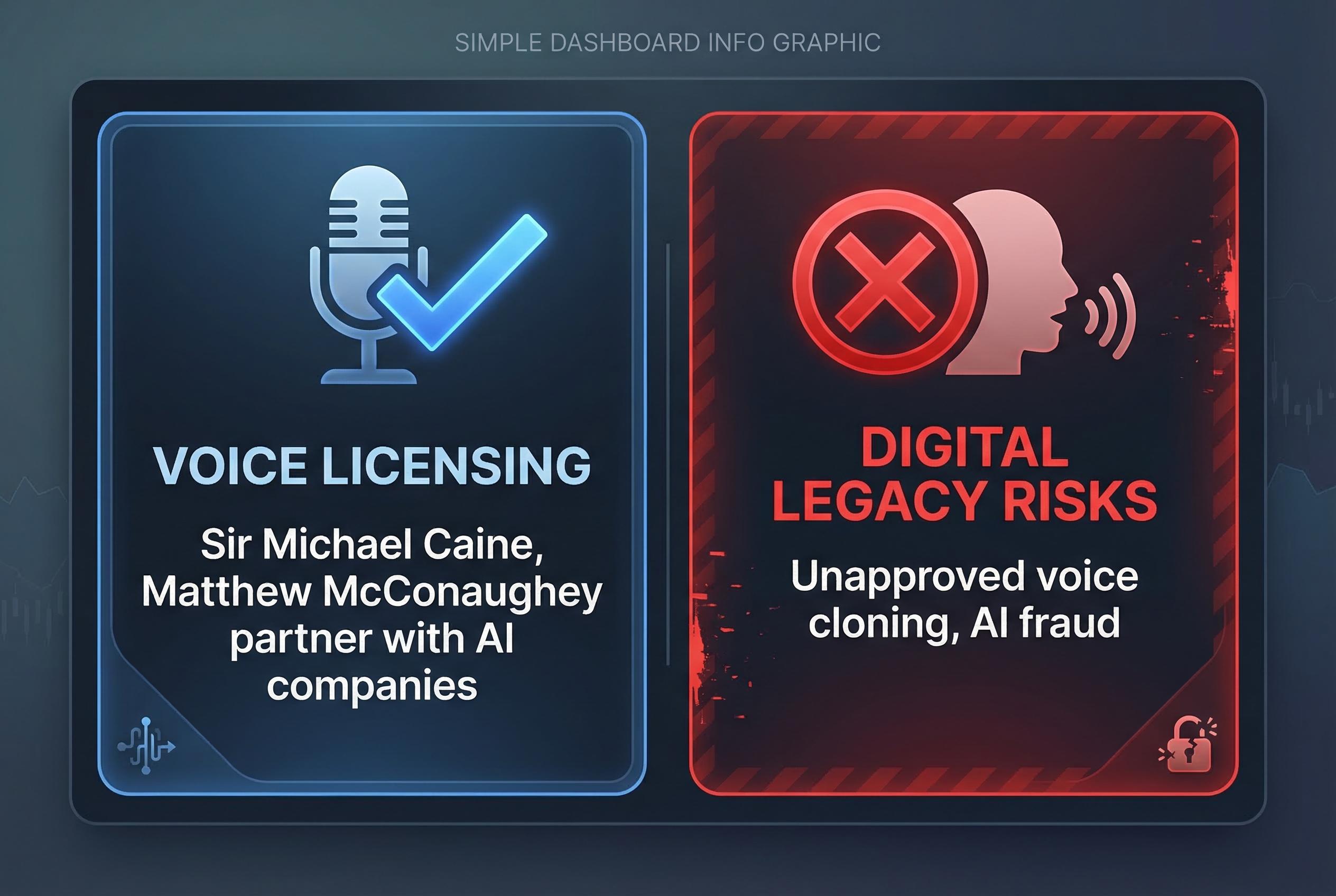
Sir Michael Caine has agreed to make his voice available for commercial use through the AI audio firm ElevenLabs, a move that puts one of Britain’s most instantly recognisable narrators into a library of purchasable vocal personalities. According to reporting by TechRadar and AP News, the arrangement means Caine’s voice can be used via ElevenLabs’ ElevenReader app and through the company’s new Iconic Marketplace.
The deal comes alongside a similar arrangement with Matthew McConaughey, who is both a user and investor in the company; ElevenLabs says McConaughey will also use its tools to produce Spanish-language audio versions of his newsletter. Industry coverage explains that the partnerships are being showcased as a way to expand access to storytelling tools while offering performers a means of control and remuneration when their voices are used in synthetic form.
ElevenLabs has positioned its Iconic Marketplace as a permissioned, commercial alternative to unauthorised voice cloning, pitching the platform as one where rights holders retain ownership, can negotiate compensation and approve each use. But that framework is complicated by the presence on the platform of voices linked to people who cannot personally consent. Reporting has noted that the catalogue includes vocal recreations associated with historical figures and deceased artists, some authorised by estates or third parties.
That fact has prompted ethical debate about digital legacy and the authority to speak for the dead. Critics argue that decision-making by estates or intermediaries does not resolve questions about what it means to reproduce a voice whose owner is no longer alive to accept or refuse particular uses. Proponents counter that licencing provides a transparent, compensatory route that is preferable to clandestine cloning that has already proliferated online.
Beyond questions of consent, security experts warn of concrete harms as synthetic speech becomes harder to distinguish from the real thing. TechRadar’s reporting highlighted growing concern about "vishing", fraud conducted using AI-generated voices, and security firms have warned of rising losses associated with such scams. AP News has also chronicled earlier misuses of voice synthesis technology, which prompted ElevenLabs to adopt stricter safeguards after a high-profile abuse.
ElevenLabs says it has introduced measures intended to prevent unauthorised cloning of celebrities and to limit misuse. According to AP News, the company changed its policies and technical controls following incidents in which its tools were misapplied; industry observers nevertheless say that no set of protections can eliminate the risk entirely as the technology spreads.
The conversation over licensed celebrity voices therefore sits at the intersection of commerce, culture and security. For artists such as Caine and McConaughey there is clear commercial and expressive value in extending their vocal reach; for audiences and regulators there is a rising need to weigh the benefits of accessible, tailored audio against an erosion of trust in what we hear. How that balance is struck may shape whether synthetic celebrity voices become a new creative resource or another source of social friction.
Source Reference Map
Inspired by headline at: [1]
Sources by paragraph:
- Paragraph 1: [2], [3]
- Paragraph 2: [4], [6]
- Paragraph 3: [2], [5]
- Paragraph 4: [2], [7]
- Paragraph 5: [2], [3]
- Paragraph 6: [3], [2]
- Paragraph 7: [2], [5]
Source: Noah Wire Services