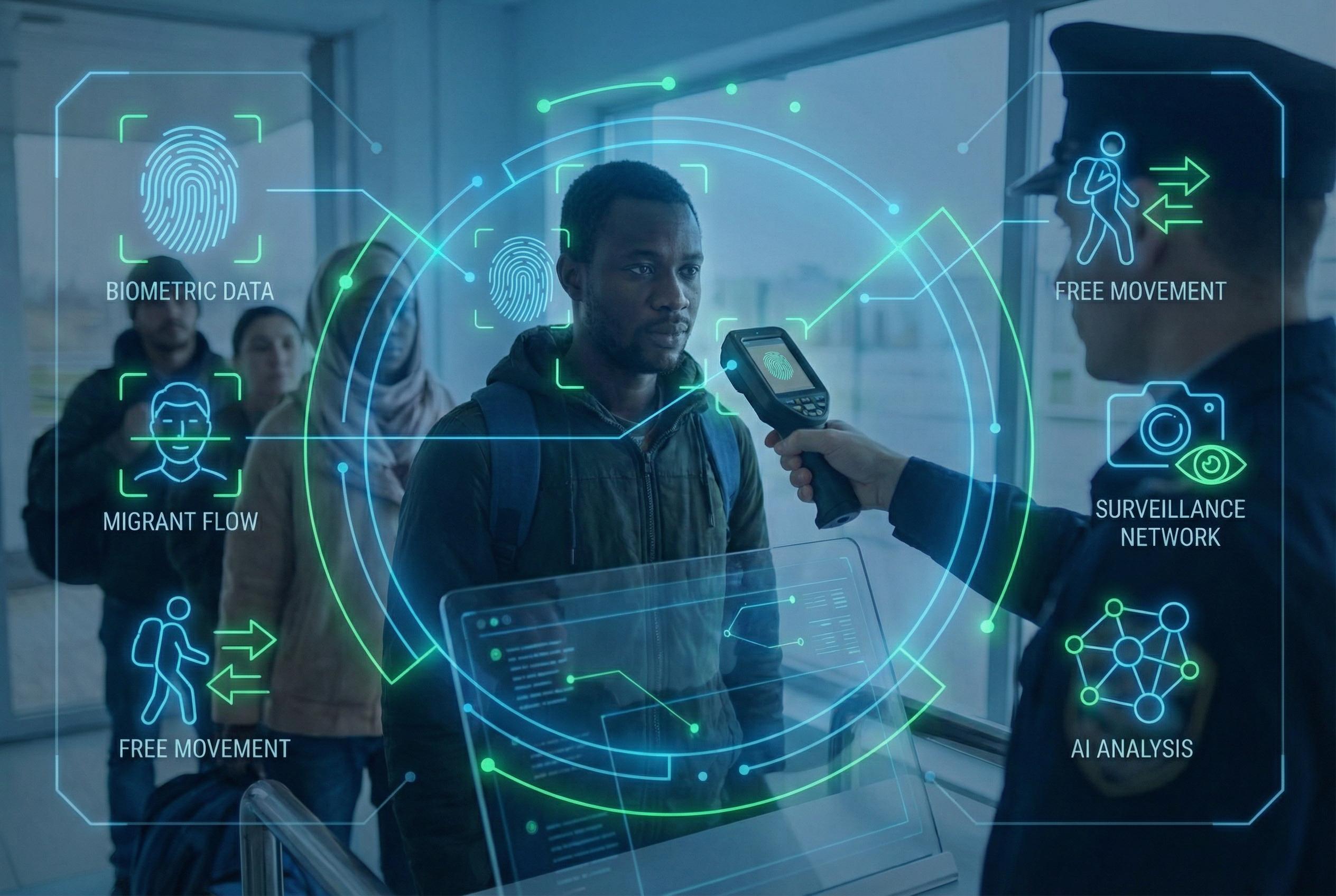
Across West Africa a long-standing tradition of cross-border movement is colliding with a new generation of digital controls that reshape who can move and on what terms. According to recent academic research, governments across the region are deploying biometric identity databases, facial-recognition cameras and AI-driven analytics at airports and land crossings, transforming porous frontiers into what experts call "digital borders". These systems promise efficiency and security but carry significant risks for migrants’ rights and privacy. (Paragraph 1 sources: [2],[5])
Historically, mobility within the Economic Community of West African States has been supported by low-tech, trust-based arrangements and regional rules that allow citizens to travel without visas. Contemporary investments in automated border management replace that informal architecture with centralised databases, biometric enrolment and machine-assisted decision systems that can deny access on the basis of data profiles rather than solely on paper documents or human judgement. Industry and legal analyses warn this technological shift alters the mechanics of movement in fundamental ways. (Paragraph 2 sources: [2])
European migration policy has been a major driver of the change. Funding programmes that aim to prevent irregular migration from reaching Europe have financed biometric projects and surveillance infrastructure in West African countries, effectively exporting elements of European border control. Critics argue this process of migration externalisation reorients African states’ capacities toward detecting and documenting migrants for European purposes, with consequences for regional free-movement norms. (Paragraph 3 sources: [3],[7])
Case studies from Nigeria and Niger illustrate divergent trajectories and political contingencies. In Nigeria, incremental introduction of biometric passports, national ID enrolment and airport screening modernises border management but leaves enforcement and data governance uneven, exposing migrants to opaque data-sharing and limited redress. Niger’s profile has been shaped by shifts in political alignment: prior cooperation with European-funded anti-smuggling laws and route surveillance was followed by policy reversals after the 2023 coup, showing how governance changes can rapidly alter the reach of digital controls. (Paragraph 4 sources: [2],[4])
The human-rights consequences are multidimensional. Biometric identifiers and long-lived digital records heighten privacy risks because fingerprints, facial templates and movement histories can be retained, combined across databases and reused in deportation or criminal-investigation contexts. Independent human-rights organisations document that algorithmic profiling and automated risk-scoring often replicate historical biases, creating racialised or nationality-based targeting that undermines equal treatment protections. (Paragraph 5 sources: [5],[2])
Beyond privacy and discrimination, scholars and interdisciplinary analysts emphasise deficits in transparency, oversight and remedy. Automated decision-making systems used at borders fall into taxonomies ranging from identification and verification to predictive risk assessment; each category raises distinct legal challenges, including the right to meaningful explanation and access to effective remedies when decisions are erroneous or discriminatory. Calls for independent audits, public transparency and constraints on profiling are common across the literature. (Paragraph 6 sources: [6],[3])
Regional law provides a potential counterweight but is not yet calibrated to the digital era. The ECOWAS Protocol on Free Movement and the African Charter on Human and Peoples’ Rights enshrine mobility and non-discrimination, yet they predate biometrics and AI. Commentators argue ECOWAS and African Union frameworks could be updated to require data-protection safeguards, algorithmic transparency, limits on retention and cross-border data sharing, and independent oversight, measures modelled in part on emerging regulatory approaches elsewhere. (Paragraph 7 sources: [2],[3])
The central question for West Africa is governance rather than technology per se: whether states will adopt surveillance tools with built-in human-rights protections or allow external incentives and weak safeguards to erode regional commitments to free movement. Policymakers, regional bodies and civil-society actors face an opening to craft rules that balance legitimate security needs with privacy, non-discrimination and effective remedies for people on the move. Absent those safeguards, the region risks trading an open, mobile social and economic space for databases that control access in perpetuity. (Paragraph 8 sources: [2],[3])
Source Reference Map
Inspired by headline at: [1]
Sources by paragraph:
- Paragraph 1: [2], [5]
- Paragraph 2: [2]
- Paragraph 3: [3], [7]
- Paragraph 4: [2], [4]
- Paragraph 5: [5], [2]
- Paragraph 6: [6], [3]
- Paragraph 7: [2], [3]
- Paragraph 8: [2], [3]
Source: Noah Wire Services