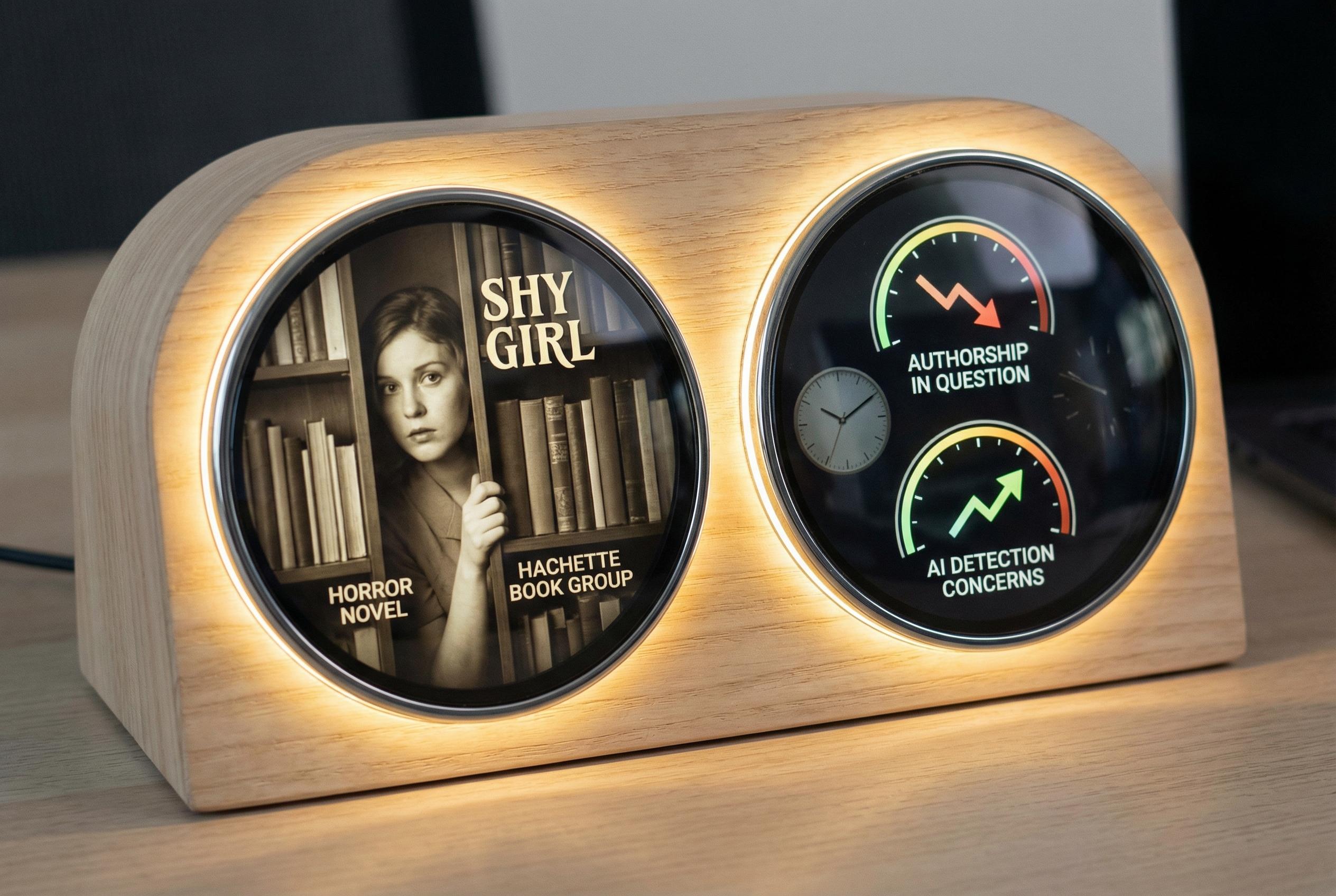
Hachette Book Group has removed the horror novel Shy Girl by Mia Ballard from its publication schedule in both the United States and the United Kingdom after online claims that large portions of the book were produced with the assistance of artificial intelligence. The decision followed growing scrutiny from readers and industry observers who said the text bore characteristics they associate with machine-generated prose. (According to reports, Ballard has denied personally writing the novel with AI.) [2][3]
The novel, which traces the descent of a young woman into a disturbing, coerced relationship with a wealthy man who promises to erase her debts, first appeared as a self-published title in February 2025 before being acquired by Orbit, an imprint of Hachette. Enthusiasm among readers helped the book attract a traditional publishing deal, but the same attention later fuelled suspicion when critics on social platforms pointed to repetitive phrasing and patterns they said were typical of AI output. [2][7]
Ballard has contested suggestions that she used AI herself, saying an acquaintance she employed to work on an earlier edition incorporated AI tools; some reports add that she is seeking legal redress. Hachette, while stopping short of a definitive public accusation, told outlets it had conducted an extensive review of the manuscript and subsequently withdrew the title. [3][4]
The episode was catalysed by discussion on Reddit and other communities such as BookTok, where an anonymous poster claiming editorial experience highlighted stylistic traits, recurrent adjective–noun pairings, frequent similes and triadic lists, that readers argued pointed to automatic generation. That online scrutiny quickly spread across TikTok, Instagram and YouTube and prompted close examination by other readers and commentators. [1][2]
Beyond this single title, the Shy Girl affair has exposed the limits of current detection and vetting processes. Industry coverage notes that publishers lack foolproof tools to distinguish between human and AI writing, and that popular detector software can be unreliable, complicating editorial confidence and rights-clearance procedures. Copyright considerations also loom large: in the United States a human author is generally required for full copyright protection, a constraint that has been cited as a practical factor in publishers’ decisions. UK law treats computer-generated works differently, assigning authorship to the person who made the arrangements for creation but offering narrower moral-rights protections. [5][3]
Some voices within the literary community are urging greater transparency rather than secrecy. Campaigns to label human-authored works have begun to emerge, including a logo developed by the Society of Authors to identify books written without AI assistance, while others call for clearer industry standards on disclosure and attribution. Proponents argue that open labelling could reduce suspicion, whereas opponents warn it might stigmatise authors who have used AI tools legitimately as part of their process. [1][5]
The controversy around Shy Girl illustrates a fraught turning point for publishing: technology that can lower barriers to production is colliding with market expectations about authorship, originality and legal protection. Publishers, authors and rights bodies now face the task of balancing innovation with credibility; until more robust detection methods, legal clarity and industry-wide disclosure practices are established, similar disputes are likely to recur. [5][6]
Source Reference Map
Inspired by headline at: [1]
Sources by paragraph:
- Paragraph 1: [2], [3]
- Paragraph 2: [2], [7]
- Paragraph 3: [3], [4]
- Paragraph 4: [1], [2]
- Paragraph 5: [5], [3]
- Paragraph 6: [1], [5]
- Paragraph 7: [5], [6]
Source: Noah Wire Services