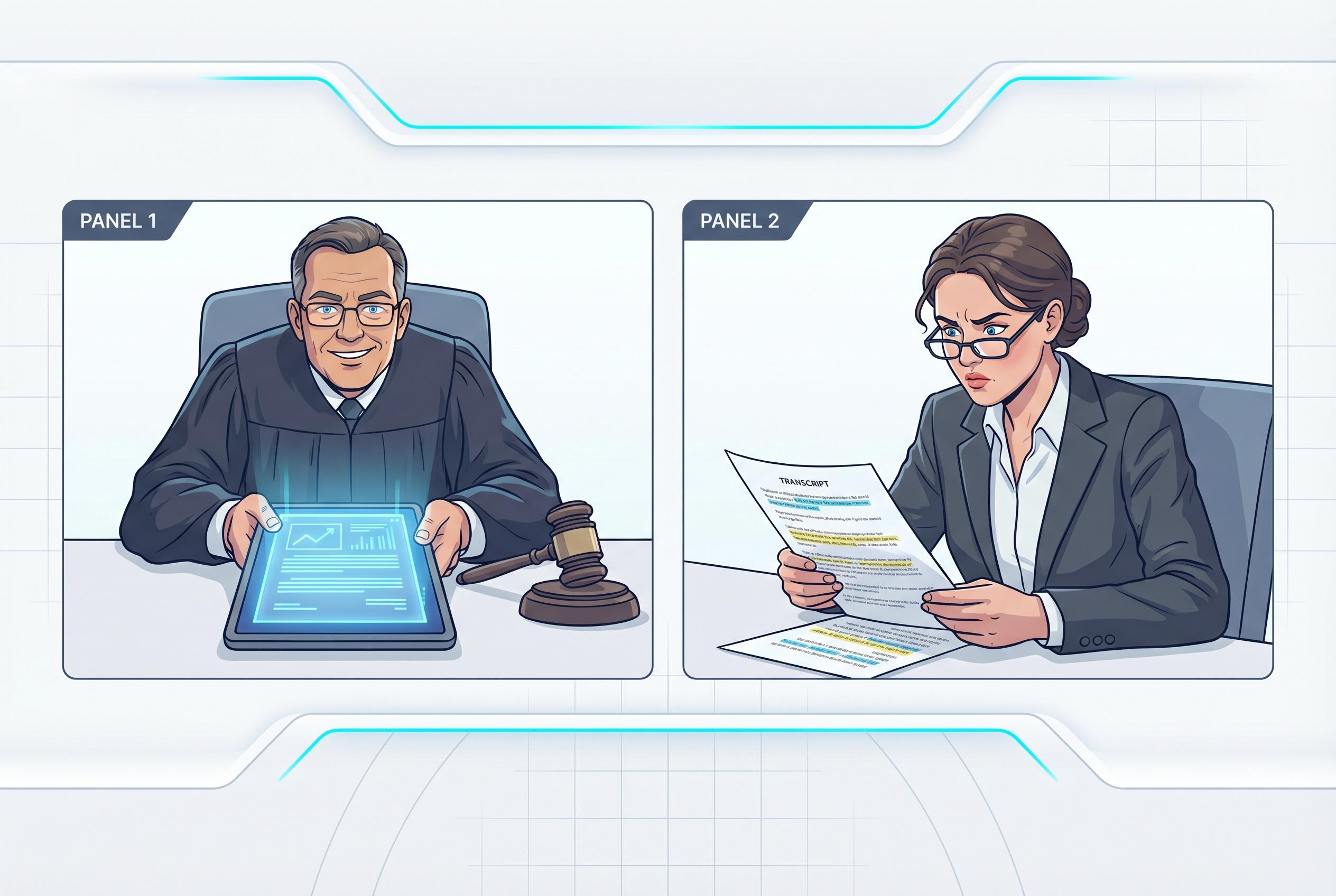
HM Courts & Tribunals Service is preparing to test whether artificial intelligence can produce court transcripts accurately enough to be used in real cases, in a pilot that ministers say could make the justice system faster, cheaper and more accessible. The project will assess the Ministry of Justice’s in-house tool, Justice Transcribe, against the standards required for court records, with the results expected to shape wider plans to modernise the system and improve access to justice.
The initiative has drawn backing from victims’ advocates, who say transcripts can be crucial for understanding what happened in court and for processing traumatic proceedings in private. The Victims’ Commissioner for England and Wales welcomed the pilot, saying it could help victims and families follow cases more easily while also strengthening transparency and accountability. Open justice campaigners have made similar arguments, while noting that the current system can be expensive and difficult to navigate.
According to the Law Society, the move reflects recommendations associated with Sir Brian Leveson on improving access to affordable and accurate records of proceedings. Brett Dixon, the society’s vice president, said the government should test not only speed and cost, but also accuracy, fairness, confidentiality and staff training. He also said audio recordings should be retained so transcripts can be checked against the original proceedings.
Family lawyers, however, are warning that the technology raises particular risks in children cases, where sensitive material and identifying details are routinely discussed. Robert Webster of Maguire Family Law said safeguards must be “robust”, pointing to the possibility that even anonymised records could be pieced together through contextual detail in smaller communities. Alex Verdan KC, a partner at Stewarts, said AI-generated transcripts could improve access to justice, but only if they are matched by strong data protection and protections for children’s anonymity.
The pilot comes as courts and judges face growing pressure to consider AI more broadly, with recent guidance warning about the dangers of “hallucination” in AI-generated material. HMCTS has said in other statements that it will only deploy AI where it adds real value and supports human judgment, underscoring the cautious approach now being taken. For ministers, the hope is that machine-generated transcripts could eventually reduce a barrier that has long limited access to court records; for critics, the central test will be whether efficiency can be delivered without weakening privacy, accuracy or trust.
Source Reference Map
Inspired by headline at: [1]
Sources by paragraph:
- Paragraph 1: [2], [3]
- Paragraph 2: [2], [3]
- Paragraph 3: [3]
- Paragraph 4: [1], [4]
- Paragraph 5: [4], [5], [6], [7]
Source: Noah Wire Services