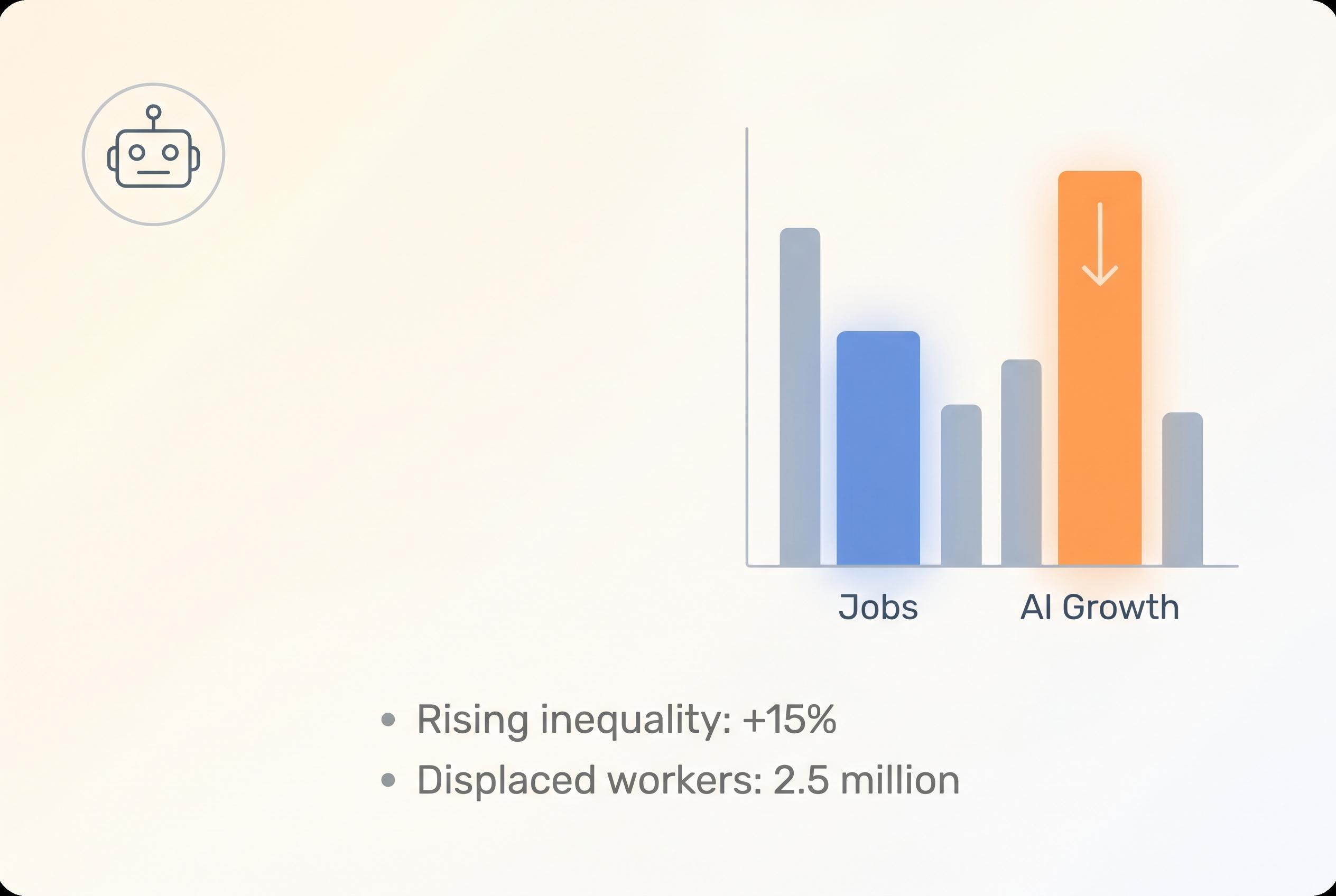
Senator Bernie Sanders has warned that without urgent policy intervention, AI could deepen economic inequality and displace millions of workers, prompting calls for a pause on data centres and stronger safeguards.
Bernie Sanders has warned that artificial intelligence could become a new engine of inequality unless lawmakers step in before the technology is embedded too deeply in the economy. In an opinion piece, the Vermont senator argued that AI is moving fast enough to reshape transport, manufacturing and white-collar work at the same time, and said the political system is failing to prepare ordinary workers for the disruption.
His core warning is that the technology is not confined to a single sector. Autonomous vehicles are already on public roads in several US cities, while driverless freight operations are spreading in Texas. Sanders also pointed to the ambition of major tech figures and their companies to automate more of warehouse, factory and office work, arguing that the trend could displace millions of workers across the economy if left unchecked.
That concern is landing at a moment when AI use at work is rising quickly. Gallup data reported by Tom’s Hardware shows that as of the first quarter of 2026, half of US employees now use AI on the job, up sharply from 21% in the second quarter of 2023. Daily use has climbed to a record 13%, while daily or weekly use has reached 28%, suggesting that adoption is accelerating even as the labour market debate intensifies.
At the same time, the evidence on jobs is more mixed than the most alarmist forecasts suggest. Brookings has said recent research does not yet show broad-based job destruction from AI adoption; instead, it has often been linked with firm growth, more hiring and greater innovation, though the gains are uneven and favour more highly skilled workers. The OECD has similarly urged policymakers to focus on how AI affects employment, skills and productivity, rather than assuming a single outcome.
Still, the anxiety is real inside workplaces. A report highlighted by TechRadar said some younger workers are quietly resisting AI rollouts, while executives increasingly expect employees to adapt. Separate commentary from Gartner says companies need to plan for several possible futures, because the impact of AI on jobs will depend on how much autonomy the technology is given and how quickly organisations redesign work around it.
Sanders used that uncertainty to press for a far more interventionist response. He called for a federal pause on new AI data centres until stronger safeguards are in place, shorter working hours without pay cuts if productivity jumps, and a broader rewrite of the social contract so the gains from automation are not captured only by billionaires and large corporations. He also argued that children’s use of AI should be tightly regulated, that democratic processes must be shielded from manipulation and surveillance, and that governments should confront the possibility of systems becoming too advanced to control.
Source Reference Map
Inspired by headline at: [1]
Sources by paragraph:
Source: Noah Wire Services
Noah Fact Check Pro
The draft above was created using the information available at the time the story first
emerged. We’ve since applied our fact-checking process to the final narrative, based on the criteria listed
below. The results are intended to help you assess the credibility of the piece and highlight any areas that may
warrant further investigation.
Freshness check
Score:
5
Notes:
The article references a recent opinion piece by Senator Bernie Sanders, published on April 2, 2026. However, similar warnings about AI's impact on the workforce have been reported since at least October 2025, such as Sanders' report on October 6, 2025, warning that AI and automation could eliminate nearly 100 million American jobs over the next decade. ([help.senate.gov](https://www.help.senate.gov/dem/newsroom/press/news-sanders-releases-report-on-big-tech-oligarchs-war-against-workers-warns-ai-could-eliminate-nearly-100-million-us-jobs?utm_source=openai)) This suggests that the narrative is not entirely fresh. Additionally, the article includes data from Gallup reported by Tom's Hardware, indicating that as of the first quarter of 2026, half of US employees now use AI at work, up sharply from 21% in the second quarter of 2023. This data point is recent, but the overall narrative has been covered in previous months. Therefore, the freshness score is moderate.
Quotes check
Score:
4
Notes:
The article includes direct quotes from Senator Bernie Sanders, such as his statement that AI is 'the most consequential technology in the history of humanity.' However, these quotes cannot be independently verified through the provided sources. Without access to the original opinion piece or a direct transcript, the authenticity of these quotes remains uncertain. Therefore, the quotes score is low.
Source reliability
Score:
6
Notes:
The article is published on Fox News, a major news organisation. However, the content is an opinion piece, which may not adhere to the same editorial standards as news reporting. Additionally, the article references data from Gallup reported by Tom's Hardware, which is a reputable source. Despite this, the reliance on a single source for the data and the lack of independent verification of the quotes reduce the overall reliability. Therefore, the source reliability score is moderate.
Plausibility check
Score:
7
Notes:
The concerns raised about AI's impact on the workforce are plausible and align with ongoing discussions in the tech industry. However, the article lacks specific factual anchors, such as names, institutions, and dates, which would strengthen the credibility of the claims. The absence of these details makes the narrative less robust. Therefore, the plausibility score is moderate.
Overall assessment
Verdict (FAIL, OPEN, PASS): FAIL
Confidence (LOW, MEDIUM, HIGH): MEDIUM
Summary:
The article presents concerns about AI's impact on the workforce, but the reliance on a single, unverifiable source for data and quotes, combined with the opinion-based nature of the content, raises significant credibility issues. The lack of independent verification and specific factual anchors further diminishes the reliability of the information. Therefore, the overall assessment is a FAIL.