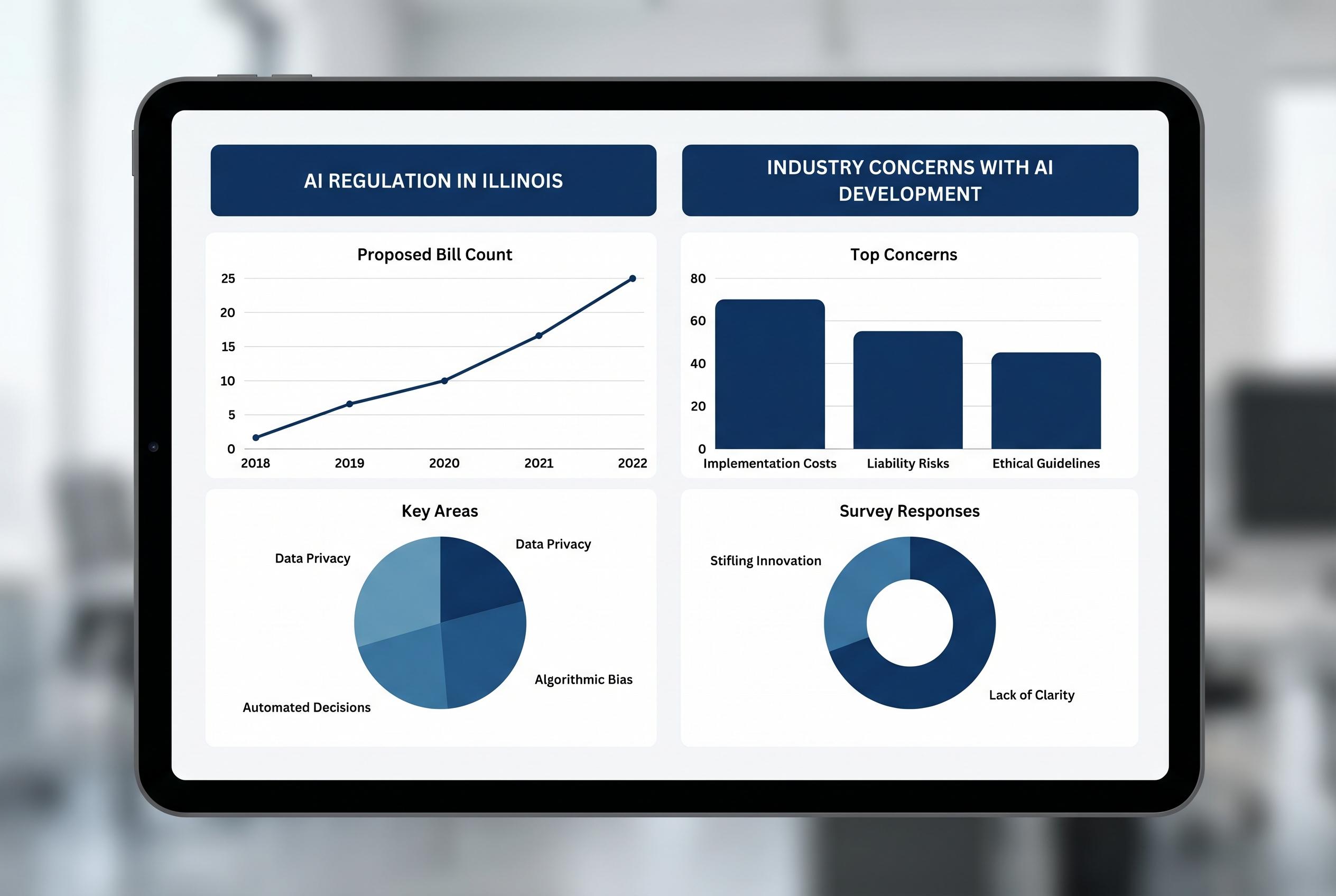
Illinois lawmakers are intensifying efforts to regulate AI, balancing innovation, consumer protection, and industry concerns amid growing nationwide scrutiny of emerging technologies.
Illinois lawmakers are moving further into the unsettled business of policing artificial intelligence, even as industry groups warn that fragmented state rules could become a burden for companies trying to operate across the country. In hearings this month, senators in Springfield examined dozens of bills touching consumer protection, privacy, education and data centres, reflecting a growing belief among legislators that existing safeguards have not kept pace with the technology's reach. The debate has sharpened around chatbots, minors and the possibility that AI systems may already be harming consumers before regulators have fully caught up.
Democratic senator Mary Edly-Allen framed the issue in stark terms, warning that lawmakers risk repeating the mistakes made with social media if they fail to act now. Republican senator Sue Rezin argued that the goal is not to choke off innovation, but to build guardrails before misleading or dangerous AI outputs cause further damage. Industry representatives, meanwhile, urged caution, saying Illinois should avoid becoming a compliance outlier in a patchwork of state laws. That argument overlaps with the federal government's recent preference for lighter-touch oversight, even as states continue pressing ahead on their own.
Illinois is hardly starting from scratch. The state already has laws aimed at AI-generated image manipulation and other deceptive practices, and in 2024 lawmakers approved a measure requiring employers to notify workers and applicants when AI is used in hiring or other employment decisions. That law, which amended the Illinois Human Rights Act, also reinforced prohibitions on discriminatory AI use and is set to take effect in 2026. Separate legislation passed in 2025 went further by barring AI from providing mental health and therapeutic decision-making services, while still allowing administrative support uses under licensed professionals.
The hearings also highlighted the legal and practical difficulties of regulating a fast-changing field. Ketan Ramakrishnan, a Yale law professor, told lawmakers that early lawsuits against chatbot makers are often proceeding under existing tort law, but said that common-law remedies alone are not enough for increasingly powerful systems. Business groups countered that new rules can be hard to implement, citing the delays around regulatory guidance for earlier AI-related employment laws. At the same time, employer groups such as the Society for Human Resource Management say AI adoption is growing in business functions from marketing to cybersecurity, intensifying pressure on legislators to find a balance between innovation, accountability and consumer protection.
Source Reference Map
Inspired by headline at: [1]
Sources by paragraph:
Source: Noah Wire Services
Noah Fact Check Pro
The draft above was created using the information available at the time the story first
emerged. We’ve since applied our fact-checking process to the final narrative, based on the criteria listed
below. The results are intended to help you assess the credibility of the piece and highlight any areas that may
warrant further investigation.
Freshness check
Score:
8
Notes:
The article was published on April 15, 2026, and discusses recent legislative hearings on AI regulation in Illinois. The content appears original, with no evidence of prior publication. However, the article references ongoing legislative activities, indicating that the situation is evolving. Given the rapid developments in AI legislation, the information may become outdated quickly. Therefore, while the article is current, its relevance may diminish as new developments occur.
Quotes check
Score:
7
Notes:
The article includes direct quotes from Senator Mary Edly-Allen and Senator Sue Rezin. A search for these quotes reveals no exact matches in earlier publications, suggesting they are original to this article. However, without access to the full legislative hearings or official transcripts, the accuracy and context of these quotes cannot be independently verified. This lack of verifiability raises concerns about the reliability of the reported statements.
Source reliability
Score:
6
Notes:
The article originates from the IPM Newsroom, which is not a widely recognized news outlet. This raises questions about the credibility and reach of the source. Additionally, the article relies on information from legislative hearings and statements from specific senators, which may be subject to bias or selective reporting. The lack of corroboration from major news organizations or independent sources further diminishes the reliability of the information presented.
Plausibility check
Score:
7
Notes:
The article discusses ongoing legislative efforts in Illinois to regulate artificial intelligence, a topic that aligns with current global trends in AI governance. The concerns raised by the senators about consumer protection and the need for regulatory frameworks are plausible and reflect common debates in the field. However, the absence of detailed evidence or references to specific legislative texts makes it difficult to fully assess the accuracy of the claims.
Overall assessment
Verdict (FAIL, OPEN, PASS): FAIL
Confidence (LOW, MEDIUM, HIGH): MEDIUM
Summary:
The article presents information on Illinois lawmakers' discussions about regulating artificial intelligence. While the topic is timely and the content appears original, the reliance on a less-established source and unverified quotes from specific senators diminishes the overall credibility. The absence of corroboration from major news organizations or independent sources further raises concerns. Given these factors, the article does not meet the necessary standards for publication.