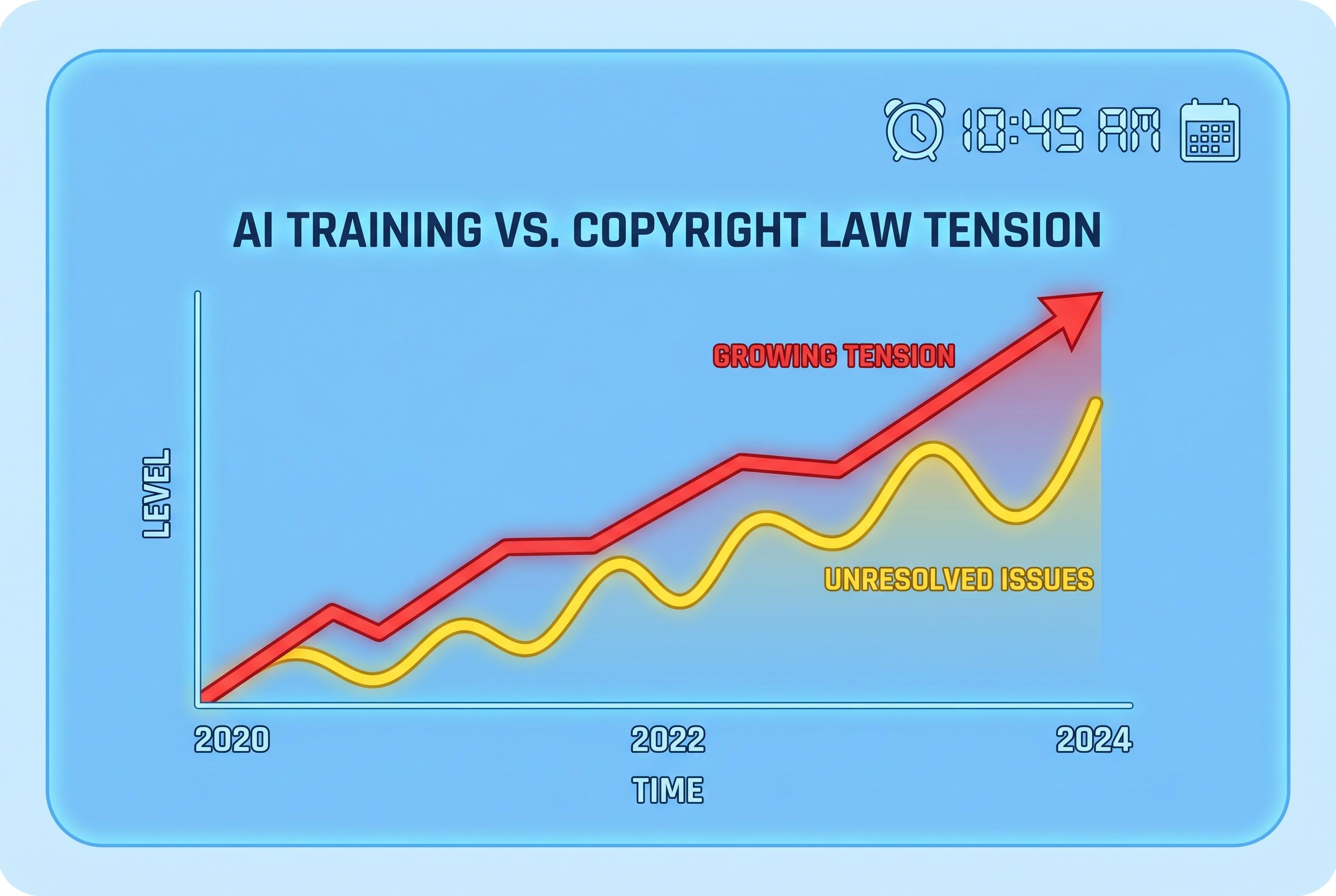
A landmark court ruling reveals ongoing legal uncertainties over AI training on books, music and art, sparking concerns among creators about compensation and copyright protection amid a broader industry debate.
The documentary makers behind The AI Doc: Or How I Became an Apocaloptimist are trying to turn a cultural argument into a legal and moral one: should tech firms be allowed to absorb books, music, journalism and art into AI systems without asking first? Daniel Roher, the film’s co-director, says the answer from many executives has been an unapologetic yes, but he and producer Ted Tremper argue that creators are being told to accept a system built on the uncompensated use of their work.
That dispute now sits at the centre of a widening courtroom battle. According to The Guardian, a US judge recently found that Anthropic’s use of books to train its models without authors’ permission qualified as fair use, while also ruling that storing pirated books in a central library amounted to infringement. The split decision underlines how unsettled the law remains, even as companies such as OpenAI, Anthropic, xAI, Meta and Google continue to defend their practices as legally permissible.
For artists, the worry is not just legal theory but economic survival. A PRS for Music survey cited by MusicRadar found that nearly four in five musicians are concerned about AI-generated music, with many fearing that the technology will further depress income and flood the market with synthetic competition. Similar concerns have been voiced by visual artists, photographers and publishers, who argue that consent and compensation should be central to any workable framework for training data.
AI companies, meanwhile, insist the scale of modern model-building makes traditional licensing impractical, and some have begun striking deals with rights holders such as Disney and Universal Music Group. But Tremper says that points to a two-tier system in which only the largest corporations can defend their work. The broader fight is still being shaped by lawsuits, policy debates and new licensing tools, including the AXM platform reported by Axios, which aims to automate permissions and payments for creators. For Roher and Tremper, the larger question is whether the rules governing copyright can be updated quickly enough to stop the industry from deciding the answer for itself.
Source Reference Map
Inspired by headline at: [1]
Sources by paragraph:
Source: Noah Wire Services
Noah Fact Check Pro
The draft above was created using the information available at the time the story first
emerged. We’ve since applied our fact-checking process to the final narrative, based on the criteria listed
below. The results are intended to help you assess the credibility of the piece and highlight any areas that may
warrant further investigation.
Freshness check
Score:
8
Notes:
The article references recent events, including a US judge's ruling on Anthropic's use of books to train AI models without authors' permission, dated June 25, 2025. ([en.wikipedia.org](https://en.wikipedia.org/wiki/The_AI_Doc%3A_Or_How_I_Became_an_Apocaloptimist?utm_source=openai)) The documentary 'The AI Doc: Or How I Became an Apocaloptimist' premiered at the Sundance Film Festival on January 27, 2026, and was released in US theaters on March 27, 2026. ([focusfeatures.com](https://www.focusfeatures.com/article/focus-features-announces-the-ai-doc-or-how-i-became-an-apocaloptimist-arriving-in-theaters-march-27-2026?utm_source=openai)) The article appears to be current, with no evidence of recycled content. However, the earliest known publication date of the article is not specified, so a definitive assessment of freshness is not possible.
Quotes check
Score:
7
Notes:
The article includes direct quotes from Daniel Roher and Ted Tremper, co-directors of the documentary. However, the earliest known usage of these quotes cannot be determined from the available information, making independent verification challenging. Without access to the original sources of these quotes, their authenticity cannot be fully confirmed.
Source reliability
Score:
6
Notes:
The article is published on Mashable, a reputable online media outlet. However, Mashable is not a major news organisation like the BBC or Reuters, which may affect the perceived reliability. The article cites sources such as The Guardian and MusicRadar, which are reputable publications. The article also references a PRS for Music survey cited by MusicRadar, but the original survey is not accessible, making independent verification difficult. The article appears to be summarising content from these sources, which may affect its originality.
Plausibility check
Score:
7
Notes:
The claims in the article align with known developments in AI and copyright law, including the US judge's ruling on Anthropic's use of books to train AI models without authors' permission. ([en.wikipedia.org](https://en.wikipedia.org/wiki/The_AI_Doc%3A_Or_How_I_Became_an_Apocaloptimist?utm_source=openai)) The documentary 'The AI Doc: Or How I Became an Apocaloptimist' also addresses similar themes. ([focusfeatures.com](https://www.focusfeatures.com/article/focus-features-announces-the-ai-doc-or-how-i-became-an-apocaloptimist-arriving-in-theaters-march-27-2026?utm_source=openai)) However, without access to the full content of the article and the original sources, a comprehensive assessment of plausibility is not possible.
Overall assessment
Verdict (FAIL, OPEN, PASS): OPEN
Confidence (LOW, MEDIUM, HIGH): MEDIUM
Summary:
The article appears to be current and references recent events and developments related to AI and copyright. However, without access to the full content of the article and the original sources, a comprehensive assessment of its accuracy and reliability is not possible. The reliance on summarised content from other sources and the inability to independently verify certain claims raise concerns about the article's originality and factual accuracy. Further verification is recommended before publishing.