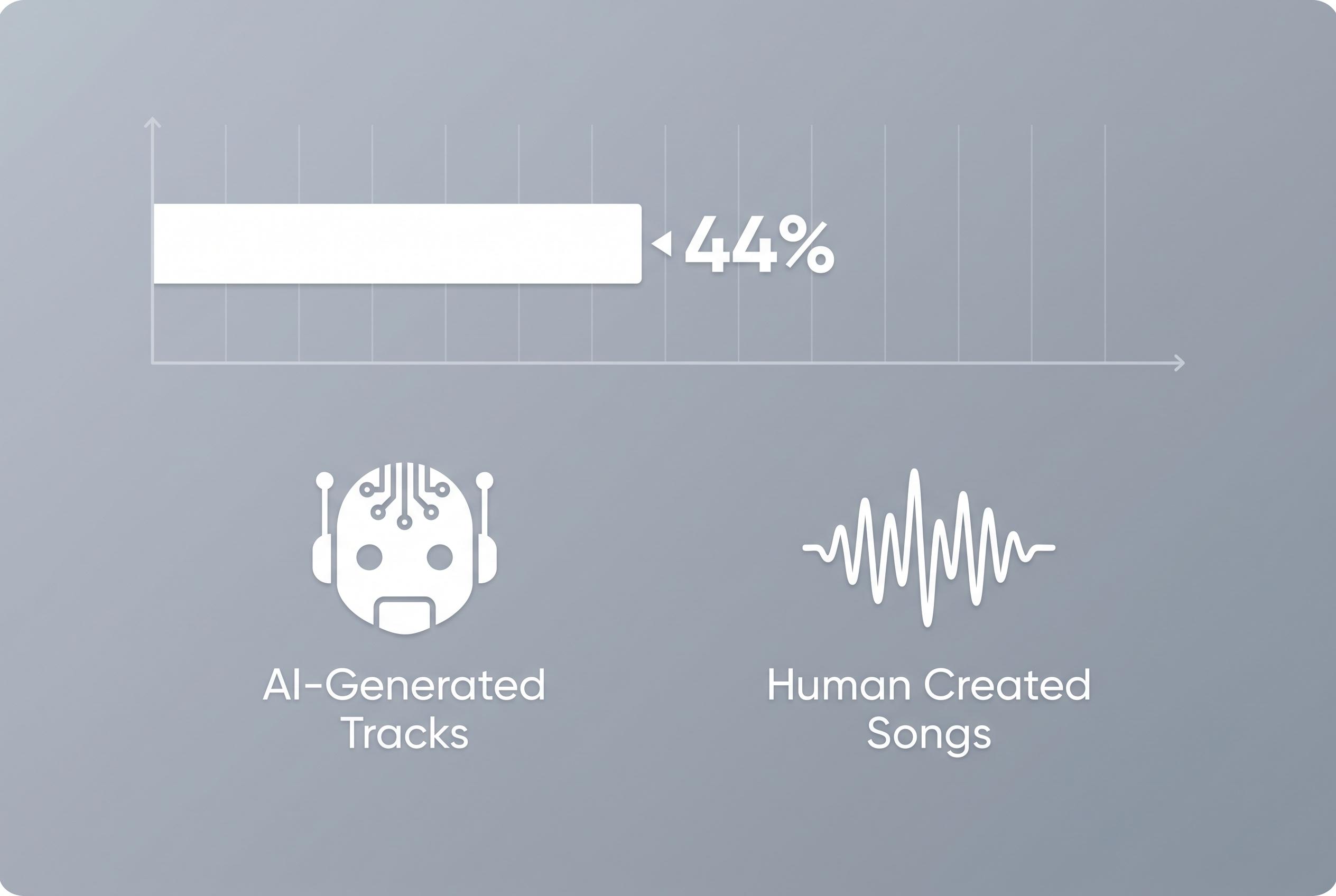
Deezer says it is now receiving nearly 75,000 fully AI-generated tracks every day, a pace that means synthetic music makes up 44% of all new uploads to the platform. The Paris-based streaming service said the surge underlines how quickly generative tools are reshaping the supply side of digital music, even as consumption of such tracks remains relatively limited. According to Deezer, AI-made music still accounts for only 1% to 3% of total streams, and most of that activity is flagged as fraudulent and removed from monetisation.
The latest figures, released on 20 April, extend a rise that Deezer has been tracking for more than a year. The company said it was seeing about 60,000 AI tracks a day in January, 50,000 in November, 30,000 in September and roughly 10,000 when it first introduced its AI detection tool in January 2025. In April 2025, Deezer said fully AI-generated music represented 18% of daily uploads, indicating a sharp acceleration since then.
Deezer has responded by tightening its handling of synthetic content. The company now says it no longer stores high-resolution versions of AI-generated tracks, adding to earlier steps that already excluded such music from algorithmic recommendations and editorial playlists. It has also made its detection technology available for licensing, first to Sacem and later to other partners through its Deezer for Business unit. Deezer says its system can identify fully AI-generated music from leading models including Suno and Udio, and that it has detected and tagged more than 13.4 million AI tracks across 2025.
The broader streaming industry is taking different approaches to the same problem. Qobuz has introduced its own detection tool, while Apple Music has opted for transparency tags supplied by labels and distributors. Spotify has backed the DDEX disclosure standard and recently began a beta feature that surfaces AI-use credits in Song Credits on mobile. Deezer says listener concern remains high, citing its own survey in which most respondents said they could not tell AI-generated music from human-made tracks and wanted clear labelling. The company argues that, with creator revenues under pressure and legal disputes continuing between rightsholders and AI firms, the industry needs more consistent safeguards and clearer disclosure.
Source Reference Map
Inspired by headline at: [1]
Sources by paragraph:
Source: Noah Wire Services