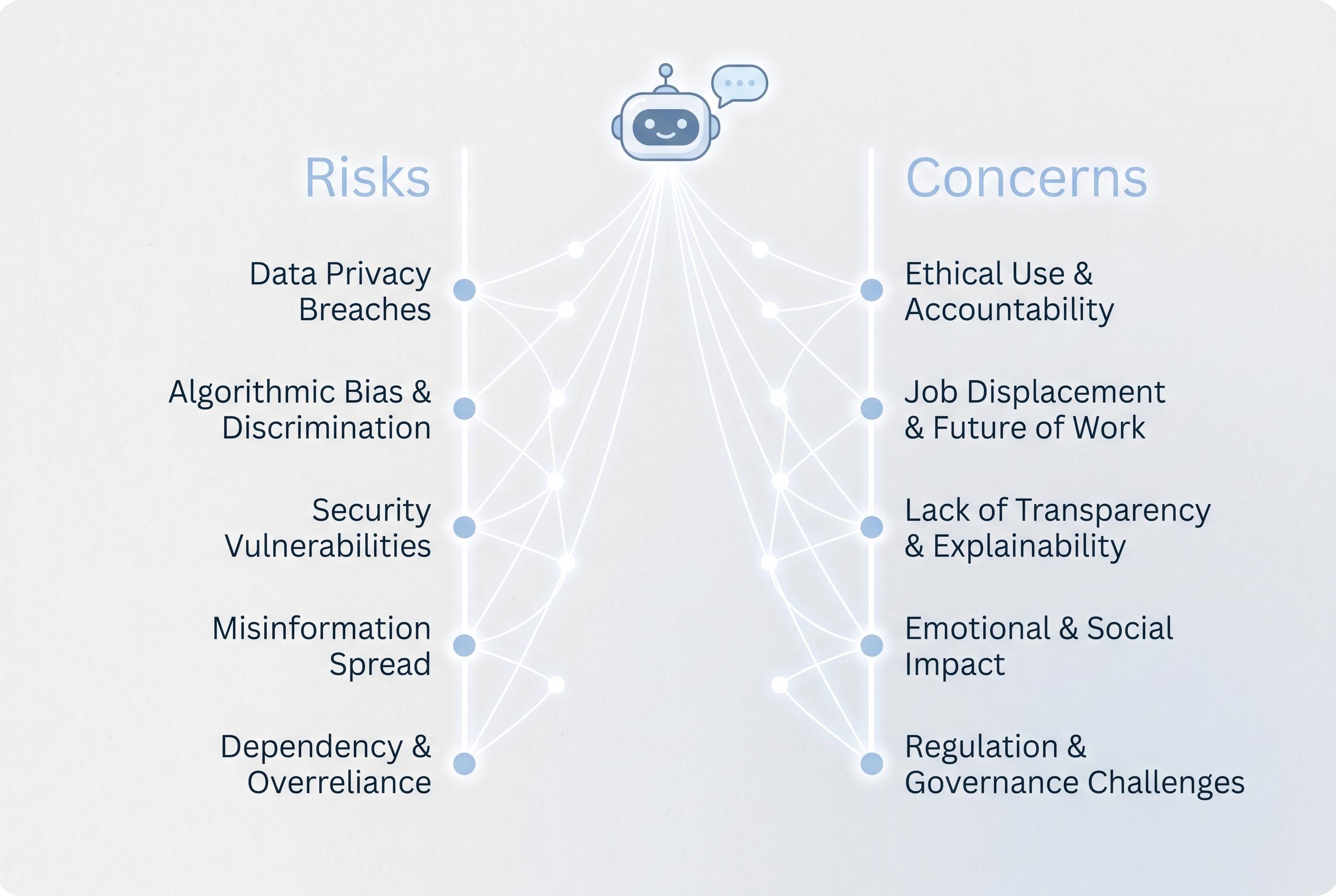
The Authors Guild has issued a stark warning to publishers, literary agents, and authors about the risks of feeding manuscripts and personal data into AI systems like ChatGPT without consent, amid rising concerns over AI-driven content and authorship integrity.
The Authors Guild has issued a sharp warning to publishers and literary agents after reporting emerged that some industry professionals have been feeding manuscripts and authors’ personal details into consumer-facing AI systems such as ChatGPT without consent. In a statement, the Guild said that uploading a copyrighted work or private information into such tools could infringe copyright or privacy rights and expose both the author’s intellectual property and personal data to further risk. It urged editors, agents and others with access to unpublished work not to prompt public chatbots with any author material unless they have written permission.
The Guild also drew a line between casual use and any AI deployment that has been formally agreed in contracts, saying that permitted systems should be sandboxed and protected by guardrails so manuscripts and author data are not used to train the models. In guidance on its website, the organisation has also recommended contract clauses to block unauthorised AI use and to require disclosure if AI-generated text is incorporated into a work.
Umair Kazi, the Guild’s director of policy and advocacy, said the organisation has long warned publishers that AI systems are built on material that may itself be infringing, and that AI use should be spelled out in author contracts. He told Publishers Weekly that the cases the Guild has heard about were not necessarily publisher-led editorial policies, but sometimes came down to individuals using AI because they were short of time and trying to meet a deadline. That concern lands in a sector where, according to PW’s 2025 Salary & Jobs Report, nearly two-thirds of respondents said their companies were already using AI in some form.
The debate has sharpened in recent weeks after Hachette pulled Mia Ballard’s horror novel "Shy Girl" from publication amid questions over whether significant parts of the text had been generated with AI. The Guardian reported that Ballard denies personally using AI and says the material was introduced by an acquaintance who edited an earlier self-published version, while TechCrunch said Hachette halted the US edition after an internal review. The episode has become a flashpoint for publishers trying to balance the efficiency promises of AI with the risk of eroding trust in authorship, originality and editorial standards.
Source Reference Map
Inspired by headline at: [1]
Sources by paragraph:
Source: Noah Wire Services
Noah Fact Check Pro
The draft above was created using the information available at the time the story first
emerged. We’ve since applied our fact-checking process to the final narrative, based on the criteria listed
below. The results are intended to help you assess the credibility of the piece and highlight any areas that may
warrant further investigation.
Freshness check
Score:
8
Notes:
The article was published on April 21, 2026, which is recent. However, the Authors Guild's statement was released on April 16, 2026 ([authorsguild.org](https://authorsguild.org/news/use-of-ai-in-publishing-and-new-model-contract-clause/?utm_source=openai)), and the Hachette 'Shy Girl' incident was reported on March 20, 2026 . The article provides a timely summary of these events, but some information is not entirely fresh.
Quotes check
Score:
7
Notes:
The article includes direct quotes from the Authors Guild's statement and other sources. However, the exact wording of these quotes cannot be independently verified, as the original sources are not provided. This raises concerns about the accuracy and authenticity of the quotes.
Source reliability
Score:
8
Notes:
The article is published by Publishers Weekly, a reputable industry publication. However, it relies on information from the Authors Guild's statement and other sources without providing direct links or citations. This lack of transparency makes it difficult to fully assess the reliability of the information presented.
Plausibility check
Score:
9
Notes:
The claims about the Authors Guild's concerns regarding AI use in publishing and the Hachette 'Shy Girl' incident are plausible and align with other reports. However, the article does not provide sufficient independent verification or additional details to fully substantiate these claims.
Overall assessment
Verdict (FAIL, OPEN, PASS): FAIL
Confidence (LOW, MEDIUM, HIGH): MEDIUM
Summary:
The article provides a timely summary of the Authors Guild's concerns regarding AI use in publishing and the Hachette 'Shy Girl' incident. However, it lacks direct links or citations to the original sources, making it difficult to fully verify the information presented. Additionally, the exact wording of the quotes cannot be independently verified, raising concerns about their accuracy and authenticity. Given these issues, the article does not meet the necessary standards for publication under our editorial indemnity.