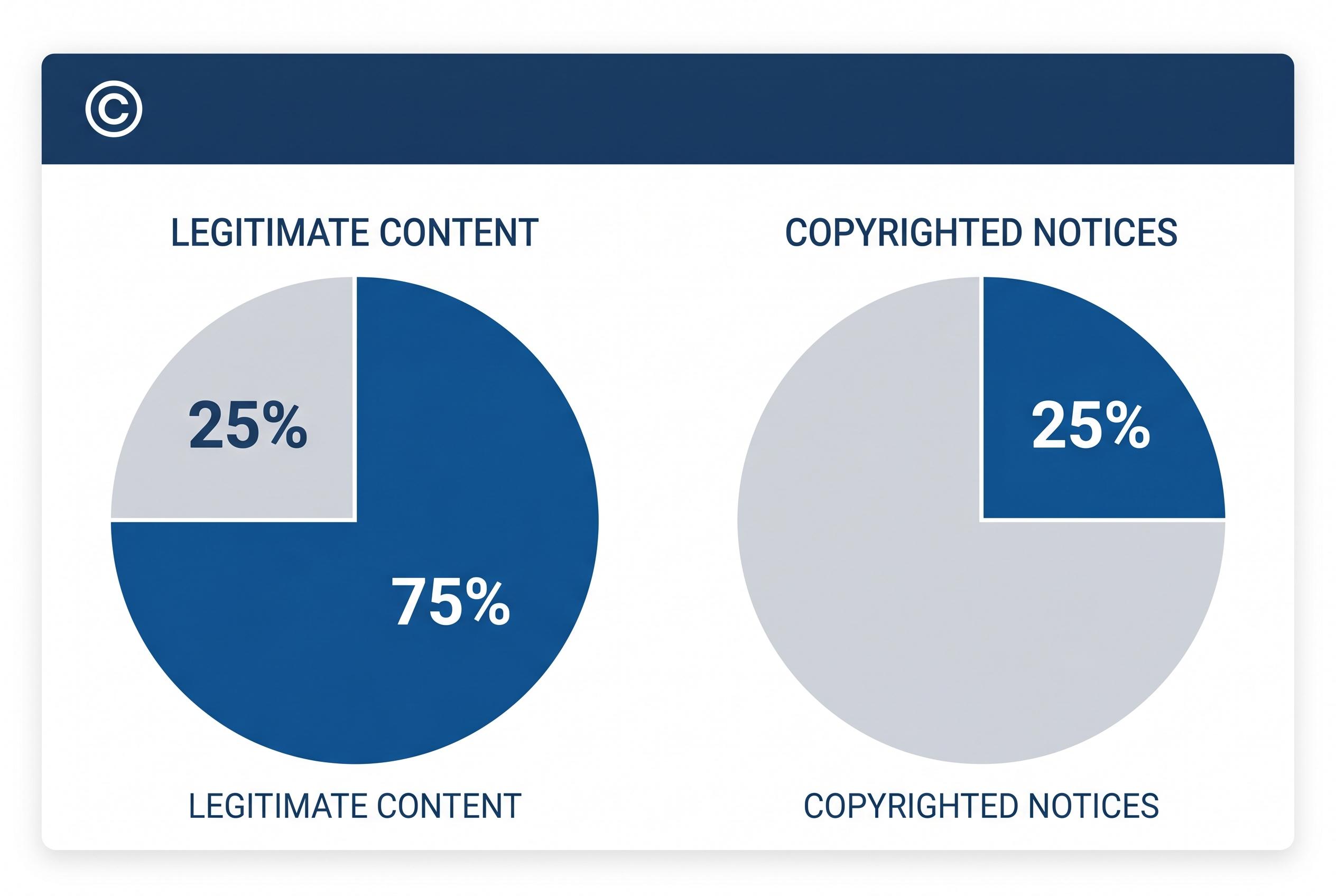
What is emerging is a peculiar failure of the online rights system: a copyright notice can now be used to suppress legitimate pages from Google Search almost immediately, while the owner of the affected site can wait days or weeks to undo the damage. The underlying framework, built under the Digital Millennium Copyright Act, was designed to encourage fast removal of allegedly infringing material, but that speed also makes it vulnerable to abuse, according to the advocacy group Takedown Abuse and the copyright explainer published by ReputationX.
The problem became harder to ignore in March when a cluster of apparently coordinated complaints caused journalism about the SEO industry to disappear from search results. Press Gazette published an investigation on March 25, 2026, followed by Search Engine Land the next day. Both were later removed from Google’s index after a notice that appeared to rely on an unrelated Verge article, before being restored on March 31. The episode suggested that even original reporting from established outlets can be temporarily wiped from search visibility by a complaint that is never properly tested first.
The damage is not confined to newsrooms or well-known brands. Reporting cited in the article points to Forbes having faced more than 1,000 complaints, while Moz was briefly de-indexed in 2022 after a DMCA notice before its homepage returned within a day. The same pattern has also been observed among smaller operators, many of whom lack the legal support or search-platform contacts that large publishers can call on when something goes wrong.
The scale of the abuse appears to be widening as the process becomes more automated. TorrentFreak reported that Google dealt with more than five billion copyright removal requests in 2025, taking down more than 2.7 billion URLs, compared with roughly 250,000 annual requests in 2010. The Lumen Database, which tracks notices across major platforms, now receives more than 20,000 new entries a week. MUSO, which works on anti-piracy workflows, has argued that rising volumes are pushing platforms towards ever-faster automated systems, even as those systems make mistakes more likely.
That speed is central to the complaint. A notice can be filed without the complainant having to prove ownership first, and Google may remove the link long before any human review occurs. The counter-notice process is slower and more exposed: site owners must provide contact details, while the complainant can remain hidden. In one Google Webmasters community thread cited in the article, a site owner complained that they had to reveal real information to recover search visibility while learning almost nothing about the person who sent the notice.
Researchers and investigators have documented what that imbalance can look like in practice. According to reports cited from Forbidden Stories and Rest of World, the Spanish reputation-management firm Eliminalia allegedly manufactured backdated copies of articles and used them to trigger takedowns of the originals. OCCRP has also described a case in which one of its articles was removed after what it considered a fabricated complaint. Patent attorney Bao Tran, cited in the article, has warned that competitors can also use bulk notices and timed takedowns to target rivals during launches or major announcements.
Calls for reform have therefore focused on three changes: limits on how many notices one party can submit, disclosure of the complainant’s verified identity at the point of filing, and proof of ownership before any URL is removed. Takedown Abuse and similar campaigners argue that without those safeguards, the system will continue to reward the fastest filer rather than the rightful copyright owner. The article notes that the European Union’s Digital Services Act is often cited as a possible model, but as of April 2026 no comparable overhaul has advanced in the United States.
Source Reference Map
Inspired by headline at: [1]
Sources by paragraph:
- Paragraph 1: [2], [3]
- Paragraph 2: [1]
- Paragraph 3: [1]
- Paragraph 4: [4], [1]
- Paragraph 5: [3], [1]
- Paragraph 6: [1], [2], [4]
Source: Noah Wire Services