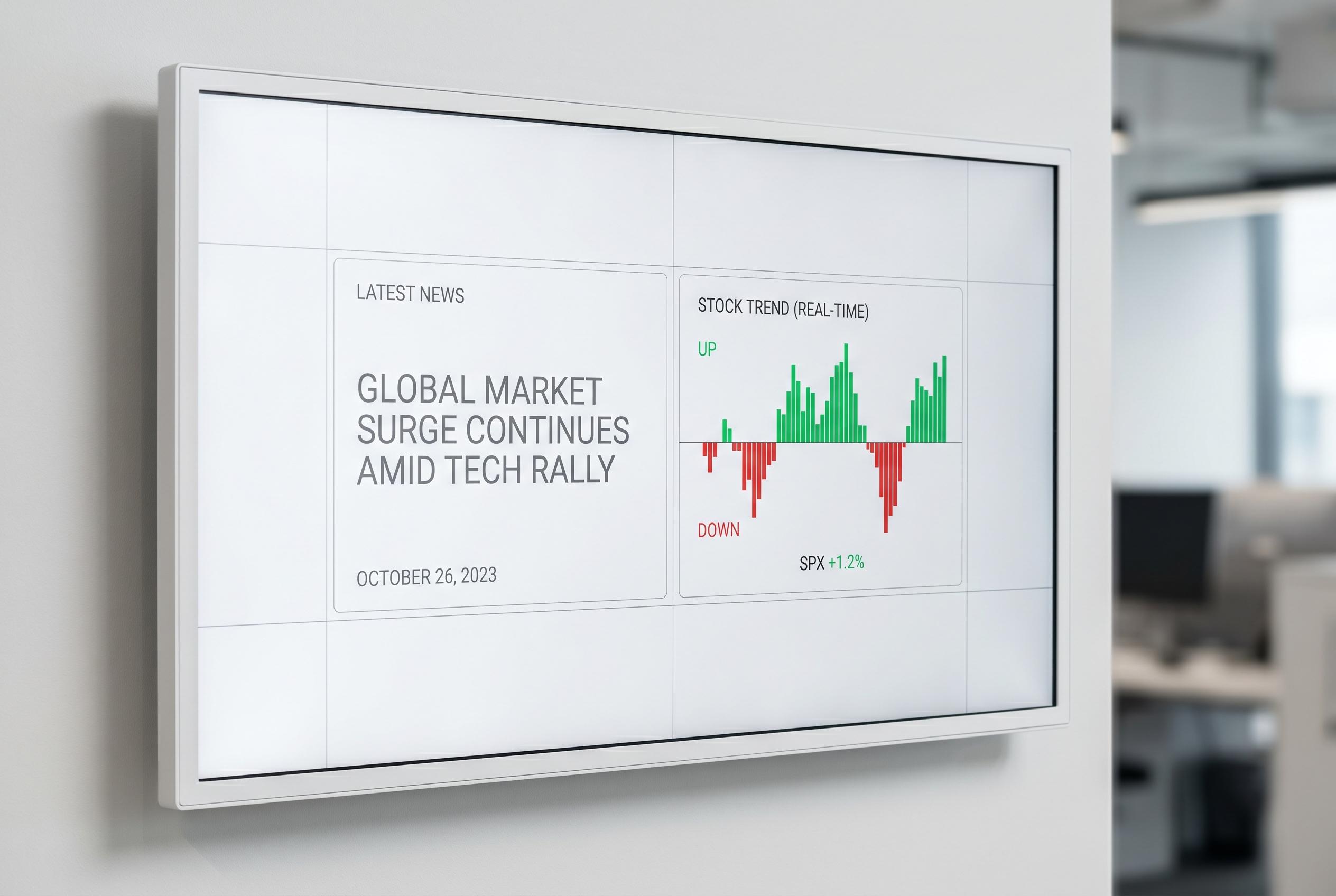
Prediction markets are no longer sitting at the edge of the news business. They are moving into its core, where reporting, audience attention and commercial strategy increasingly overlap. In April 2026, Fox Corporation said it would weave Kalshi’s real-time forecast data through FOX News Channel, FOX Business Network, FOX Weather and its streaming service, while earlier partnerships had already brought prediction market signals into CNBC and CNN coverage. Around the same time, Dow Jones, publisher of The Wall Street Journal, Barron’s and MarketWatch, struck an exclusive deal with Polymarket to place its probabilities across consumer products.
The significance of those deals is not simply that media companies are experimenting with a new graphic or data feed. It is that market-derived probabilities are becoming part of the editorial environment itself. The Associated Press said in March 2026 that it would supply Kalshi with its election data, including vote counts and race calls, underscoring how prediction platforms now depend on established news organisations for the information that helps anchor their forecasts. That makes the relationship circular: the newsroom informs the market, and the market is then folded back into the newsroom.
This shift helps explain why prediction markets are increasingly described in newsroom discussions as a kind of casino-fication of news. A political contest, regulatory decision or cultural event is no longer only something to cover. It can also become a tradable instrument, with prices updating in public and interpreted by audiences as a live measure of expectation. Industry reporting has suggested that a large share of visitors come to these platforms for the odds rather than the act of trading, which points to a broader role as information products rather than merely financial venues.
That dual identity creates a powerful feedback loop. Information sparks trading, trading shifts prices, and those prices then influence how stories are framed and shared. Reuters-style verification still matters, but the tempo has changed. As one market watcher quoted in newsletter reporting put it, the pace can feel “supercharged”, because probabilities can move before a formal announcement lands. The result is a newsroom environment in which signals can begin shaping narrative before the underlying event is fully settled.
The ethical questions are beginning to follow quickly behind the technology. Journalists often learn things before the public does, which raises the possibility that sensitive knowledge could be turned into a financial advantage on prediction platforms. Although there have been few widely reported insider-trading cases involving reporters in this space, the risk is clear enough that some organisations are acting pre-emptively. ProPublica introduced an ethics code in 2026 to stop staff from betting on news events through prediction markets.
There is also a subtler danger: the language of forecasting can begin to influence the language of reporting. If a contract is settled by a particular phrase or outcome definition, journalists may find themselves nudged towards wording that tracks the market rather than the uncertainty of the real world. That matters because prediction markets do not produce truth; they aggregate belief, and belief can be wrong, incomplete or distorted. When probabilities are presented without enough context, audiences can easily mistake them for conclusions.
For publishers, however, the appeal is obvious. Prediction data adds speed, a visual hook and a sense of immediacy that fits the rhythm of digital news. It also gives outlets a new way to package political, economic and cultural uncertainty for audiences who are already accustomed to watching live charts and constantly updating dashboards. What began as a niche forecasting tool is now being treated as part of the mainstream information stack.
The bigger question is how far this goes. If media organisations keep integrating prediction markets into their products, the boundary between reporting on events and trading on their likelihood will become harder to see. For now, the movement is still in its early stages, but the direction is clear: market signals are entering the news cycle not as side information, but as part of the cycle itself.
Source Reference Map
Inspired by headline at: [1]
Sources by paragraph:
- Paragraph 1: [2], [3], [6], [7]
- Paragraph 2: [4], [6], [7]
- Paragraph 3: [1]
- Paragraph 4: [1]
- Paragraph 5: [1]
- Paragraph 6: [1]
- Paragraph 7: [2], [3], [4], [5], [6], [7]
- Paragraph 8: [1], [2], [3]
Source: Noah Wire Services