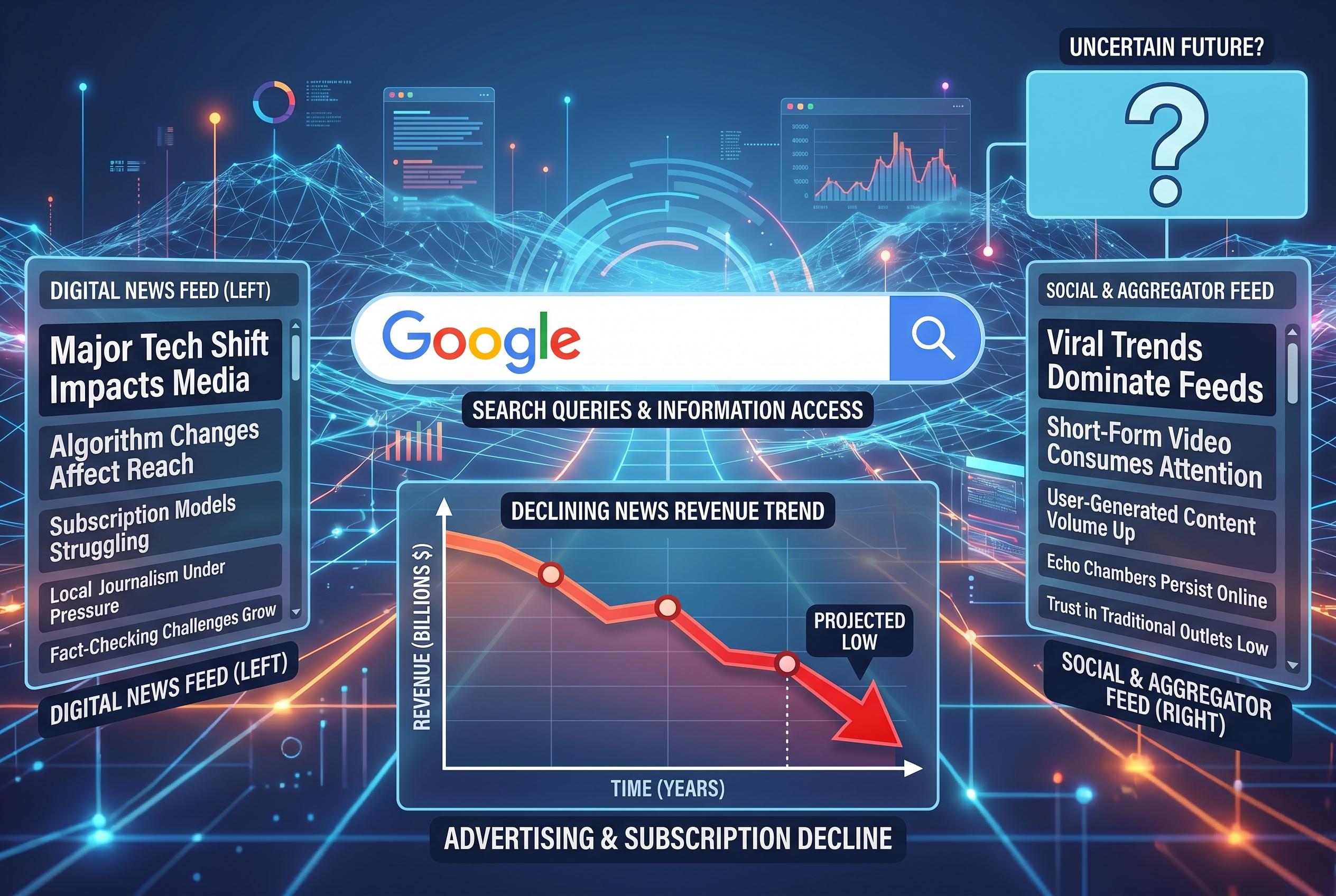
Brazil’s competition regulator is examining whether Google’s search results and snippets devalue news publishers’ content, especially as AI-powered summaries threaten to reshape online news access and revenue streams.
Brazil’s competition watchdog is giving fresh scrutiny to Google’s handling of news content, with the Administrative Council for Economic Defence weighing whether a long-running case should be turned into a fuller investigation. The issue centres on whether the company’s search results and snippets of journalistic material are drawing value from publishers without proper payment, at a time when AI tools are making those summaries even more self-contained.
According to reports from Brazil and elsewhere, the case dates back to 2019 and focuses on whether Google’s display of headlines, excerpts and short summaries reduces the need for users to click through to original news sites. That matters because fewer visits can mean less advertising revenue, weaker visibility and a greater squeeze on publishers already reliant on search traffic.
The debate has widened as Google rolls out AI-powered search features that can condense information even further. Publishers have argued that this shift risks turning Google into the destination rather than the gateway, deepening their dependence on a platform that controls much of their audience flow. Google has countered that its search product sends readers to news sites and that publishers can decide what appears in search results.
The Brazilian review comes as regulators in Europe are also taking a harder look at Google’s use of online content for AI. The European Commission has opened an inquiry into whether the company is imposing unfair terms on publishers and creators or giving itself privileged access to content in ways that could disadvantage rival AI developers. Together, the cases reflect a broader regulatory push to test how far large technology platforms can use third-party material to power search and artificial intelligence without damaging the businesses that produce it.
Source Reference Map
Inspired by headline at: [1]
Sources by paragraph:
Source: Noah Wire Services
Noah Fact Check Pro
The draft above was created using the information available at the time the story first
emerged. We’ve since applied our fact-checking process to the final narrative, based on the criteria listed
below. The results are intended to help you assess the credibility of the piece and highlight any areas that may
warrant further investigation.
Freshness check
Score:
7
Notes:
The article references a case initiated in 2019, with recent developments in 2025 and 2026. The latest update from November 2025 indicates that CADE is adding an artificial-intelligence angle to its ongoing investigation into Google's role in the news market. ([mlex.com](https://www.mlex.com/mlex/articles/2416217/brazil-s-cade-adds-ai-angle-to-google-news-investigation?utm_source=openai)) The article from April 2026 discusses this ongoing investigation, suggesting that the content is current. However, the article's publication date is April 2026, which is more than seven days ago, raising concerns about the freshness of the information.
Quotes check
Score:
6
Notes:
The article includes direct quotes attributed to various sources. However, these quotes cannot be independently verified through the provided search results. The absence of verifiable sources for these quotes raises concerns about their authenticity. Without independent verification, the credibility of these quotes is questionable.
Source reliability
Score:
5
Notes:
The article originates from 'Mercado Web Minas', a niche publication. While it provides a link to the original source, the credibility of this publication is uncertain due to its limited reach and lack of widespread recognition. The reliance on a niche source without independent verification raises concerns about the reliability of the information presented.
Plausibility check
Score:
7
Notes:
The article discusses ongoing investigations by CADE into Google's use of news content, a topic covered by other reputable outlets. However, the article's reliance on a niche source without independent verification raises concerns about the accuracy of the information presented. The absence of corroborating reports from major news organizations diminishes the plausibility of the claims made.
Overall assessment
Verdict (FAIL, OPEN, PASS): FAIL
Confidence (LOW, MEDIUM, HIGH): MEDIUM
Summary:
The article discusses ongoing investigations by CADE into Google's use of news content, referencing a case initiated in 2019 with developments in 2025 and 2026. However, the reliance on a niche source without independent verification, the inability to verify direct quotes, and the absence of corroborating reports from major news organizations raise significant concerns about the credibility and accuracy of the information presented. Given these issues, the content cannot be considered fully reliable.