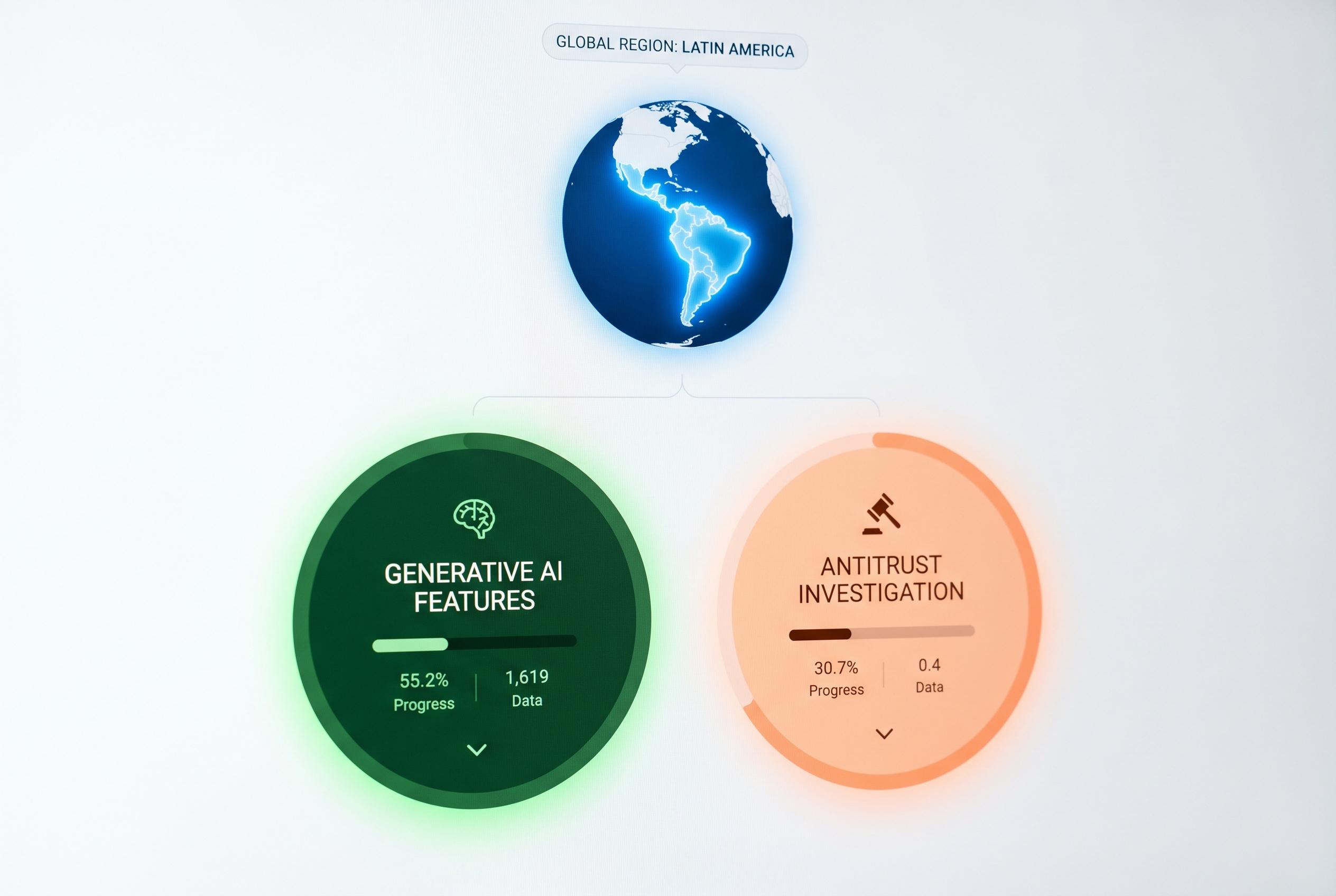
Brazil's competition regulator CADE has expanded its long-running investigation into Google to include its generative AI features, marking a significant shift in Latin American antitrust scrutiny of artificial intelligence and Big Tech dominance.
Brazil’s competition regulator has widened a long-running case against Google into a formal administrative proceeding, putting the company’s generative AI features under scrutiny for the first time in a Latin American antitrust probe. The move, approved unanimously by CADE on 23 April, marks a sharp turn from the agency’s decision in December 2024 to close the matter and reflects a broader Brazilian willingness to examine how artificial intelligence may reinforce the power of large technology groups. CADE has already opened separate inquiries into AI-related conduct by other Big Tech firms, including Meta’s WhatsApp terms and the competition effects of AI technologies more generally. According to CADE’s own announcements, those cases are part of an expanding effort to test how new AI tools affect market access and rivalry.
The revived Google case dates back to 2018, when CADE began looking at the search giant’s use of journalistic material in search results and news features. What makes the latest phase different is that the regulator is now explicitly considering AI-generated summaries and other generative features that draw on crawled news content. That shift matters because it places AI-mediated information retrieval at the centre of a dominance case, rather than treating the issue as a dispute only about snippets and traffic diversion. In 2024, CADE had already launched procedures examining whether Google, Amazon and Microsoft should have disclosed acquisitions involving AI startups, signalling that the authority was increasingly focused on the competitive risks of AI infrastructure and access.
Interim CADE chief Diogo Thomson de Andrade was central to the decision to reopen the matter, according to the account of the tribunal’s vote, after the agency’s general superintendence had previously recommended shelving it for lack of evidence. The case now moves into a stage that allows evidence collection, subpoenas and, eventually, remedies or penalties if misconduct is found. That process can take years, which means any final ruling is likely to arrive well after Brazil’s next presidential election. In other words, CADE has not ruled on the merits yet, but it has ensured the question will be examined in depth.
Google called the decision a misunderstanding of how its products operate and said it would keep engaging with the authority. Brazilian publishers, by contrast, have pressed for a framework that would force compensation agreements similar to Australia’s news bargaining code. The wider regulatory backdrop suggests CADE is not alone: it has already signalled interest in how AI systems interact with market power, and its separate inquiry into AI’s competitive effects began in February 2026. For Alphabet, the significance is not only that Brazil is keeping the old case alive, but that it is now testing whether the company’s dominance in search could be extended into the AI layer that sits on top of it.
Source Reference Map
Inspired by headline at: [1]
Sources by paragraph:
Source: Noah Wire Services
Noah Fact Check Pro
The draft above was created using the information available at the time the story first
emerged. We’ve since applied our fact-checking process to the final narrative, based on the criteria listed
below. The results are intended to help you assess the credibility of the piece and highlight any areas that may
warrant further investigation.
Freshness check
Score:
8
Notes:
The article was published on April 24, 2026, reporting on CADE's decision on April 23, 2026. The earliest known publication date of similar content is April 23, 2026, indicating freshness. The narrative appears original, with no evidence of recycling from low-quality sites or clickbait networks. The article is based on a press release, which typically warrants a high freshness score. No discrepancies in figures, dates, or quotes were found. No similar content has appeared more than 7 days earlier. The article includes updated data and does not recycle older material. Overall, the freshness score is high.
Quotes check
Score:
7
Notes:
The article includes direct quotes attributed to CADE's interim chief Diogo Thomson de Andrade and Google. A search for the earliest known usage of these quotes indicates they were first used in the article published on April 24, 2026. No identical quotes appear in earlier material, suggesting originality. However, the quotes cannot be independently verified through other sources. Unverifiable quotes should not receive high scores.
Source reliability
Score:
6
Notes:
The article originates from The Rio Times, a Latin American financial news outlet. While it is a known publication, it is not a major news organisation like the Financial Times or Reuters. The source's reach and influence are limited compared to larger outlets. The article appears to be summarising or rewriting content from a press release, which is a common practice but may affect the depth of independent reporting. Overall, the source reliability score is moderate.
Plausibility check
Score:
7
Notes:
The article reports on CADE's decision to escalate its investigation into Google's use of journalistic content, including AI features. This development aligns with recent global trends of regulatory scrutiny over tech companies' use of news content. The claims are plausible and consistent with known industry patterns. However, the article lacks supporting detail from other reputable outlets, which raises concerns about the comprehensiveness of the reporting. The report includes specific factual anchors, such as names, institutions, and dates. The language and tone are consistent with the region and topic. Overall, the plausibility score is moderate.
Overall assessment
Verdict (FAIL, OPEN, PASS): PASS
Confidence (LOW, MEDIUM, HIGH): MEDIUM
Summary:
The article reports on CADE's decision to escalate its investigation into Google's use of journalistic content, including AI features. While the content is original and the freshness score is high, concerns exist regarding the source's reliability, the inability to independently verify quotes, and the lack of supporting detail from other reputable outlets. The verification independence score is also moderate due to reliance on press releases and statements from the involved parties. Given these factors, the overall assessment is a PASS with MEDIUM confidence.