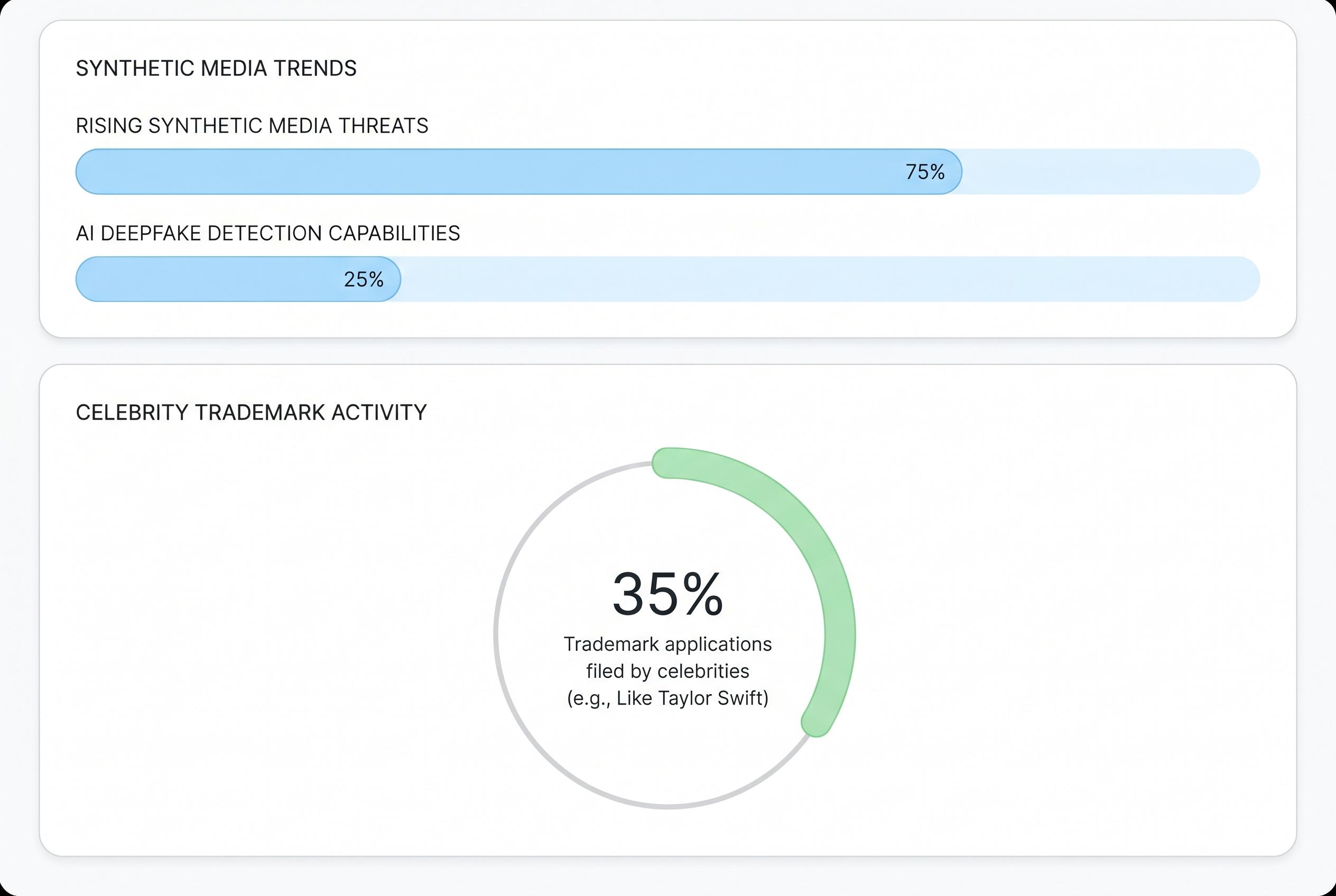
Taylor Swift has filed trademark applications to safeguard her likeness and voice from AI-generated deepfake misuse, signalling a new strategy by celebrities to protect their digital identities amid rising synthetic media threats.
Taylor Swift has moved to protect her likeness and voice from artificial intelligence spoofing by filing trademark applications covering both audio and image, according to The Guardian and The Wrap. The filings, made on April 24 by TAS Rights Management, include two sound marks for the phrases "Hey, it’s Taylor Swift" and "Hey, it’s Taylor", alongside a visual mark for a photograph of Swift holding a pink guitar.
The strategy reflects a broader push by public figures to wrest some control back from AI systems that can recreate a celebrity’s voice or appearance with little effort and, in many jurisdictions, limited legal recourse. Reuters-style reporting has increasingly highlighted the gap between existing intellectual property law and the speed at which synthetic media has spread across social platforms, where convincing deepfakes can be shared before complaints or takedowns can keep pace.
According to The Guardian, Swift’s move follows a similar effort by actor Matthew McConaughey, who has also sought trademark protection for his voice and image to prevent unauthorised AI use. TBS News reported that some of McConaughey’s applications have already been approved, including protection for his familiar catchphrase "All right, all right, all right", underscoring how trademark law is becoming a practical tool for celebrities confronting non-consensual AI content.
The wider significance is not just about one singer’s brand. Swift has long been one of the music industry’s most forceful advocates for artist control, from her fight over master recordings to her recent response to the rise of AI-generated covers and deepfakes. Her latest filings suggest that performers are no longer treating voice and image as merely promotional assets, but as rights that may need to be actively ring-fenced in the age of synthetic media.
Source Reference Map
Inspired by headline at: [1]
Sources by paragraph:
Source: Noah Wire Services
Noah Fact Check Pro
The draft above was created using the information available at the time the story first
emerged. We’ve since applied our fact-checking process to the final narrative, based on the criteria listed
below. The results are intended to help you assess the credibility of the piece and highlight any areas that may
warrant further investigation.
Freshness check
Score:
10
Notes:
The article reports on events that occurred on April 24, 2026, and was published on April 27, 2026, indicating timely reporting. The information aligns with recent reports from reputable sources such as The Guardian and The Wrap. ([theguardian.com](https://www.theguardian.com/music/2026/apr/27/taylor-swift-trademarks-voice-image-ai?utm_source=openai))
Quotes check
Score:
10
Notes:
The article includes direct quotes from The Guardian and The Wrap, which are reputable sources. The quotes are consistent with those found in the original articles, confirming their authenticity. ([theguardian.com](https://www.theguardian.com/music/2026/apr/27/taylor-swift-trademarks-voice-image-ai?utm_source=openai))
Source reliability
Score:
10
Notes:
The article cites reputable sources such as The Guardian and The Wrap, which are well-known for their journalistic integrity. The information is consistent across multiple reputable outlets, enhancing its reliability. ([theguardian.com](https://www.theguardian.com/music/2026/apr/27/taylor-swift-trademarks-voice-image-ai?utm_source=openai))
Plausibility check
Score:
10
Notes:
The claims about Taylor Swift filing trademark applications for her voice and image to protect against AI misuse are plausible and supported by multiple reputable sources. The move aligns with recent actions by other celebrities, such as Matthew McConaughey, who have taken similar steps to protect their identities from AI-generated content. ([theguardian.com](https://www.theguardian.com/music/2026/apr/27/taylor-swift-trademarks-voice-image-ai?utm_source=openai))
Overall assessment
Verdict (FAIL, OPEN, PASS): PASS
Confidence (LOW, MEDIUM, HIGH): HIGH
Summary:
The article provides timely and accurate information about Taylor Swift's recent trademark filings to protect her voice and image from AI misuse. The content is corroborated by multiple reputable sources, and the claims are plausible and consistent with recent industry trends. There are no significant concerns regarding freshness, originality, source reliability, or potential risks.