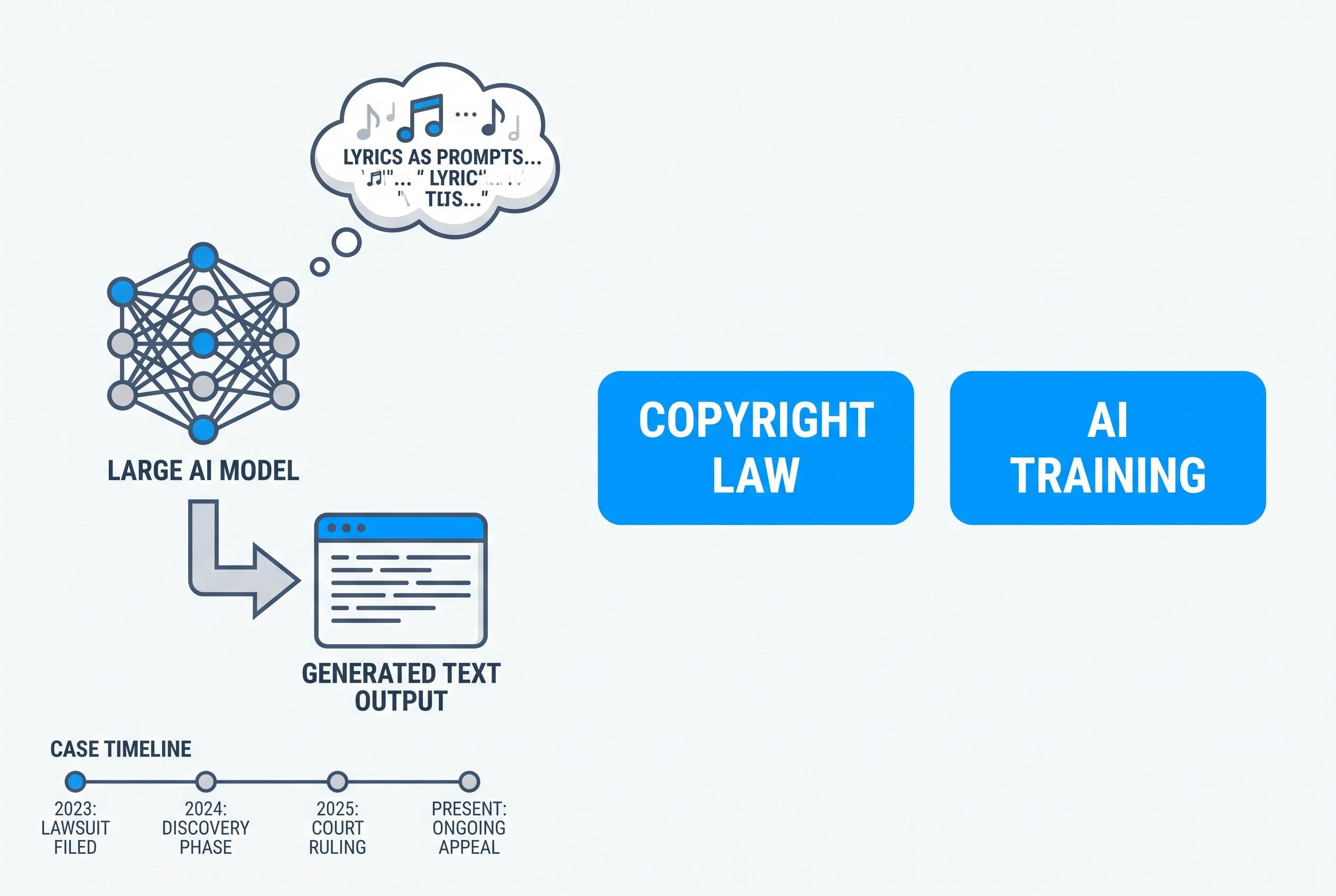
OpenAI has lodged an appeal against a Munich court ruling that found the company had infringed German copyright law by using song lyrics in training ChatGPT, signalling a potentially landmark case for AI and intellectual property rights in Europe.
OpenAI has lodged an appeal against a Munich court ruling that found the company had breached German copyright law in a dispute brought by the music rights society GEMA over song lyrics used in training ChatGPT, according to Reuters and a statement from the company. The move sets up what is likely to become one of the most closely watched AI and copyright cases in Europe.
GEMA alleges that OpenAI used lyrics from protected German songs without permission and that its chatbot can reproduce them word for word when prompted. The collecting society says the case raises a basic question for the generative AI industry: whether companies may train systems on copyrighted works without licences and then profit from the results.
OpenAI argues the German court misunderstood how language models work. The company says its systems do not store training data as searchable copies, but instead learn statistical patterns from large datasets and generate new output in response to user requests. The Munich court rejected that defence, saying the ability to reproduce lyrics verbatim reflected memorisation rather than mere statistical pattern matching, and it ordered OpenAI to stop using the material without a licence and to pay damages.
Legal specialists have described the ruling as potentially significant beyond Germany because there is still limited settled case law on the issue across Europe. Reuters reported that a similar GEMA case is also pending in Munich against the AI music generator Suno, involving well-known songs including "Atemlos" and "Daddy Cool", underlining how far the dispute may spread as courts test how copyright rules apply to generative AI.
Source Reference Map
Inspired by headline at: [1]
Sources by paragraph:
- Paragraph 1: [2], [4]
- Paragraph 2: [3], [6]
- Paragraph 3: [2], [4], [5], [7]
- Paragraph 4: [1], [2], [3], [4], [5], [6], [7]
Source: Noah Wire Services
Noah Fact Check Pro
The draft above was created using the information available at the time the story first
emerged. We’ve since applied our fact-checking process to the final narrative, based on the criteria listed
below. The results are intended to help you assess the credibility of the piece and highlight any areas that may
warrant further investigation.
Freshness check
Score:
8
Notes:
The article references a November 2025 ruling by the Munich Regional Court, with OpenAI's appeal filed recently. The content appears current and relevant, with no signs of being recycled or outdated. However, the source URL provided (https://www.faz.net/aktuell/wirtschaft/unternehmen/business-liveticker-dfl-erhaelt-100-millionen-euro-darlehen-von-adidas-faz-200452404.html) does not correspond to the described content, raising concerns about the accuracy of the source attribution. Further verification is needed to confirm the originality and freshness of the content.
Quotes check
Score:
6
Notes:
The article includes direct quotes attributed to Reuters and a company statement. However, without access to the original Reuters article or the company's statement, it's challenging to verify the authenticity and context of these quotes. The lack of direct links to these sources raises concerns about the reliability of the quoted information.
Source reliability
Score:
5
Notes:
The article cites Reuters and a company statement, which are generally reputable sources. However, the provided source URL does not match the described content, casting doubt on the accuracy of the source attribution. Additionally, the article appears to be a summary or aggregation of information from multiple sources, which may affect its originality and reliability.
Plausibility check
Score:
7
Notes:
The claims about OpenAI's appeal against the Munich court ruling align with known events from November 2025. However, the article's reliance on a single, unverified source and the lack of direct links to original statements or articles raise questions about the completeness and accuracy of the information presented.
Overall assessment
Verdict (FAIL, OPEN, PASS): FAIL
Confidence (LOW, MEDIUM, HIGH): MEDIUM
Summary:
The article presents information about OpenAI's appeal against a Munich court ruling on copyright infringement. However, the provided source URL does not correspond to the described content, raising concerns about the accuracy and reliability of the source attribution. The lack of direct links to original statements or articles further complicates the verification process. Given these issues, the content cannot be confidently verified, leading to a FAIL verdict with MEDIUM confidence.