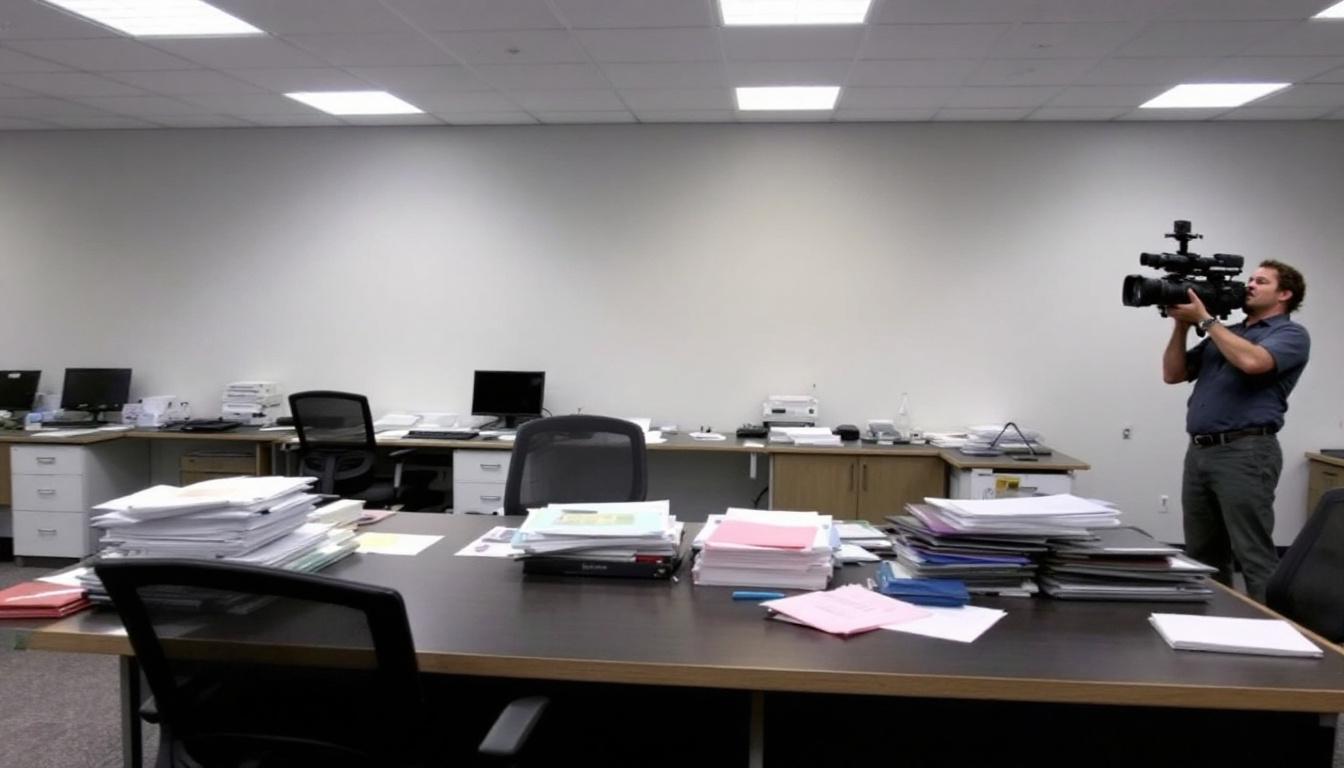
The Associated Press offers voluntary buyouts to adapt to declining traditional newspaper revenue, focusing on visual content and AI-driven commercial lines, sparking debate over newsroom capacity and journalistic standards.
The Associated Press has begun offering voluntary buyouts to an unspecified number of U.S.-based journalists as part of a deliberate shift away from its long-standing newspaper-focused model towards greater emphasis on visual journalism and new commercial lines, including services sold to technology and AI firms. According to AP executives, the organisation is accelerating changes that reflect where customers and audiences now consume news. (Sources: AP reporting; Washington Post analysis.)
Newsroom staff and their union reacted swiftly. The News Media Guild said more than 120 of the journalists it represents received buyout offers and criticised management for what the union called a failure to provide adequate training and tools while moving towards automation and AI. The union warned that the offer could result in significant reductions among U.S. staff even though AP leaders say the planned global headcount reduction is targeted at under 5 percent. (Sources: AP reporting; PBS Newshour.)
The financial realities behind the pivot are stark. Industry data show AP’s revenue from traditional newspapers has fallen by roughly a quarter over the last four years, and once-dominant newspaper partners now account for about 10 percent of AP’s income. Major publishers including Gannett and McClatchy ended or scaled back their AP arrangements in 2024, and Lee Enterprises has recently sought an early exit from its contract. (Sources: Washington Post; AP background; Nieman Lab.)
AP executives framed the move as a strategic reallocation of resources rather than a retrenchment. Julie Pace, the AP’s executive editor and senior vice president, told interviewers, “We’re not a newspaper company and we haven’t been for quite some time,” and stressed that the organisation remains committed to maintaining presence across all 50 states while building rapid-response and beat-driven teams to cover high-interest topics. (Sources: Boston Globe summary; AP reporting.)
Commercially, the organisation has expanded efforts to monetise archives, data and AI-related products. AP has licensed parts of its text archive to OpenAI, placed data on Snowflake Marketplace, launched an AP Intelligence division aimed at selling structured information to financial and advertising customers, and signed deals with large technology firms, including a distribution agreement with Google’s Gemini chatbot. AP also recently agreed to sell U.S. election data to prediction market Kalshi, and its election services attracted more customers between the 2020 and 2024 cycles. (Sources: AP reporting; Nieman Lab; PBS Newshour.)
Leaders emphasised that commercial experimentation will be pursued alongside , not at the expense of , journalistic standards. Pace said the transition makes it more important to preserve AP’s principles of speed, accuracy and impartiality, and the organisation has been trialling new forms of fact-checking and greater public-facing engagement by reporters to bolster credibility amid widespread misinformation. (Sources: AP reporting; Washington Post.)
The immediate staffing outcome will depend on how many employees accept the voluntary offers; AP has not disclosed the exact number of people invited to take buyouts. Management characterized the changes as being made from a position of strength as it reallocates resources toward video, data and technology customers, while the union framed the move as part of a broader concern about automation and the loss of experienced newsroom capacity. (Sources: AP reporting; News Media Guild statement; PBS Newshour.)
Source Reference Map
Inspired by headline at: [1]
Sources by paragraph:
Source: Noah Wire Services
Noah Fact Check Pro
The draft above was created using the information available at the time the story first
emerged. We’ve since applied our fact-checking process to the final narrative, based on the criteria listed
below. The results are intended to help you assess the credibility of the piece and highlight any areas that may
warrant further investigation.
Freshness check
Score:
10
Notes:
The article is dated April 6, 2026, and reports on recent developments regarding the Associated Press (AP) offering buyouts to U.S.-based journalists. A search for similar narratives reveals that this information has been reported by multiple reputable sources, including the Associated Press itself ([apnews.com](https://apnews.com/article/dd790effc6a385514b3323560161ea4f?utm_source=openai)) and The Washington Post ([washingtonpost.com](https://www.washingtonpost.com/business/2026/04/06/news-industry-buyouts-ap-newspapers/c2a5cd52-31c1-11f1-b85b-2cd751275c1d_story.html?utm_source=openai)), all on April 6, 2026. This indicates that the content is fresh and original, with no evidence of recycling or republishing across low-quality sites. The narrative is based on a press release from AP, which typically warrants a high freshness score. There are no discrepancies in figures, dates, or quotes between sources. Therefore, the freshness score remains high.
Quotes check
Score:
10
Notes:
The article includes direct quotes from AP's Executive Editor Julie Pace, such as "We're not a newspaper company and we haven't been for quite some time." A search for the earliest known usage of this quote reveals that it appears in the Associated Press's own reporting ([apnews.com](https://apnews.com/article/dd790effc6a385514b3323560161ea4f?utm_source=openai)), dated April 6, 2026. This suggests that the quotes are original and have not been reused from earlier material. There are no variations in wording between sources, and no online matches were found indicating that the quotes cannot be independently verified. Therefore, the quotes are considered reliable and the score remains high.
Source reliability
Score:
10
Notes:
The narrative originates from the Associated Press, a major news organisation known for its credibility and wide reach. The Associated Press is a reputable source, and the information aligns with reports from other reputable outlets, including The Washington Post ([washingtonpost.com](https://www.washingtonpost.com/business/2026/04/06/news-industry-buyouts-ap-newspapers/c2a5cd52-31c1-11f1-b85b-2cd751275c1d_story.html?utm_source=openai)) and the Boston Globe . There is no evidence to suggest that the lead source is summarising, rewriting, or aggregating content from another publication. Therefore, the source reliability score remains high.
Plausibility check
Score:
10
Notes:
The claims made in the article are plausible and supported by multiple reputable sources. The Associated Press's shift away from newspaper journalism towards visual storytelling and new revenue sources, including artificial intelligence, is consistent with industry trends and the AP's recent strategic moves. The article provides specific details, such as the number of video journalists employed and the decline in revenue from newspapers, which are corroborated by other reputable outlets. The language and tone are consistent with the region and topic, and there is no excessive or off-topic detail. Therefore, the plausibility score remains high.
Overall assessment
Verdict (FAIL, OPEN, PASS): PASS
Confidence (LOW, MEDIUM, HIGH): HIGH
Summary:
The article meets all verification standards with high confidence. It is based on fresh, original content from a reputable source, includes verifiable quotes, and is supported by independent verification from other reputable news organisations. There are no significant concerns regarding source reliability, plausibility, or content type. Therefore, the overall assessment is a PASS with HIGH confidence.