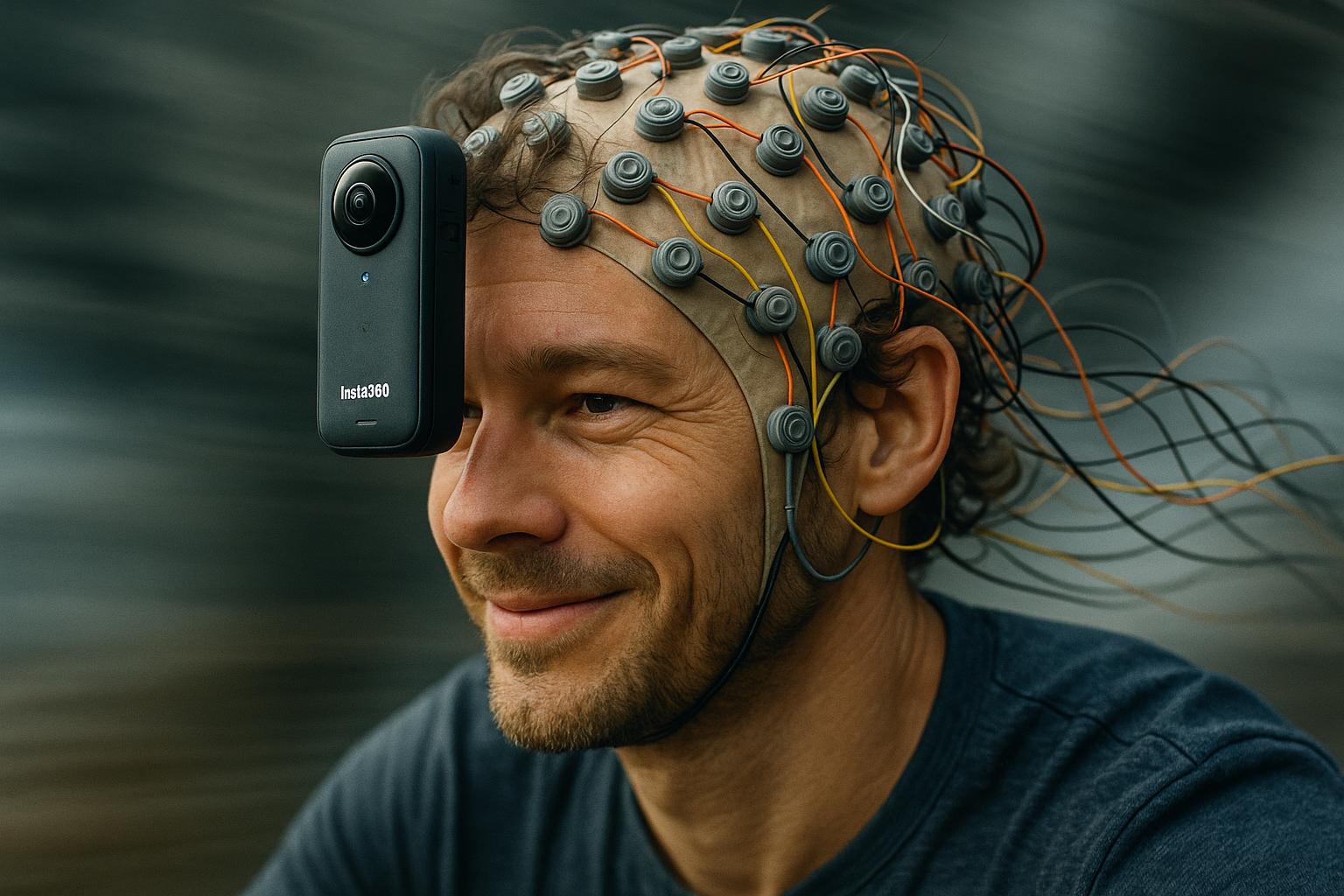
Shoppers are watching this tech story unfold as a Neuralink brain implant teams up with an Insta360 camera to give an immobilised ALS patient a new way to see, follow and join family life. The result, part clinical trial and part human experiment, matters because it shows how brain–computer tech can restore connection, not just functions.
- Real-world pairing: A Neuralink implant now controls an Insta360 Link 2 webcam, letting an ALS patient “move his head” and zoom with thought.
- Faster, smoother: Engineers tuned software for low latency and quicker response so the camera feels responsive and natural.
- Everyday wins: He can follow his children, join family conversations and record messages , small sensory joys that feel huge.
- Clinical context: This is part of FDA-authorised human trials that began in late 2024; it’s experimental but promising.
- Practical note: The setup needs careful calibration and tech support, so it’s not yet a plug-and-play consumer product.
How a brain implant turned a webcam into a new pair of eyes
This isn’t sci‑fi, it’s a person learning to steer a camera with thought signals. The patient, Brad Smith, got a Neuralink implant in November 2024 and gradually trained the system to move a cursor and now to send commands to an Insta360 Link 2. The camera’s gimbal and smart tracking combine with adapted software so a thought to look left, right or zoom becomes an actual change in frame , a quiet, tactile sort of freedom.
There’s a sensory magic to watching someone follow their child across a room using a digital gaze. For someone who’s been unable to move for years, that mild head-turn, visible on screen, reads like a full stop after a long sentence.
Why Insta360 Link 2 was a sensible match for this work
Insta360’s Link 2 is built for smooth motion, automated framing and good low‑light performance , features that matter when you can’t reposition a camera by hand. The gimbal reduces jitter and the motorised pan and tilt let the device mimic natural head movements, so the result feels less mechanical and more human.
Engineers from Insta360 worked with the trial team to reduce lag and make commands predictable. There’s a trade-off between speed and stability, and the tuning here leans into reliability so the camera doesn’t overreact to stray signals.
What this means for brain–computer interfaces beyond medical labs
We’re seeing a subtle shift: brain–computer tech moving from narrow clinical tasks, like texting, to richer, social interactions. That matters because returning the ability to share attention , to look where others look , is as much about dignity as it is about function.
The FDA’s authorised trials that allowed this to happen are cautious but open to novel uses. If you follow the landscape, from early Neuralink approvals to other research groups mapping intent to action, this is the kind of practical demonstration that helps regulators, engineers and families imagine next steps.
How the team translated brain signals into camera moves
Technically, the implant reads neural patterns and a Link Controller interprets them as cursor commands. Developers then mapped those commands to camera actions: pan, tilt, zoom and preset framing. The tricky bit wasn’t the hardware; it was training the software to ignore noise and respond only to deliberate signals.
That involved iteration with Smith in real situations , family chats, different lighting and background motion , so the system learned to feel intuitive. In other words, the lab worked in the living room, because that’s where the experience has to work.
What to expect next and why it’s not yet consumer tech
This remains an experimental, medically supervised setup. Widespread consumer availability would need improved safety, regulatory approvals, simpler calibration and cheaper gear. Still, this proof of concept accelerates thinking about assistive products that do more than enable typing , they restore presence.
For now, the takeaways are hopeful rather than hype. The tech is surprisingly immediate in emotional payoff, but it needs time to become robust, affordable and widely available.
Ready to make technology work for presence as well as practicality? Check the latest updates and follow trials to see when similar setups move from bespoke demos to real-world options.