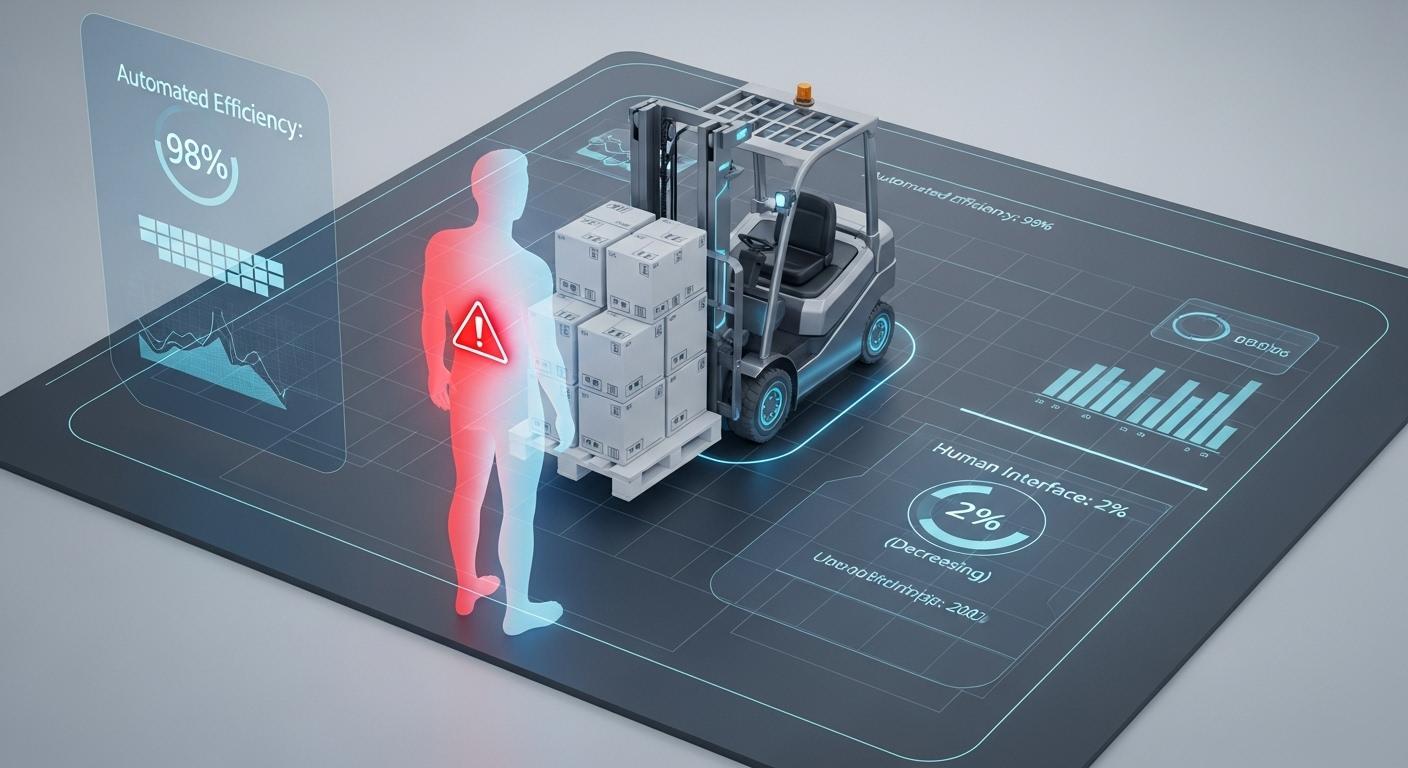
Australia's largest listed technology company, WiseTech Global, has projected a significant transformation in the logistics sector driven by artificial intelligence (AI), anticipating that half of the jobs in logistics providers could be eliminated while simultaneously increasing the importance of the remaining roles.
At an investor summit, WiseTech's CEO Zubin Appoo revealed that the company has integrated numerous AI agents into its flagship Cargowise platform, which serves more than 17,000 freight forwarders and third-party logistics providers globally. The AI systems are specifically designed to automate labour-intensive tasks typically handled by offshore shared service centres or business process outsourcing (BPO) centres in lower labour-cost countries. Appoo emphasized that AI adoption will drastically reduce this segment of the workforce by more than 50 percent.
This AI-driven shift, however, is not about replacing all human involvement. Appoo explained that skilled logistics operators located near supply chain operations will become increasingly vital as their role evolves to verify and collaborate with AI agents to ensure high-quality outcomes, thereby enhancing profitability, margins, and operational performance for customers such as freight forwarders and customs brokers.
The critical challenge AI aims to tackle is the massive paperwork burden inherent in international trade logistics. Currently, many trade documents remain non-digitised, existing as PDFs or images requiring manual data entry into systems like Cargowise. Appoo illustrated the scale of this task, noting that a global freight forwarder might process around 10 million commercial invoices annually, translating into the equivalent of 95 years of human data entry every year. While offshore data processing and optical character recognition solutions are in use, WiseTech’s Cargowise now includes a document ingestion system powered by advanced AI language models capable of understanding and structuring information from these documents with human-like comprehension.
The AI system flags any data uncertainties or compliance anomalies, such as shipments involving sanctioned entities or potentially prohibited products, prompting human review only when necessary. This selective intervention ensures accuracy and mitigates risks across the supply chain.
WiseTech's AI capabilities extend beyond data entry. Mirta Fagundes dos Santos, the company's AI team leader, highlighted the AI-driven classification assistant which automates up to 90 percent of the demanding task of customs goods classification. Determining the correct categorisation of goods, such as distinguishing a ceramic pepper grinder from ceramic tableware, requires interpreting complex legal notes and trade policies. Misclassification carries financial penalties and reputational risks, as well as implications for national security and compliance, making this automation a critical advancement. By deploying bespoke AI agents narrowly tailored for specific tasks, WiseTech claims to maintain high accuracy and avoid AI hallucinations, a common concern in broader AI applications.
Recent developments show WiseTech is actively expanding its AI and automation capabilities. In 2025, the company acquired Shipamax, a UK-based firm specialising in data entry automation through AI and machine learning for logistics tasks like forwarding, customs brokerage job management, and accounts payable invoice processing. This acquisition aims to further streamline operations and reduce manual handling across the logistics industry.
The company is also undergoing a strategic overhaul involving AI-driven cost optimisation, with a focus on long-term value creation in logistics. This process includes workforce reductions as WiseTech invests heavily in AI infrastructure, a move aligning with trends across the tech industry where automation is reshaping employment landscapes. Although WiseTech has not disclosed specific figures regarding job cuts, it has committed to helping affected employees transition professionally.
While automation threatens certain routine roles, especially in offshore and lower-skill job categories, industry analysis suggests the rise of AI will also create new job opportunities in supervisory, engineering, and specialist roles within the logistics workforce. The World Economic Forum projects that by 2030, millions of new roles related to AI and robotics will emerge, balancing some of the displacement caused by automation.
WiseTech's fiscal 2025 earnings presentation highlighted the incorporation of agentic AI-enabled workflow automation in its CargoWise platform, which employs AI personas to continuously automate aspects of trade and logistics operations at a fraction of the traditional cost, significantly improving speed, accuracy, and productivity.
Moreover, WiseTech continues to enhance its platform's efficiency by enabling real-time data exchange among global partners, supported by multilingual capabilities and extensive licensing that facilitate smooth international collaboration, improved supply chain visibility, and regulatory compliance.
In navigating this AI transformation, WiseTech underscores that while substantial labour shifts are imminent, the future logistics workforce will be defined by more strategic, skilled roles working alongside advanced AI systems to unlock new efficiencies and capabilities in global trade.
📌 Reference Map:
- [1] (inkl) - Paragraphs 1, 2, 3, 4, 5, 6, 7
- [2] (Reuters) - Paragraph 8, 9
- [3] (Cargowise) - Paragraph 10
- [4] (WiseTech FY25 results) - Paragraph 11
- [5] (WiseTech news) - Paragraph 12
- [6] (TMA Solutions) - Paragraph 9
- [7] (AI Invest) - Paragraph 8
Source: Noah Wire Services