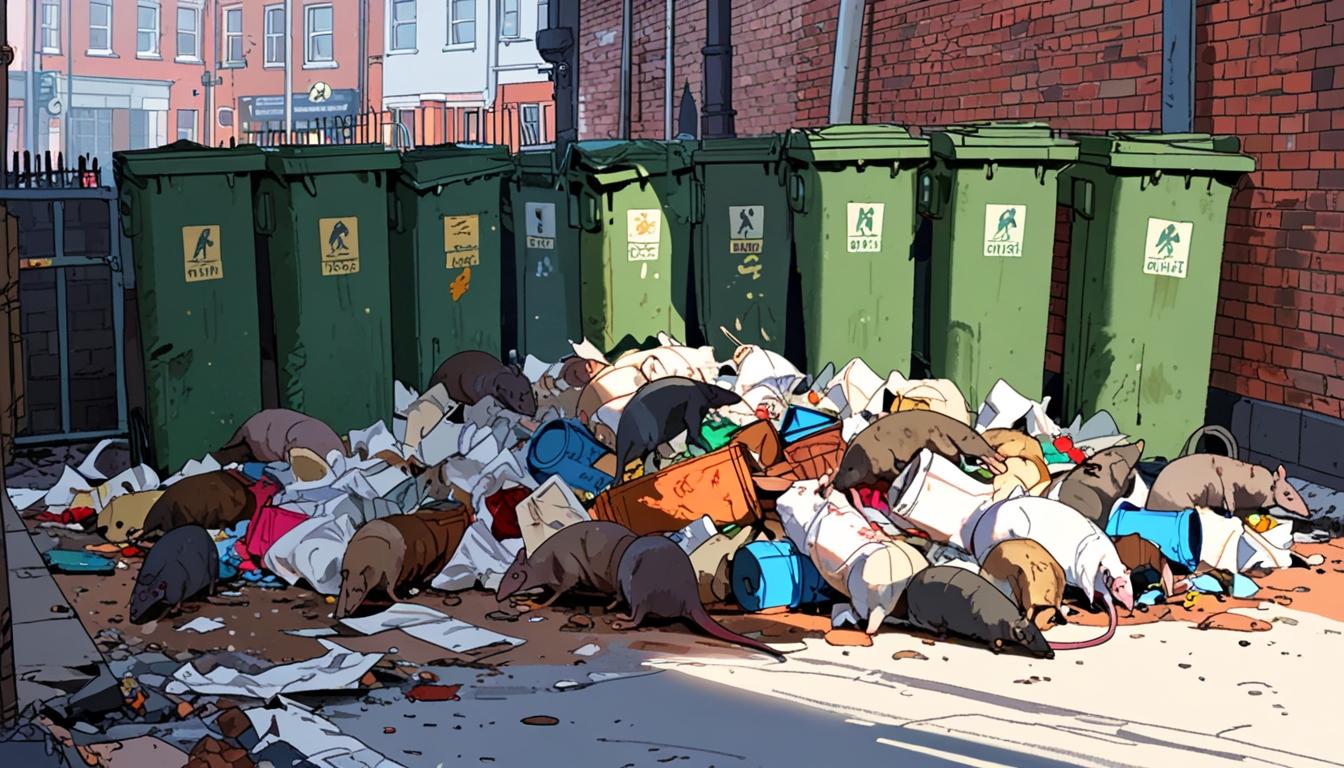
Birmingham is confronting a mounting public health challenge as its ongoing bin strike enters its seventh week, with a confidential council dossier revealing the potentially serious consequences for residents. The strike, involving hundreds of refuse workers who are members of the Unite trade union, has led to widespread accumulation of uncollected household waste and rubbish across the city’s streets.
The walkout began after Birmingham City Council decided to abolish the waste recycling and collection officer role, a move that Unite claims could result in pay cuts for other refuse workers. The disruption has left full rubbish bags lining residential areas, including neighbourhoods such as Sparkbrook, raising concerns about sanitation, public health, and emergency access.
A recently obtained nine-page risk assessment document, prepared for local authority leaders, highlights the scale of the health risks associated with the strike. Particular concern is directed towards vulnerable groups including the elderly, disabled individuals, infants, and people with compromised immune systems, who are deemed "particularly susceptible" to adverse health outcomes caused by the refuse build-up.
The dossier warns that the piling up of food, animal, and human waste presents a "medium" but "tolerable" risk of gastrointestinal illnesses spreading among residents. It also underscores danger from rat-borne diseases, noting the potential for increased encounters with rodents carrying infections such as leptospirosis, salmonella, and hantavirus. While the report states there is "no current evidence" of increased contact between rats and people, residents have reported sightings of unusually large rats scavenging through uncollected rubbish.
The document draws on guidance and monitoring from the UK Health Security Agency, the Environment Agency, and Birmingham City Council’s own public health and environmental teams. It also incorporates findings from previous waste strikes to inform the current assessment, with regular input from the Refuse Public Health Risk Assessment review group.
Emergency services are also at risk, the dossier points out, as accumulated waste could obstruct access for ambulances and fire vehicles in critical situations. Meanwhile, concerns about wider environmental contamination persist, with risks identified to land, air, and water due to decomposing waste, unauthorised dumping, and the burning of rubbish by residents.
In response to the escalating crisis, Birmingham City Council declared a major incident last month. Efforts to clear excess waste have been intensive, and a Local Government spokesperson stated, "The situation in Birmingham remains a priority and we have worked intensively with the council to clean up the city's streets, with the vast majority of excess waste now cleared."
Negotiations have recently resumed between Birmingham City Council and Unite, with talks restarting on Wednesday. Within hours, Unite announced that the conciliation service Acas would be involved for the first time in an effort to broker an agreement, indicating that a deal could be "in touching distance."
As the strike continues, residents face ongoing disruptions to their environment, along with the anxieties associated with the documented health and safety risks. The complexities of the dispute and its impacts remain under close observation by local authorities and public health officials.
Source: Noah Wire Services