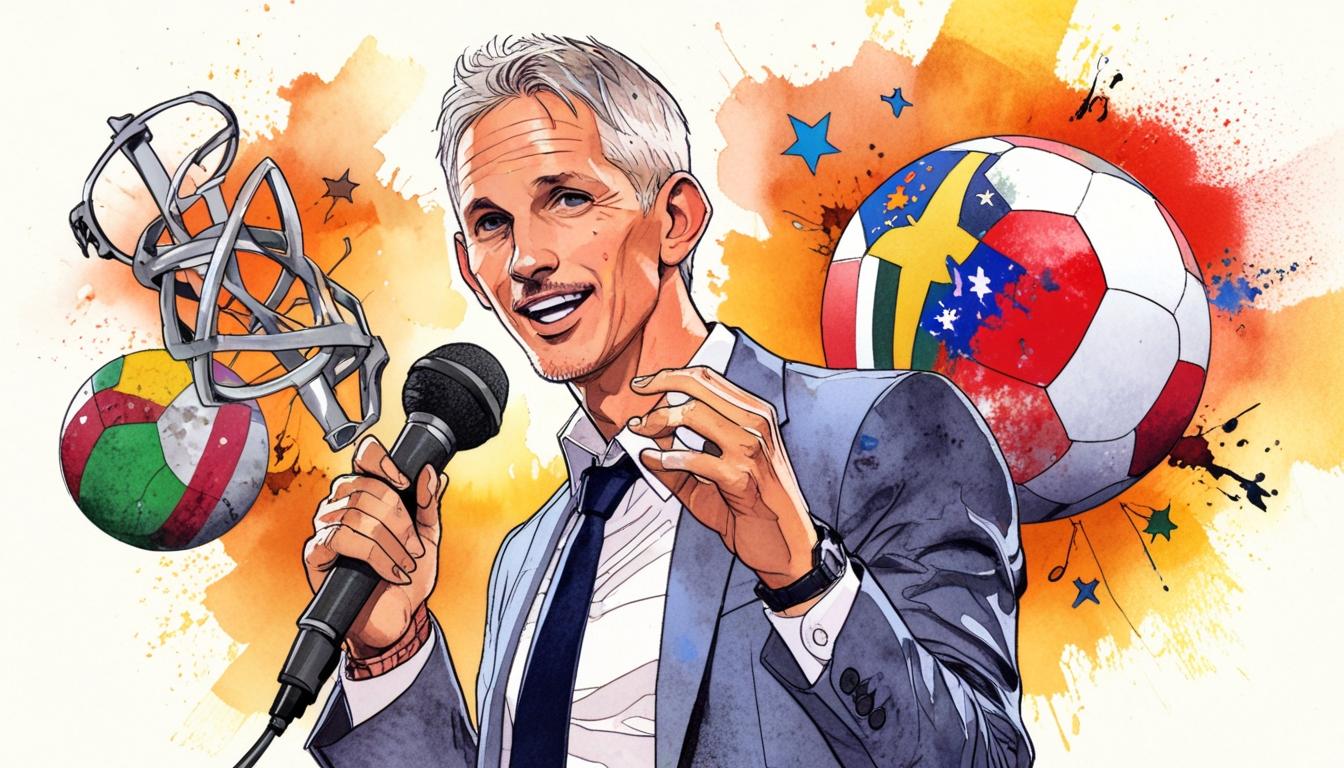
In a recent interview broadcast on the BBC, former England football captain and renowned presenter Gary Lineker offered a revealing and wide-ranging glimpse into both his personal life and his perspectives on broader issues beyond football. The interview, conducted by BBC journalist Amol Rajan, touched upon numerous facets of Lineker’s career, life experiences, and public controversies, eliciting diverse public reactions.
One of the more unexpected disclosures was Lineker’s childhood acquaintance with the singer Engelbert Humperdinck, whom he sometimes found playing cards with his father after school. Despite this intriguing anecdote, much of the public and media response chiefly fixated on other segments of the conversation.
The interview covered Lineker’s formative years, revealing that his parents were supportive without being overly pushy, and highlighted a pivotal moment in his sporting career—the hat-trick he scored against Poland in the 1986 World Cup, which he described as transformative. Lineker also reminisced about legendary figures such as Diego Maradona, including his memories of the notorious pitch conditions at the Estadio Azteca, and recalled a severe foul inflicted on his teammate Glenn Hoddle. He praised the commentary of Barry Davies during one of football's iconic goals, describing it as "magnificent."
Throughout the discussion, Lineker shared his views on several personal and professional matters: his stance on gambling, insights into goal-scoring techniques, and a poignant account of his near loss of his son to leukemia. He reflected on his unexpected role stepping into the presenting chair for the BBC’s Grandstand during a crisis caused by a bomb scare at the Grand National, and offered behind-the-scenes details of how commentary lines are sometimes improvised during England’s exits from major tournaments. He also recounted a humorous incident involving evading paparazzi while trying to catch a train, highlighting the ups and downs of public life.
However, the interview gained most attention for Lineker’s comments on his suspension from the iconic football programme Match of the Day in 2023, his decision to sign a letter advocating for the reinstatement of a documentary about Gaza on the BBC iPlayer, and the broader implications surrounding the BBC’s handling of editorial decisions and internal pressures. Lineker defended his actions and the right of viewers to access the documentary, titled Gaza: How to Survive a Warzone, which became a contentious issue owing to its young narrator’s familial connections to Hamas.
Lineker expressed that while the 7 October massacre was unequivocally tragic, it was important to recognise that history and ongoing conflict issues did not start on that date. He emphasised that criticisms of the Israeli state are not inherently antisemitic, particularly given the number of civilian casualties in the region, including children. "I think you let people make their own minds up. We’re adults. We’re allowed to see things like that. It’s incredibly moving," he said, while also suggesting that the BBC might have succumbed to external lobbying pressures.
The interview provoked a spectrum of responses from various media outlets and commentators. The Telegraph critiqued it as an example of Lineker’s continued misunderstanding of the situation, while the Daily Express cited a body language expert claiming Lineker displayed signs of anger and unhappiness. Meanwhile, voices from alternative media accused the BBC of bias or questioned the appropriateness of topics discussed. On the other hand, some commentators on social platforms and more left-leaning perspectives praised Lineker for bringing attention to difficult subjects and for his candidness.
Reflecting on the experience of working across different broadcasters over two decades, the interview piece noted that most media executives prefer presenters to stick to their core subject matter — in Lineker’s case, sport. Nevertheless, it highlighted the reality that figures in sport are also individuals with views on societal issues and that a balance must be struck between professional responsibilities and personal expression.
The programme underscored that Lineker had rarely entered into political discourse publicly before recent years and noted the significance of his choice to do so. Despite debates surrounding his public statements, the interview suggested that Gary Lineker remains a figure committed to his professional craft and to using his platform in what he considers a thoughtful and conscientious manner.
Following his suspension, Match of the Day continues with other capable broadcasters at the helm, while Lineker pursues other projects, including podcasting. The interview’s extensive scope and candid nature offer a richer picture of a figure often viewed through the lens of controversy, portraying a man engaged not only with the world of football but also with wider humanitarian concerns.
Source: Noah Wire Services