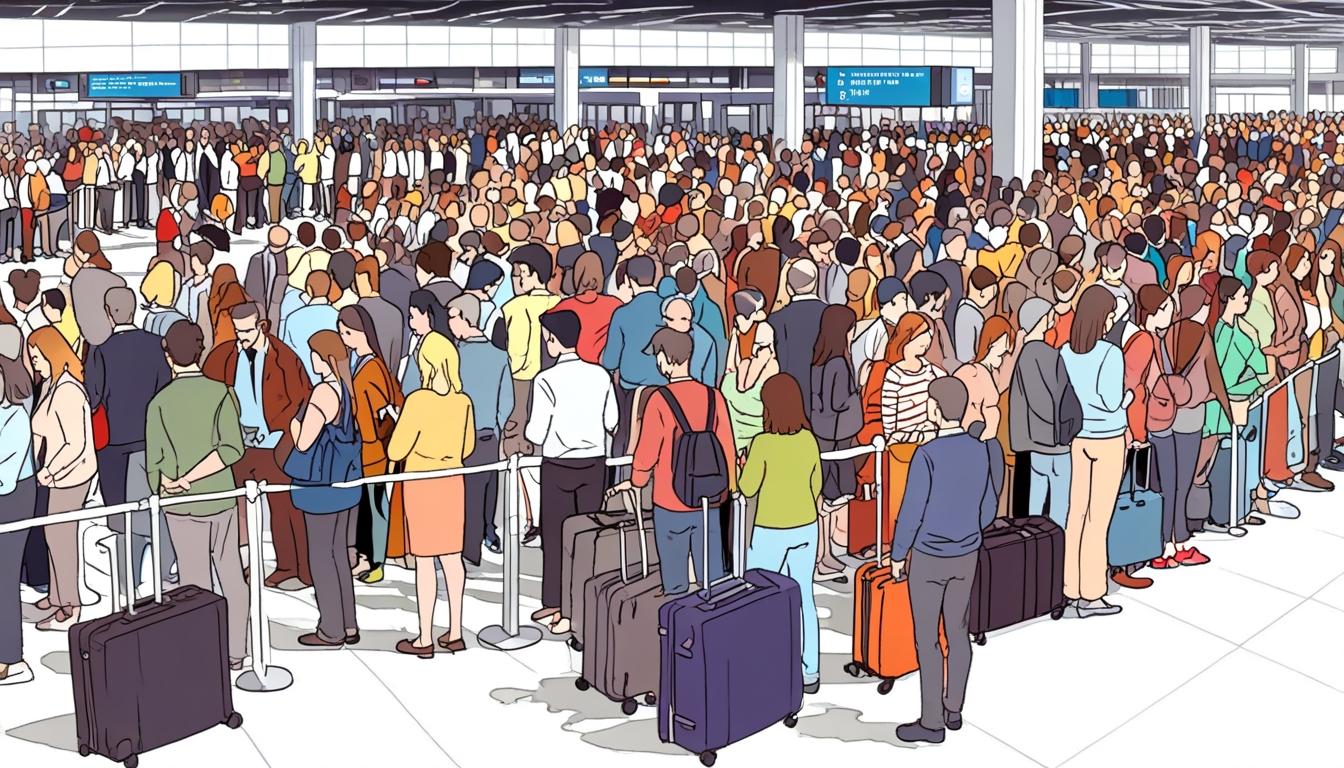
Thousands of passengers faced significant disruption at several UK airports on Friday due to a global IT outage that led to widespread flight cancellations and delays. The IT malfunction forced airlines to cancel 167 flights scheduled to depart from UK airports, with an additional 171 flights delayed. Airports including Gatwick, Luton, Manchester, and Stansted saw long queues, with some passengers waiting for over three and a half hours.
Friday marked the busiest day of the year so far for UK air travel, with 3,214 departing flights as many families embarked on summer holidays following the end of the academic year. The global impact was also notable; aviation analytics firm Cirium reported that 5,078 flights worldwide – representing 4.6% of those scheduled – were cancelled on the same day. Several major US airlines such as United, American Airlines, and Delta were among those affected.
At Gatwick, a traveller preparing for a flight to Miami described queuing for more than three and a half hours. Similarly, the queue at Stansted extended outside the main terminal. A mother of two young boys, aged five and seven, recounted waiting in line for around two hours, noting the stress her children were experiencing.
Due to ongoing difficulties, affected passengers have been asked to leave crowded airports if their flights have been cancelled. Budget airline Ryanair, which cancelled a limited number of flights, stated, “If your flight has been cancelled, we kindly request that you leave the airport as the IT outage means we cannot currently assist passengers at the airport.” Edinburgh Airport issued a similar appeal, urging those with cancelled flights to vacate the premises and contact their airline directly.
Transport Secretary Louise Haigh confirmed that her department was "working at pace with industry and across Government on the issue," while UK air traffic control provider Nats reported its systems were "operating normally."
Travel expert Rory Boland, editor of Which? Travel, recognised the concerns of passengers affected by the IT problems. Speaking to MyLondon, he advised passengers to avoid checking in bags where possible due to long check-in queues and the increased risk of lost luggage during IT failures. He also suggested keeping essential items such as medication and keys in hand luggage. Boland noted that while compensation claims for delayed or cancelled flights were unlikely due to these extraordinary circumstances, airlines remained obligated to provide care, including meals, accommodation, and alternative travel arrangements where necessary.
The IT issues also extended to rail services, with National Rail Enquiries warning of “widespread IT issues across the entire network.” Although most train services operated as scheduled, South Western Railway reported that all its ticket vending machines were out of order due to the outage.
The disruption on this particularly busy travel day caused considerable inconvenience to thousands of passengers attempting to begin their summer holidays. The efforts of government departments and airlines continue as they seek to manage the fallout from the global IT failure.
Source: Noah Wire Services