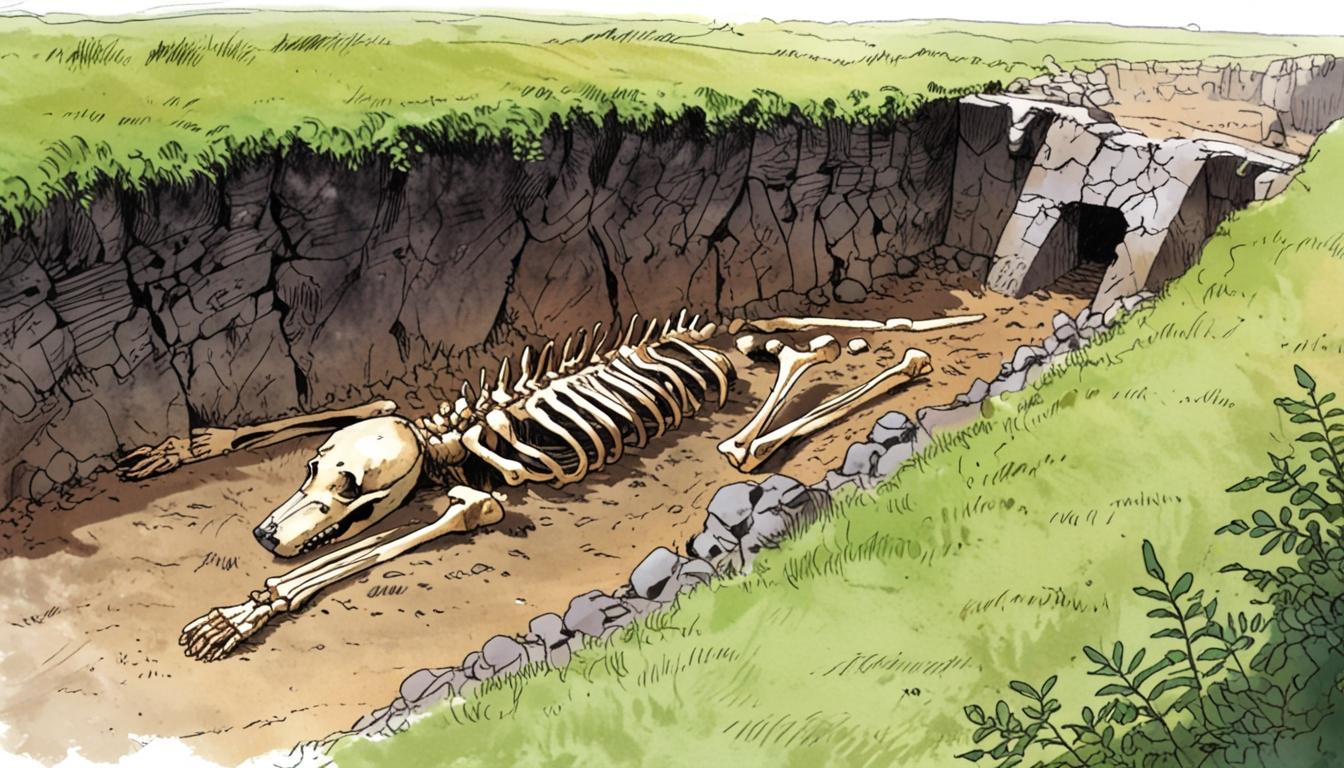
Archaeologists conducting excavations at Fonmon Castle in the Vale of Glamorgan, Wales, have made significant discoveries shedding new light on prehistoric and Early Medieval life in the region. The recent findings include a ritually buried Iron Age dog skeleton and remnants of a second prehistoric settlement near the well-known tourist site, extending the area's historical narrative well before the castle’s Norman-era origins.
The research, led by Cardiff University, builds upon previous excavations at Fonmon that unveiled an ancient cemetery dating to the 6th or 7th century. This earlier dig had revealed approximately 39 human skeletons carved from limestone bedrock, predominantly female, in unusual burial positions. Some showed evidence of heavy physical labour, osteoarthritis, and wealth, while one skeleton was of notably short stature. Researchers also found one woman’s bones disposed of in a ditch, contrasting with the respectful internment of others.
Dr Andy Seaman, Reader in early medieval archaeology at Cardiff University, explained the significance of the new Iron Age discovery located just west of the castle. The team uncovered part of an ancient settlement marked by a ditch, which is believed to have served as an entrance. At the bottom of this ditch, the complete skeleton of a dog was found deliberately placed, interpreted as a ritual act to guard or protect the settlement. He said, “The placement of the dog skeleton at the enclosure entrance aligns with similar Iron Age sites across Britain, where dogs were treated as symbolic guardians.”
Radiocarbon dating positions the dog’s remains between 700 and 500 BC, a period with relatively few known Welsh archaeological sites, making this find especially important. Additional artefacts from the trench include pottery fragments and numerous animal bones, which appear to be refuse deposits. These features are expected to provide insights into the economy, farming practices, and environment of the Iron Age communities in the area.
The original medieval cemetery excavation revealed intriguing social dynamics. Bioarchaeologist Katie Faillace of Cardiff University noted that isotopic analysis indicates many of the buried individuals were local to the region. She observed, “Some of the individuals had joint degeneration consistent with osteoarthritis, and one showed extremely short stature.” DNA analysis is currently underway and is anticipated to offer further details about the cemetery’s population in the coming months.
Mr Nigel Ford, owner of Fonmon Castle since 2019, welcomed the archaeological work. Originally opening the property as a visitor attraction and events venue, he invited the Cardiff University team to explore the site. Ford remarked, “We’re very excited by how the archaeological investigations have panned out,” adding that no one expected the discovery of the significant medieval cemetery or evidence of Iron Age occupation. Reflecting on the site’s long history, he said, “This highlights just how long people have been drawn to settle in this area, making the castle seem a relatively recent addition.”
Plans are underway for further excavations in 2025, with hopes of uncovering evidence of houses within the enclosure and continuing to explore sections of the ditch for additional clues. Dr Seaman described the discovery as a “fascinating addition to Fonmon’s history, pushing its story back beyond the Roman period into prehistoric times,” highlighting the site's deep historical significance in Welsh archaeology.
These ongoing investigations at Fonmon Castle contribute valuable knowledge about early Iron Age and Early Medieval periods in Wales, providing a unique window into ancient communities’ lifestyles, social structures, and cultural practices.
Source: Noah Wire Services