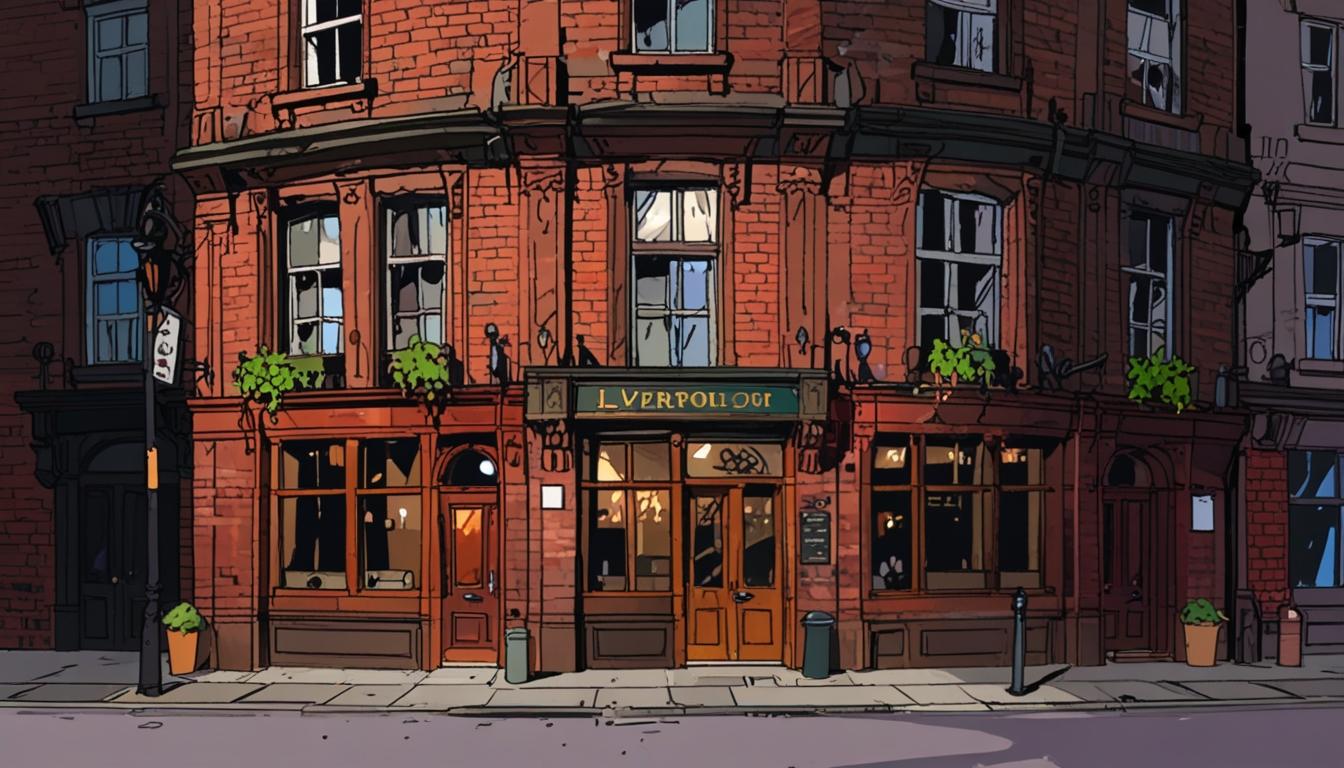
In Liverpool, several pubs have earned reputations that reflect the city's rich, if sometimes turbulent, pub culture, serving as both community hubs and, in certain cases, controversial landmarks. Over the years, some establishments have become notorious, often due to associations with criminal activity or rough atmospheres, while others have simply been characterised as old-fashioned or uninviting by some patrons. A closer look at five such Liverpool pubs reveals their histories, their downfalls, and what has followed after their closures.
One of the more infamous venues was the Eagle and Child pub in Huyton, which stood on Liverpool Road until its demolition in the mid-1990s. The “monster-sized” pub was widely regarded as a “hell hole” and a “criminals’ sanctuary,” according to retired Merseyside detective Albert Kirby, who shared his reflections with the Liverpool Echo in 2008. The establishment once hosted unusual events like a mouse racing track inside the pub, with betting on the small animals, leading on one occasion to chaos when a wager prompted a man to try eating the mice. The Eagle and Child's decline culminated in serious incidents in the mid-1990s, including an arrest linked to a firearm and multiple arson attacks within a single week, leading to its eventual demolition and replacement by a McDonald's restaurant.
Closer to Liverpool city centre, the Penny Farthing pub—later renamed the New Penny Farthing—occupied a prominent corner next to the Royal Court Theatre at St Johns Precinct until its closure nearly a decade ago. The pub was known for its colourful atmosphere that included midday drinking, offers of free bacon butties with pints, and even topless go-go dancers. The Liverpool Echo reported that while some considered it an “eyesore” and a poor reflection of the city, others held fond memories of its social scene. One commenter recalled, "Remember they wouldn't serve us because after last orders. Some customer opened his coat and offered us cans to top up our glasses – never charged us. Could only happen in the Penny Farthing." The building was taken over by the Royal Court Theatre in 2015 and subsequently underwent a complete renovation by new owners. Since 2017, it has operated as The Courtyard Bar and Kitchen, featuring an outdoor drinking area and receiving positive reviews.
Another city centre pub with a longstanding history was the Punch and Judy on Bolton Street, near Lime Street Station, reportedly linked to traditional Punch and Judy puppet shows that ran until the late 1950s. Often described as a “down market two-bar boozer” with cheap pints costing £1.20, its mock-Tudor style and quirky layout with three front doors gave it a distinctive character. The pub suffered a devastating explosion in June 2012, which caused the roof to collapse and extensive fire damage; although arrests followed, no charges were reported, and the pub was later demolished. Despite receiving a reputation as a rough establishment, patrons expressed nostalgia for the Punch and Judy as a popular meeting spot, especially before football matches.
In the south Liverpool area of Toxteth, the Inglenook pub on Ullet Road faced a downward spiral of criminal activities and violence before its closure. Known for its sizeable beer garden and suburban setting, it became the focus of police raids starting in 2005, uncovering weapons and drugs. Incidents including stabbings, assaults, noise complaints, and burglaries plagued the pub from 2005 to 2009. A particularly violent episode involving the landlord being shot in a kneecap led to the pub's closure by police. After a brief reopening, it closed permanently in 2011 and was demolished in July 2012, with a care home now standing on the site. Despite its troubled final years, many locals remember the Inglenook as a family-friendly pub during its earlier decades.
Lastly, the Dog and Gun in Carr Lane, Croxteth, was identified as a criminal hub before its closure and demolition. In 2004, the pub was forcibly shuttered after it was effectively commandeered by teenage criminal Wesley Brown and his gang. Brown exerted such control that only the front door was kept open, with gang members managing entry. Police raids revealed a cache of heroin, cocaine, and firearms inside the premises. Brown was convicted and sentenced to three and a half years in prison for possession of a firearm.
The Liverpool Echo is reporting that these pubs, each with their distinct stories of notoriety or community spirit, reflect a complex relationship between social gathering spots and the challenges faced by some venues. While some have given way to new developments, others have been transformed or replaced in efforts to revitalise their spaces within the city’s social landscape.
Source: Noah Wire Services