In the late 1980s, ambitious plans were made to develop a major theme park in the UK, aiming to rival the success of American ventures like Disney parks. Known as “WonderWorld,” the project was designed to be the British answer to the US theme park phenomenon, with an investment commitment of £346 million. The park was set to be constructed in Weldon, near Corby, on a 1,000-acre site close to where Priors Hall Park currently exists.
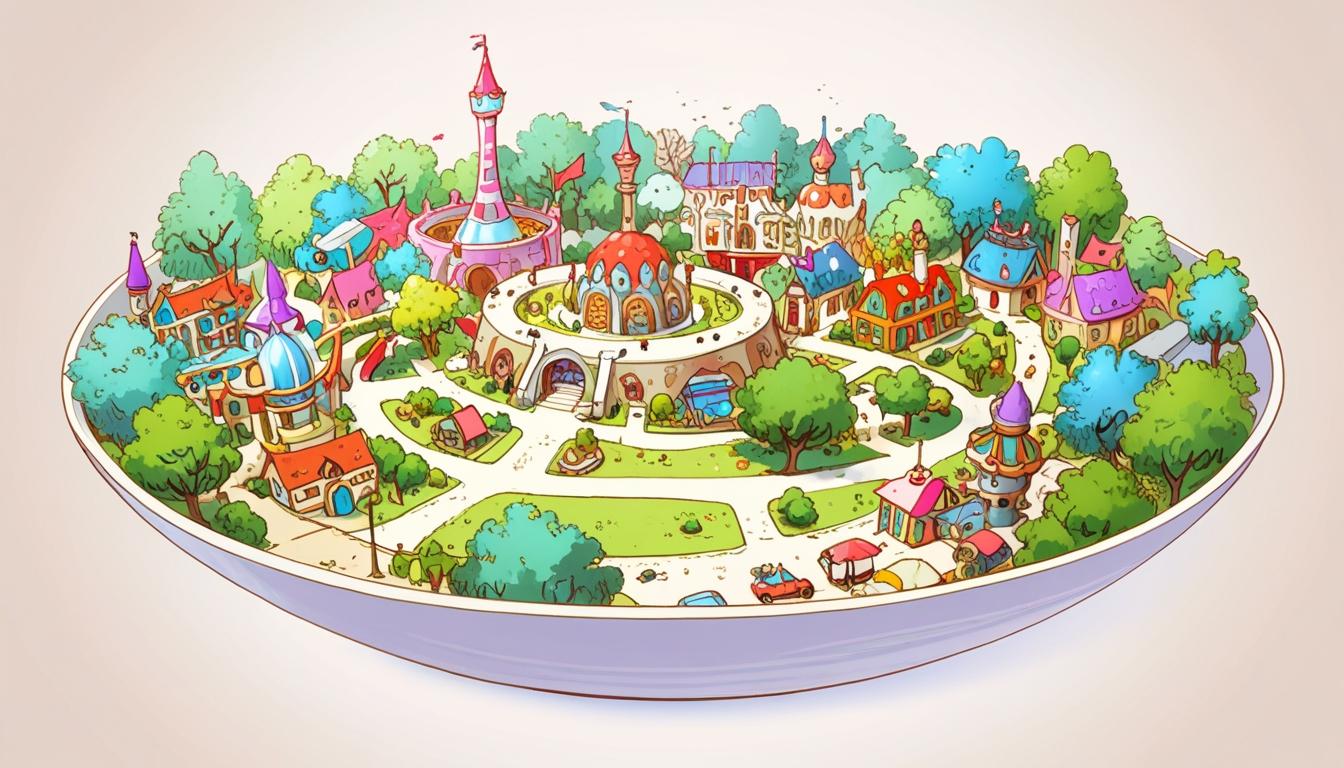
The idea for WonderWorld originated in 1980, and by 1989, there were detailed plans for a park featuring 13 themed villages, hotels, and rides notably designed by Terry Gilliam of Monty Python fame. The concept drew inspiration partly from Disney’s Epcot Center in Orlando, which opened in 1982 and is distinguished by its iconic Spaceship Earth attraction housed in a spherical structure. Similarly, WonderWorld was to centre around a 700-metre diameter bowl with a themed village set within it. The vision was to combine both entertainment and educational elements, with a focus on participation.
Additional proposed features included a mock safari, a 10,000-seat stadium for indoor sports events, and a concert arena. The development was poised to become a family resort destination with accommodation options on site.
The plan gained some momentum as a BBC Look East report from 1989 showed the WonderWorld chairman handing over keys to an international construction firm as the project prepared to commence a 39-month building programme. An initial opening was targeted for the summer of 1992. The park aimed to attract four million visitors annually, with parking available for 7,000 vehicles. From an economic perspective, the project was seen as a means to address the high unemployment rates in Corby following the 1980 closure of local steelworks, which had resulted in significant job losses and affected nearly a third of the town’s workforce. WonderWorld was expected to create 2,000 construction jobs, along with 1,000 permanent staff roles at the park and 350 seasonal positions.
Architect Derek Walker, involved with the project, expressed optimism about its potential, telling a publication in 1985, “The basic ingredients [for WonderWorld] are very simple: entertainment at the very highest level. It's participatory and it's incredibly educational. [WonderWorld] will offer the best of British design.”
Despite the promising plans and early enthusiasm, the project was ultimately not realised. Contributing challenges included rising costs, delays in planning, and difficulties securing sustained funding. In the end, the only tangible elements on site were a large WonderWorld sign and a small wooden cabin.
While the theme park never came to fruition, the area around Weldon has since been developed for residential use. More than 1,000 houses were constructed at Priors Hall Park, with plans underway to add approximately 5,000 more homes on the site.
The Independent reports that the WonderWorld project remains a historical example of ambitious development planning in the UK, reflecting both the aspirations and the obstacles faced by large-scale leisure schemes during that era.
Source: Noah Wire Services