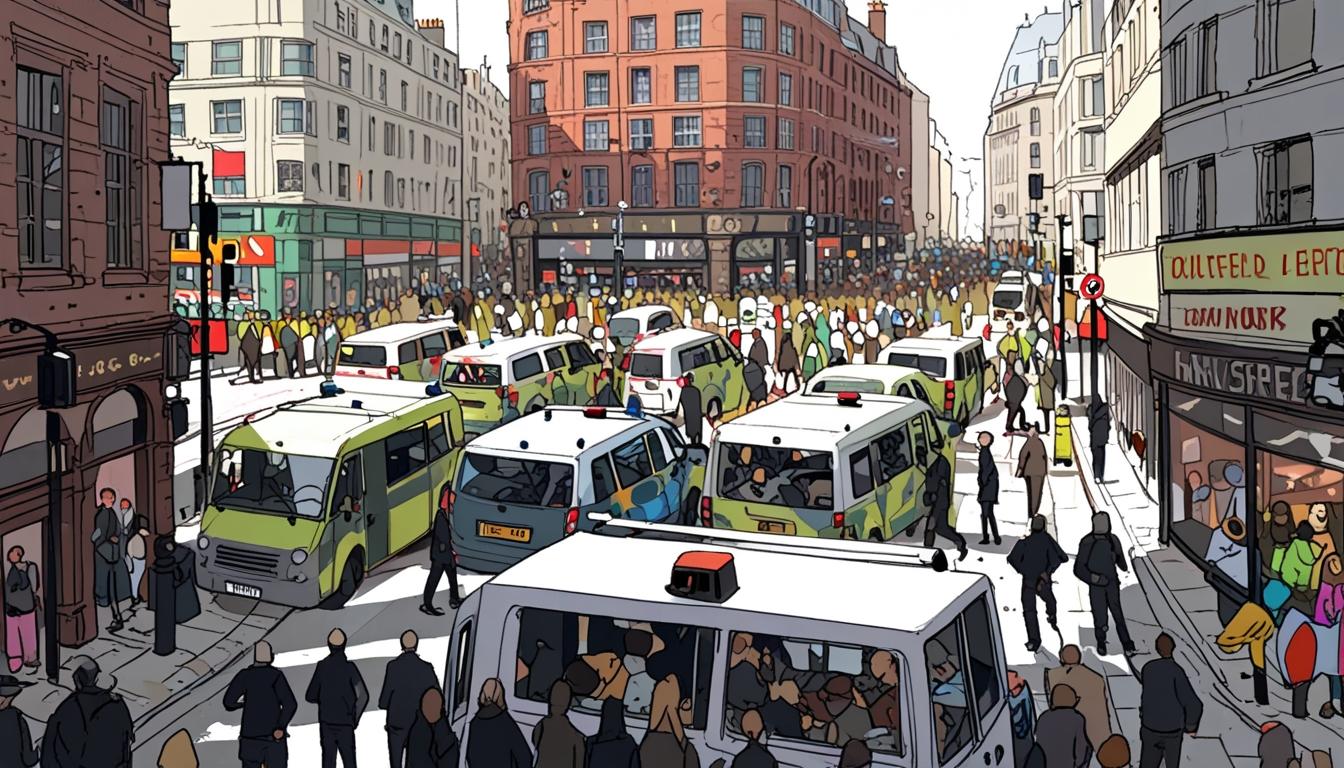
A recent comprehensive analysis has revealed the UK areas most affected by public order offences, shedding light on where incidents involving drunks, fights, and threatening behaviour have been most concentrated over the past year. The Mirror compiled data across England and Wales, showing which towns, city centres, and neighbourhoods have been hardest hit by such offences.
In 2023, police forces received more than 400,000 reports of public order crimes, encompassing a wide spectrum of incidents from violent disorder and affray to threats, drunk and disorderly conduct, and offences related to racial, religious, or homophobic hatred. Rioting also falls under this category, a reflection of the civil unrest seen last year, including protests sparked by the tragic murder of three children at a dance class in Southport.
Southport itself registered notably high levels of public order offences, with 361 reported incidents at the Southport Waterfront area in the last year, increasing from 482 the previous year. Leeds City Centre topped the list overall, with an alarming total of 1,355 offences recorded, meaning on average one such crime occurred every six and a half hours. Leicester City Centre followed closely with 1,179 offences, while Liverpool’s Central & Islington district reported 1,018 incidents.
In London, the City of London financial district—home to many of the capital’s bankers, stockbrokers, and key institutions such as the Bank of England and the London Stock Exchange—experienced 829 public order offences. This was greater than in many other parts of London, except for the Westminster district encompassing the Strand, St James, and Mayfair, which had 974 reported incidents.
Interestingly, areas not typically known for heavy nightlife also featured prominently. Longton West & Sandford Hill in Stoke-on-Trent reported 338 offences, surpassing Birmingham’s North Central & Dartmouth Circus (337), Preston Town Centre (335), and Central Westminster (318). Longton is one of the original six towns comprising Stoke-on-Trent and is not considered a hotspot for late-night gatherings, suggesting a broader distribution of public order problems beyond entertainment districts.
Under the Public Order Act 1986, these offences cover acts of violence or intimidation disturbing public peace, with serious crimes such as rioting involving at least 12 people carrying up to ten years’ imprisonment. Violent disorder involves three or more persons and can result in a maximum five-year sentence. Affray, which includes fighting or threats of violence creating public fear, also forms part of these offences. Other charges pertain to threatening or harassing behaviour, including hate crimes motivated by prejudice.
The data presented applies to "Middle Super Output Areas" (MSOAs), neighbourhoods typically housing between 7,000 and 10,000 residents, as designated by the government. However, data for Greater Manchester is absent due to non-disclosure by the local police force, and incidents at train stations are excluded as they are recorded separately by British Transport Police.
This analysis by The Mirror provides a detailed geographic overview of public order offences in England and Wales for the past year, highlighting the locations with the highest reported disturbances involving violence, threats, and disorderly conduct.
Source: Noah Wire Services