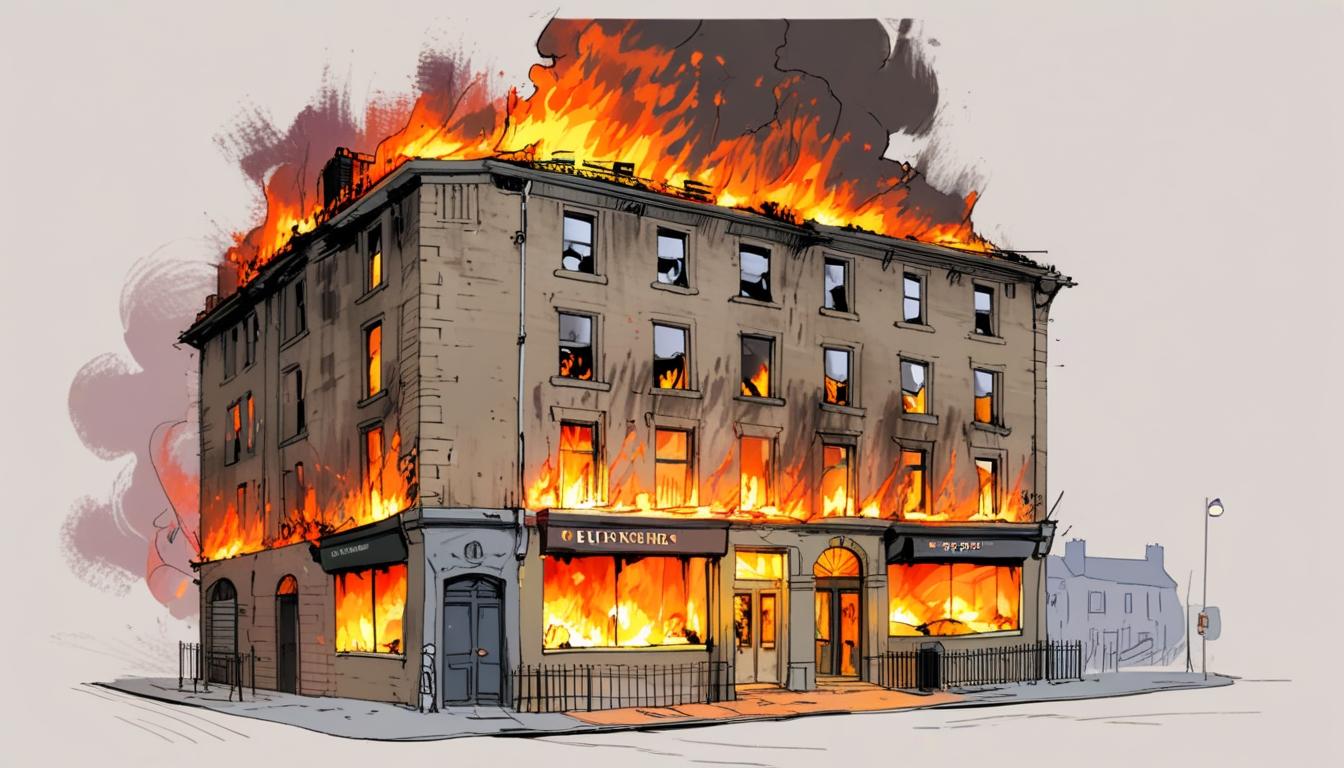
Glasgow and Edinburgh are currently experiencing a surge in violent gangland activity marked by a series of firebomb attacks linked to rival criminal groups, according to reports from the Daily Mail. The unfolding gang war is thought to revolve around clashes between three principal gangs—the Richardson family from Edinburgh, the Daniel family from Glasgow, and the Lyons gang, which has ties to the Irish Kinahan Cartel.
This renewed wave of violence appears to have been triggered by the theft of a £500,000 shipment of cocaine from the Richardson gang. The cocaine was reportedly owned by a high-level Irish criminal known only as "Mr Big," who operates out of Dubai and has been facilitating a significant influx of cocaine into Scotland. His enforcers, a group called Tamo Junto, have publicly issued threats and released videos showing incendiary attacks in Glasgow and Edinburgh, warning that "every associate, every business will be targeted" and advising rivals to "leave Scotland immediately."
The gangland conflict has brought fear to ordinary residents of Glasgow’s suburbs, with homes and businesses set alight due to their supposed allegiances. The violence is occurring despite an overall long-term reduction in murder rates in Glasgow, once Europe’s murder capital in 2005. Police Scotland and government efforts had seen homicide numbers decrease by 71% over the last two decades, though Glasgow still accounted for 18% of Scotland’s murders in 2023/24, with 10 recorded homicides that year—the highest in the country.
Former undercover police officer Simon McLean, who infiltrated Glasgow's gangs during his 40 years with the murder and drugs squads, told the Daily Mail that organised crime has effectively taken control of the city. He criticised what he described as a "soft" approach to crime enforcement in Scotland, linking it to the vacuum that permits criminal gangs to flourish. "Right now, the organised crime has taken over," McLean said, explaining that turf wars are largely driven by the lucrative drug trade and a marketplace mentality underpinning gang rivalries.
McLean also highlighted past police operations, including one in Glasgow's Govan area that temporarily halted drug sales but ultimately displaced demand rather than reducing it. He argued that to significantly diminish gang power, drug laws themselves must be reformed: "Decriminalising, regulating and taxing drugs... could lead to less crime, fewer deaths and more money for the public," he said.
Supporting perspectives from other sources underline the scale of Glasgow’s cocaine problem. Mark Dempster, a former drug smuggler turned addiction counsellor, described cocaine as "normalised" across all social groups in Scotland today, with dealers present in many pubs. He noted that drug-related violence often stems from debts and power struggles, recounting a tragic firebomb attack in 2011 which killed two children linked to a cocaine debt.
Anonymised comments from a former Glasgow detective echoed these concerns about the cyclical nature of gang violence and the challenges police face in preventing retaliatory attacks. The detective emphasised the gangs' capacity for violence, stating that they do not make idle threats, and warned that power vacuums resulting from arrests could provoke further struggles for control.
Several key figures within the Richardson and Daniel families are understood to be targeted within the current conflict. Notably:
- Mark Richardson, head of the Richardson clan, is serving a nearly nine-year prison sentence in solitary confinement for firearms possession and police pursuit offences.
- Dale Richardson, Mark's brother, survived a machete attack in 2021.
- David Togher, an enforcer for the Richardsons recently released from prison, is also at risk.
- Steven "Bonzo" Daniel, believed to lead the Daniel family, has been scarred in prior attacks and is thought to be in hiding abroad following recent firebombings of his and family members' homes.
- Other prominent Daniel associates, such as Francis "Fraggle" Green and Zander Sutherland, have faced violent incidents or legal troubles, including Sutherland's extradition after fleeing the UK.
The Daily Mail also documents instances where gang members have filmed themselves firebombing properties, illustrating the groups’ attempts to intimidate opponents and communities alike. One carpet shop in Bishopbriggs, owned by a Daniel associate, was firebombed in April, and a Glasgow beauty salon was similarly targeted.
The intensity of the conflict is underscored by the armed vigilante-like presence observed near attack sites, with reports of individuals sitting in vehicles surveillance-style or exiting damaged buildings shortly after firebombings.
Law enforcement response has been vigorous, with Police Scotland arresting at least 20 people linked to the recent offences. Detective Chief Superintendent David Ferry affirmed the seriousness with which the police are treating the violence. He said: "While we believe these incidents are linked to rival groups who are targeting each other, I want to make it clear this violence will not be tolerated." Ferry added that police are extensively pursuing forensic and digital lines of inquiry and encouraged public cooperation.
From a societal perspective, Professor Alistair Fraser, a criminology expert at the University of Glasgow and member of the Scottish Centre for Crime and Justice Research, noted that while violent crime rates fell significantly from 2005 to 2015 largely due to interventions like Scotland’s Violence Reduction Unit, rates have begun to rise again recently, aligning with trends seen internationally. Fraser emphasised the importance of targeted policing, youth services, and grassroots organisations in managing violence.
Government authorities reiterated support for policing, noting an investment of £1.62 billion for policing in 2025/26, and indicated that Police Scotland had recruited more officers than at any time since 2013. A Scottish Government spokesperson highlighted that overall recorded crime across Scotland is near historic lows, down 40% since 2006/07, despite the challenges facing Glasgow and Edinburgh.
The ongoing gangland violence marks a stark contrast between broadly successful crime reductions regionally and the persistent challenges posed by organised crime networks in Scotland’s largest cities. The situation remains under active police investigation, with law enforcement seeking to disrupt the violent turf wars and protect affected communities.
Source: Noah Wire Services