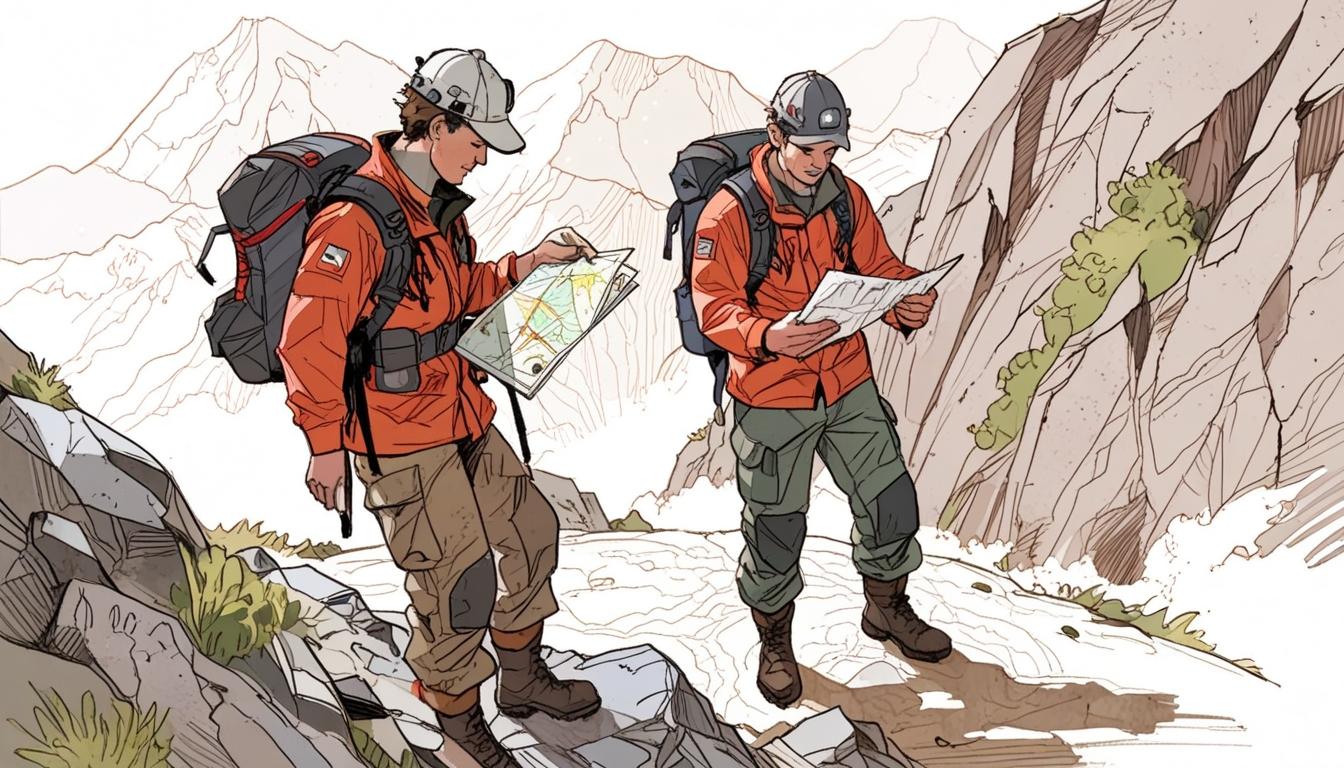
Recent data reveals a significant rise in mountain rescue callouts across the UK, highlighting a growing challenge faced by those venturing into wild and remote areas. According to figures published by Mountain Rescue England and Wales, teams of largely volunteer rescuers have been called out every day of the year for the first time, with a 24% increase in total rescues between 2019 and 2024. Notably, incidents involving individuals aged 18 to 24 have nearly doubled within this period. Comparable trends have also been observed in Scotland, indicating a nationwide pattern of escalating difficulties in navigating natural environments.
Mike Park, chief executive of Mountain Rescue England and Wales, provided insights into the situation in various popular outdoor locations including the Lake District, Eryri (Snowdonia), and Northumberland. Speaking to The Guardian, he remarked, “We know from incident reports that more and more people are tempted into risky locations by Instagram posts and the navigation apps being used aren’t always suitable for an outdoor environment.” Park emphasised that many people underestimate or overlook the real-world hazards these settings present, risks that are often absent from the curated images and simplified directions found online.
At the heart of the problem is a reliance on digital navigation tools that often prove inadequate in remote landscapes. While GPS-based apps generally offer convenience and precision in urban settings, they tend to lack detailed mapping and relevant information once users step off roads and into the wilderness. Users who become dependent on these technologies may find themselves disoriented and uncertain if such devices fail or lose signal.
Research from neuroscientists at McGill University in Montreal further underlines the potential negative impacts of this dependence. A 2020 study found that individuals with extensive lifetime experience using GPS technology showed poorer spatial memory during self-guided navigation tasks. A follow-up three years later revealed that increased GPS use corresponded with a sharper decline in hippocampal-dependent spatial memory, the area of the brain crucial for navigation. This suggests that continuous reliance on automated directions may erode people’s innate ability to navigate independently.
Beyond the technological and cognitive factors is a cultural aspect related to how modern mapping operates. Jerry Brotton, a writer and academic, remarks on the "archetypal blue dot" seen on phone screens, representing the individual at the centre of the map. In his book Four Points of the Compass, he likens this to a form of egocentrism akin to ancient Ptolemaic notions of the Earth-centred universe, where the user is the pivot of their surroundings. This perspective often neglects the broader context of the environment, focusing narrowly on immediate position rather than the terrain, hazards, or changes ahead.
Brotton also critiques mainstream navigation apps such as Google Maps and Apple Maps for prioritising commercial locations like shops and restaurants over immersive engagement with the physical world. This approach, he says, fosters a kind of spatial illiteracy where individuals remain virtually connected but environmentally detached. Such detachment poses greater risks in natural settings, where a deeper understanding of the physical landscape is essential for safety.
The convergence of these factors – increased outdoor activity fuelled in part by social media inspiration and an overreliance on imperfect navigation technology – contributes to the spike in rescue incidents. This raises questions about how best to prepare people for safe exploration of the countryside.
An advice commonly suggested involves using the Ordnance Survey’s detailed mapping app, which requires a subscription, alongside carrying traditional paper maps and a compass as backup. Careful planning and a comprehensive understanding of routes, terrain features, and potential dangers remain crucial. Observing the whole route in advance, rather than relying solely on incremental, app-driven directions, can mitigate many risks.
There is also a broader call to enhance public knowledge of geography and outdoor navigation skills, potentially revitalising interest in these often-overlooked subjects. Bridging the gap between digital representations of the world and authentic engagement with physical environments is seen as key to reducing incidents of disorientation and rescue in wilderness areas.
As reliance on digital tools continues to shape how people experience the outdoors, these developments underscore ongoing challenges in balancing technological convenience with practical skills and environmental awareness.
Source: Noah Wire Services