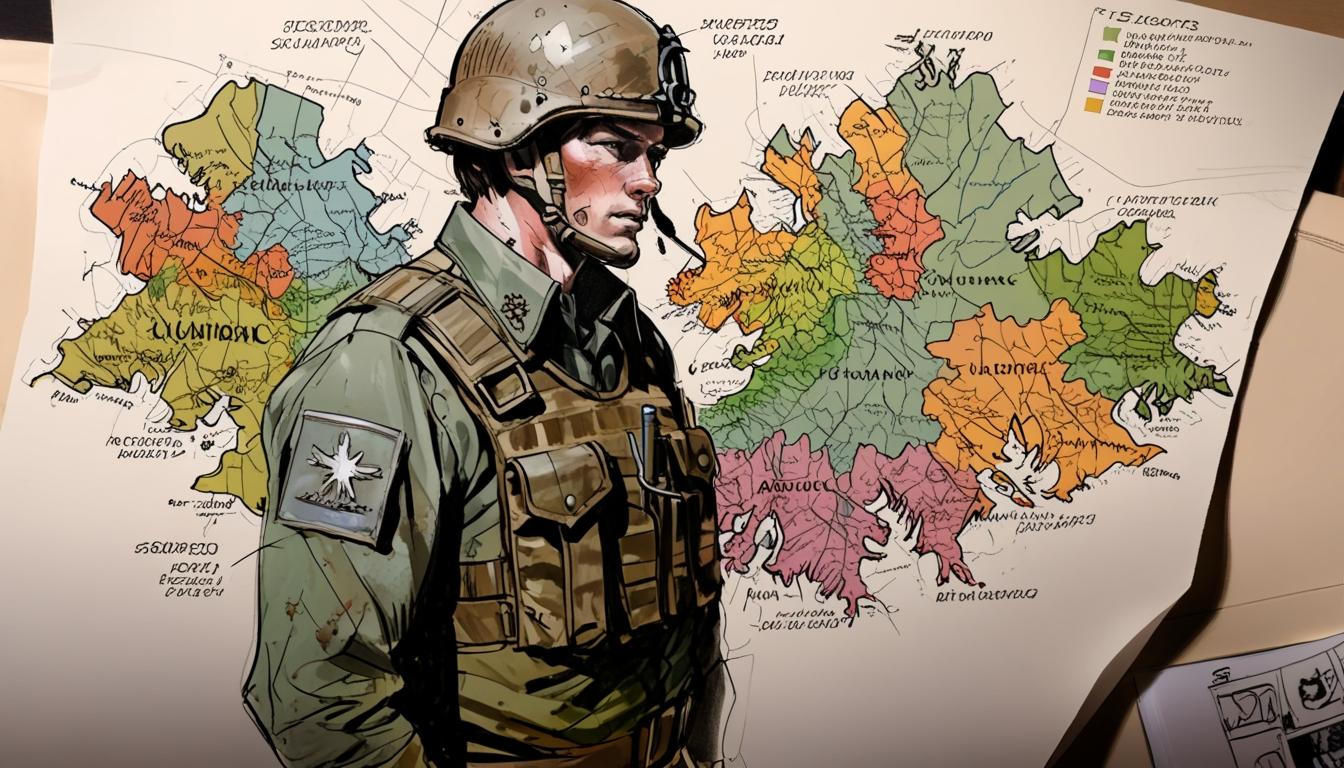
A newly released video game titled Northern Ireland ’74 allows players to assume the role of the British security forces during the Troubles, a conflict that deeply affected Northern Ireland in the 1970s. The game, available in early-access form on PCs, has been developed by Johan Nagel, a former infantry platoon commander in the South African army and retired banking executive, under his one-man brand Every Single Soldier.
Northern Ireland ’74 markets itself as the first strategy game to capture the “essence of the entire Northern Ireland conflict,” aiming to provide an authentic representation of the Troubles. Players take on complex roles, deploying troops, recruiting informers, conducting special forces operations, and managing political objectives designed to prevent rioting and foster a “just and fair peace.” In-game objectives include supporting the Royal Ulster Constabulary, maintaining British authority, containing the Irish Republican Army (IRA), and pursuing its leadership.
Speaking to The Irish News from Thailand, Mr Nagel described the game as a turn-based strategy experience rather than an action “shoot-em-up.” He emphasised that the game is intended primarily for military enthusiasts. Drawing on his own background in counter-insurgency warfare, having previously developed games based on conflicts such as the South African Border War and the Vietnam and Afghanistan wars, Mr Nagel explained why he was drawn to the Northern Ireland conflict.
“The complexity of the conflict, particularly because it involved two paramilitary sides—republicans and loyalists—made it unique,” he said. “It’s the first game I’ve made that deals with that.” He highlighted the extensive research behind the project, including consultations with military contacts and meticulous efforts to ensure authenticity in aspects such as geography and insignia.
Mr Nagel acknowledged that the subject matter is highly politically sensitive, which has historically discouraged video game development centred on the Troubles. He anticipates some level of criticism or “kick-back” but hopes the game’s focus on strategy and historical complexity will be appreciated. “The British army was placed in a difficult position in this conflict—all I’m doing is giving players the option of experiencing that,” he said.
The developer also noted that early-access release allows the community to provide feedback, helping to refine authenticity over time. However, he admitted that the game, while more educational than purely entertainment-focused, is inevitably an abstraction rather than a fully accurate historical simulation.
Despite the developer’s attempts at balance and authenticity, the game has already attracted criticism. Mark Thompson of the victims’ group Relatives for Justice told The Irish News that Northern Ireland ’74 appeared to lack a full portrayal of the conflict’s realities. “The game doesn’t appear to show that the majority of those killed by British forces were unarmed Catholic civilians, including scores of children,” he said. Thompson voiced concern that framing the British army’s role in this way could sanitise or minimise their actions and potentially trivialise the suffering experienced by victims and their families.
Northern Ireland ’74 represents a significant entry in the niche genre of military strategy games based on real historical conflicts. Its release invites discussion on how digital media can interpret complex and sensitive historical events, particularly those marked by divided perspectives and continuing legacies in communities affected by such conflicts.
Source: Noah Wire Services