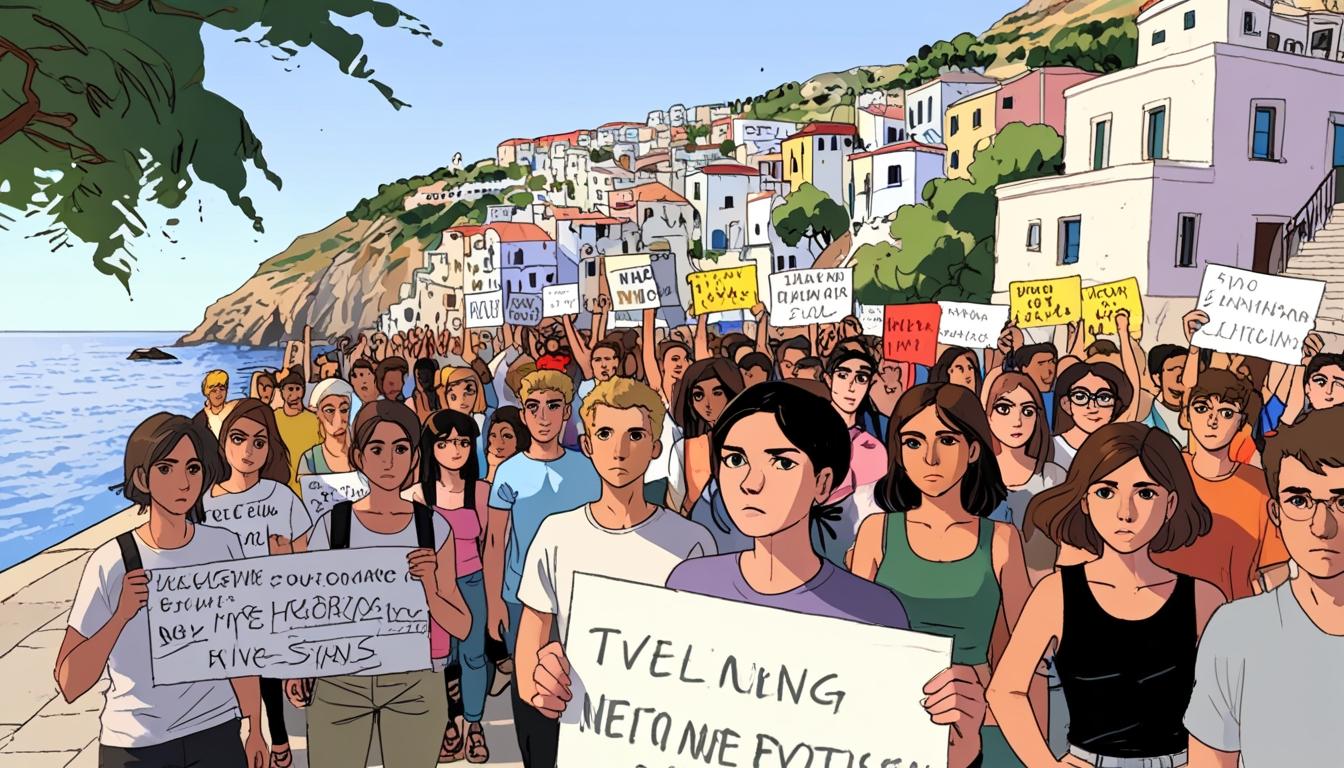
Protest groups across southern Europe have issued a warning to British tourists planning to visit popular holiday destinations this summer, signalling possible direct action aimed at curbing the impact of mass tourism. The protestors, representing communities in Spain, Italy, France and Portugal, have expressed growing frustration over soaring rents, housing shortages, and environmental degradation attributed to the booming tourism industry.
The SET European Network Against Touristification, which unites activists from 17 cities, islands, and regions, convened in Barcelona recently to discuss coordinated measures against what they term "predatory tourism." This network asserts that mass tourism has led to a significant reduction in affordable housing as properties are increasingly converted into short-term tourist accommodations, driving local rents up sharply and putting home ownership out of reach for many residents.
Elena Boschi, a 46-year-old English language teacher and campaigner from Genoa on the Italian Riviera, spoke at the summit, highlighting the urgency felt by local communities. She stated, "We want tourists to have some level of fear about the situation – without fear there is no change." Boschi emphasised the need for a policy shift towards “tourism de-growth,” underlining her community’s stance that "Our cities and regions are not for sale."
Leaders within the network did not rule out protests targeting airport terminals, which they see as symbolic entry points to mass tourism flows. Daniel Pardo, a SET Network spokesperson, commented, "It is a possibility – but it is difficult to say because each territory will decide how they want to take action, there is no one set strategy."
The scale of the issue is underscored by data showing a dramatic housing crisis in Spain, one of the top destinations for British visitors. Average rents have doubled, house prices have increased by over 44% in the last decade, and residential rental availability has halved since the pandemic began in 2020. Concurrently, short-term rental platforms such as Airbnb have seen rapid growth in listings, particularly in major cities and coastal resorts.
Public discontent has previously sparked widespread demonstrations; last summer, hundreds of thousands of Spaniards protested in 40 cities, with over 50,000 marching through Palma, Mallorca alone. Protestors brandished slogans like “Mallorca is not for sale” and “no houses without people, nor people without houses.”
Maria Cardona, a SET representative from Ibiza, conveyed the severity of the situation on her island, noting, "The housing situation is really dramatic, there are hundreds of people living in tents and in cars so I think a lot of protest groups will be prepared to take more decisive action." She also drew attention to environmental challenges, mentioning Ibiza’s water shortages that worsen during the summer months with the island’s population tripling.
Despite their strong opposition to current tourism models, several protestors clarified they are not against tourists themselves but rather the unsustainable development and social consequences that tourism can bring. One unnamed protestor said, "We are not against tourists, but what we don’t welcome is a way of being in our cities and regions that turns it into a place that is no longer nice to live in for us."
Tourism remains economically vital in the region. Spain alone attracted 94 million visitors last year, with at least 17.5 million coming from the UK, making it the world's second most visited country after France. In response to the crisis, local governments have initiated regulatory crackdowns on short-term holiday rentals. For instance, Barcelona plans to phase out its 10,000 permits for such accommodations by 2028.
Formed in 2018, the SET Network first gained attention with a manifesto addressing how mass tourism drives rent hikes, causes the disappearance of local shops, and limits employment opportunities to low-wage jobs. At the Barcelona summit, a leaflet distributed to participants declared: "Early action aimed at imposing limits on tourism is an expression of a growing collective awareness that transcends borders. Each demonstration marks a moment, and perhaps, a turning point – we must push for the changes and policies that our cities and regions, the people who live in them and the whole planet need."
This concerted effort by various European communities highlights an increasingly organised resistance to the effects of mass tourism, with summer 2024 expected to see intensified actions from local protest groups in some of Europe’s most popular holiday regions.
Source: Noah Wire Services