The United Kingdom has experienced a historic surge in wildfires during the first four months of 2025, with more than 113 square miles (292 square kilometres or 29,200 hectares) of land consumed by fire, surpassing the previous record set in 2019. Data from the Global Wildfire Information System (GWIS) indicates that this figure exceeds the entirety of the 2019 wildfire season, when 108 square miles (281 square kilometres) were burnt. Experts are warning that the wildfire threat may escalate further as the usual peak season approaches.
This unprecedented level of burning has been chiefly observed in regions including the Scottish Highlands, Northern Ireland, and Wales. Notably, a fire in the Galloway Forest Park in south-west Scotland scorched approximately 25 square miles (65 square kilometres) according to BBC analysis. Another major blaze situated 16 miles (25 kilometres) from Aberystwyth ravaged around 20 square miles (50 square kilometres), while a fire at Abergwesyn Common in Powys, Wales, affected six square miles (16 square kilometres).
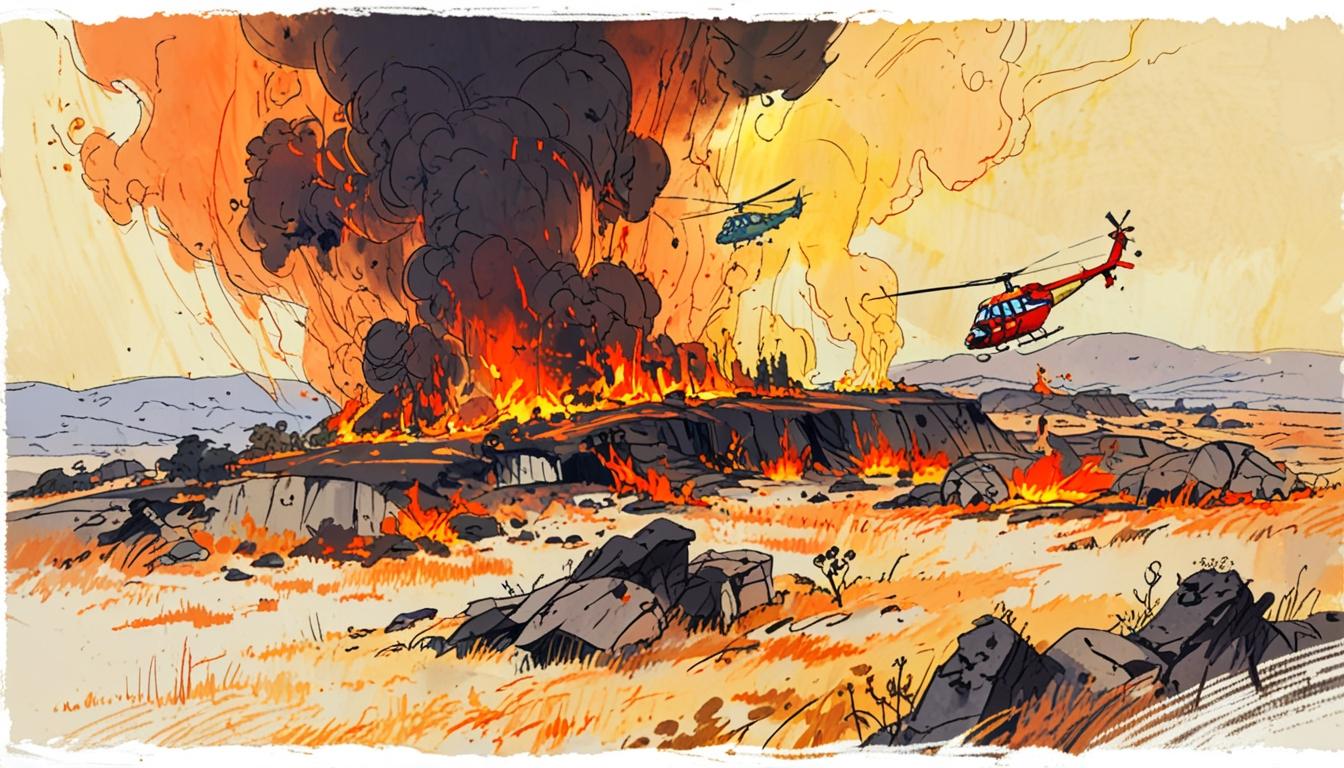
The most devastating outbreak occurred over a single week between April 2 and April 8, during which over 69 square miles (180 square kilometres) of land were destroyed. Images released by the Met Office show firefighting efforts such as helicopters dousing flames on the Isle of Bute in Scotland, while police issued extreme wildfire warnings on the Isle of Arran due to dry weather combined with strong winds.
Oliver Claydon, a spokesperson for the Met Office, attributed the record-breaking wildfires to a combination of weather factors. Speaking to MailOnline, he explained: "During dry Springs, there is an elevated chance of wildfire outbreaks in grassland and heather heaths. This is often due to the presence of dead undergrowth from the previous year, together with a lack of new plant growth that might otherwise impede the ignition and spread of fires." He further noted that the exceptionally sunny and dry spring followed a wet autumn and winter, which promoted abundant vegetation acting as fuel for fires.
Supporting this, Met Office data recorded March 2025 as the sunniest since records began in 1910, with some areas of Wales and England receiving 150 percent of average sunshine. Meanwhile, rainfall was significantly below normal levels, with the UK receiving only 43 percent of the typical March precipitation. These dry and warm conditions led the Met Office to raise the fire risk level to 'severe' across England, Wales, Northern Ireland, and parts of Scotland by early April.
Experts indicate that although some wildfires are ignited deliberately or accidentally by humans, natural conditions this year have created particularly favourable environments for fires to ignite and spread rapidly. The Met Office has linked the exceptionally dry spring and recent widespread fires to ongoing climate change. Mr Claydon remarked, "Current climate change projections suggest that we are likely to see an increase in the conditions needed for wildfire across the UK as temperatures increase, and spells of low rainfall become more common."
Research by the Met Office previously found that the record-breaking wildfires during the UK's 2022 heatwave were made at least six times more likely due to human-caused climate change. While recent wet weather has suppressed this month's wildfires, the full wildfire season typically peaks later in the summer when vegetation is driest again. Mr Claydon commented, "We are of course still in spring, but further dry, warm and breezy spells could again increase the wildfire risk through summer." However, he also said it is "too far ahead to make any predictions for the summer ahead at this stage."
Guillermo Rein, professor of fire science at Imperial College London, expressed concern for the summer wildfire outlook. Speaking to the BBC, he said, "My number one worry is what is going to happen in the summer. There are fewer wildfires but they are bigger and they can actually be seriously catastrophic. You can have 100 [small] wildfires across the whole country and all of them can be handled in one day, or you could have one summer wildfire that actually cannot be stopped in a week and actually goes on to burn houses."
The surge in wildfire activity inevitably places additional strain on the UK's firefighting resources. A spokesperson for the National Fire Chiefs Council told MailOnline, "So far this year, we have experienced more than double the number of wildfires we saw for the same period in 2022 – which went on to be a record year for wildfires. It is early days yet, but if we continue to have warm weather and rising wildfire numbers, then we could surpass what we saw in 2022."
The Council also emphasised the role of human behaviour in starting fires, warning that "one inconsiderate action or small mistake can lead to a significant wildfire." They advised caution to the public, urging people to avoid using disposable barbecues in open countryside, parks, and moorland areas, and to take care not to discard cigarettes, matches, or glass bottles that could ignite dry vegetation.
The current wildfire situation in the UK highlights the complex interaction of weather patterns, vegetation conditions, and human factors. Monitoring and preventative measures remain central as authorities and communities navigate an increasingly challenging wildfire season.
Source: Noah Wire Services