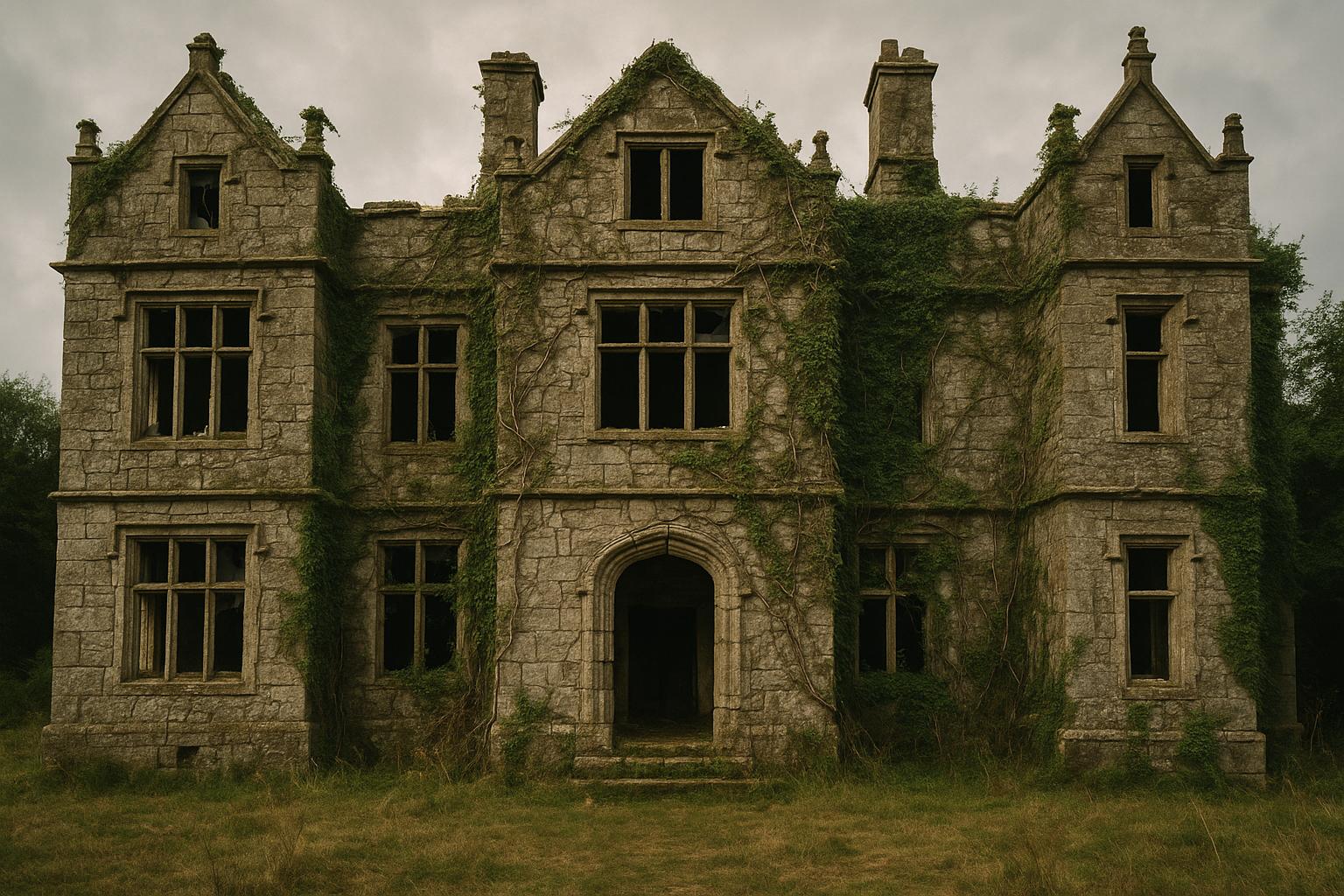
Historic England has announced the addition of 138 buildings to its Heritage at Risk Register for 2025, highlighting a continuing concern over the preservation of England’s architectural and historic sites. This surge brings the total number of England’s heritage sites considered under threat from decay, neglect, or inappropriate development to 4,891. Among the newly listed sites, there are a variety of landmarks that span from ancient Roman remains to medieval churches and important medical heritage locations, underscoring the range and richness of England’s historic fabric.
One of the notable new entries is the Hill Garden Pergola on Hampstead Heath in London, a hidden gem inspired by Italian Renaissance architecture. Built nearly 125 years ago by architect Thomas Mawson for Lord Leverhulme, the Georgian structure is suffering from material deterioration and neglect of its lush garden setting. Historic England is currently developing a conservation strategy aimed at rescuing this iconic site. Visitors to Hampstead Heath can access the garden year-round, though some areas are temporarily closed for maintenance.
In Gloucestershire lies Dr Jenner’s Hut in the Garden of the Chantry, a small rustic building of profound historical significance. This is where Edward Jenner carried out the world’s first vaccination against smallpox in 1796, earning him recognition as the father of immunology. Known as the “Temple of Vaccinia,” the hut is in poor condition, with its thatched roof and masonry urgently in need of repair. The site, alongside the adjoining Grade II* listed 18th-century house, remains open to the public and serves as a reminder of Jenner’s life-saving legacy.
On the Isle of Wight, Brading Roman Villa stands as one of the finest Roman archaeological sites in the UK, featuring one of the few surviving hypocaust heating systems. Dating back to around AD 100, the site illustrates Roman domestic innovation with heated floors and bath-houses. However, the protective building sheltering the hypocaust is now failing, necessitating urgent repair to safeguard it from environmental exposure and damage caused by burrowing animals. Visitors can explore the villa through its museum and amenities.
In Cambridgeshire, the Church of St Wendreda in March presents another critical addition to the at-risk register. The only church in the UK dedicated to St Wendreda, a 7th-century Anglo-Saxon saint reputed for healing miracles, it boasts an irreplaceable double hammerbeam roof adorned with 118 intricately carved oak angels and saints. This stunning medieval structure faces severe structural threats that endanger its future, and the local church community is engaged in a fundraising campaign to meet the estimated £250,000 essential repair costs.
Finally, buildings 26 and 21 at Cromford Mills in Derbyshire, part of the world’s first successful water-powered cotton spinning mill established by Richard Arkwright in 1771, have fallen into very poor condition. These worker cottages, dating from around 1780, exemplify early industrial heritage. Historic England has awarded about £25,000 to support project development work, including feasibility studies for sustainable adaptive reuse to ensure their protection.
While the addition of these sites to the Heritage at Risk Register draws attention to the vulnerabilities faced by England’s historic places, it is part of a broader cycle of conservation triumphs and challenges. For 2025, Historic England also celebrates the removal of 129 sites from the register, indicating efforts to secure their futures have succeeded. Among these are Victorian engineering marvel Papplewick Pumping Station, a restored Grade II listed public toilet building near Bruce Grove station in Tottenham now serving as a community space and café, and the Rockingham Kiln near Rotherham, a rare bottle-shaped pottery kiln that hosted royal commissions. Other saved sites include Well Meadow Street Conservation Area in Sheffield and the No.7 Bottle Shop in St Helens, which is progressing toward preservation.
The register itself serves both as a call to action and a resource for public awareness, with Historic England providing an interactive online map to explore sites at risk nationwide. The organisation encourages public engagement, whether by visiting these heritage places, supporting local conservation groups, or helping to raise funds.
Different regions of England face unique conservation challenges. For example, Midlands landmarks such as Waltham Windmill, a rare working six-sail mill, have been added to the risk register partly due to climate change impacts. In London, sites like Stoke Newington Town Hall and Charlton House have joined the list, highlighting urban preservation pressures. Gloucester’s at-risk sites include historic structures affected by vegetation growth and vandalism.
This annual register, now widely recognised as an essential tool in heritage conservation, also invites comparison with efforts across Europe, where similar registers play crucial roles in safeguarding cultural heritage under increasing environmental and developmental pressures.
Historic England’s co-CEOs Claudia Kenyatta CBE and Emma Squire CBE emphasise that reusing historic buildings often represents the best path to protecting them, creating local places of connection and joy. Their message calls for a unified community effort, combining professional conservation with grassroots support to ensure these irreplaceable sites endure for future generations.
📌 Reference Map:
- [1] (Daily Mail) - Paragraphs 1-13, 17-18
- [2] (Historic England Findings) - Paragraphs 1, 17
- [3] (Historic England Register) - Paragraph 16
- [4] (Gloucester 500) - Paragraph 14
- [5] (ITV News Central) - Paragraph 15
- [6] (Evening Standard) - Paragraph 15
- [7] (Euronews) - Paragraph 16
Source: Noah Wire Services