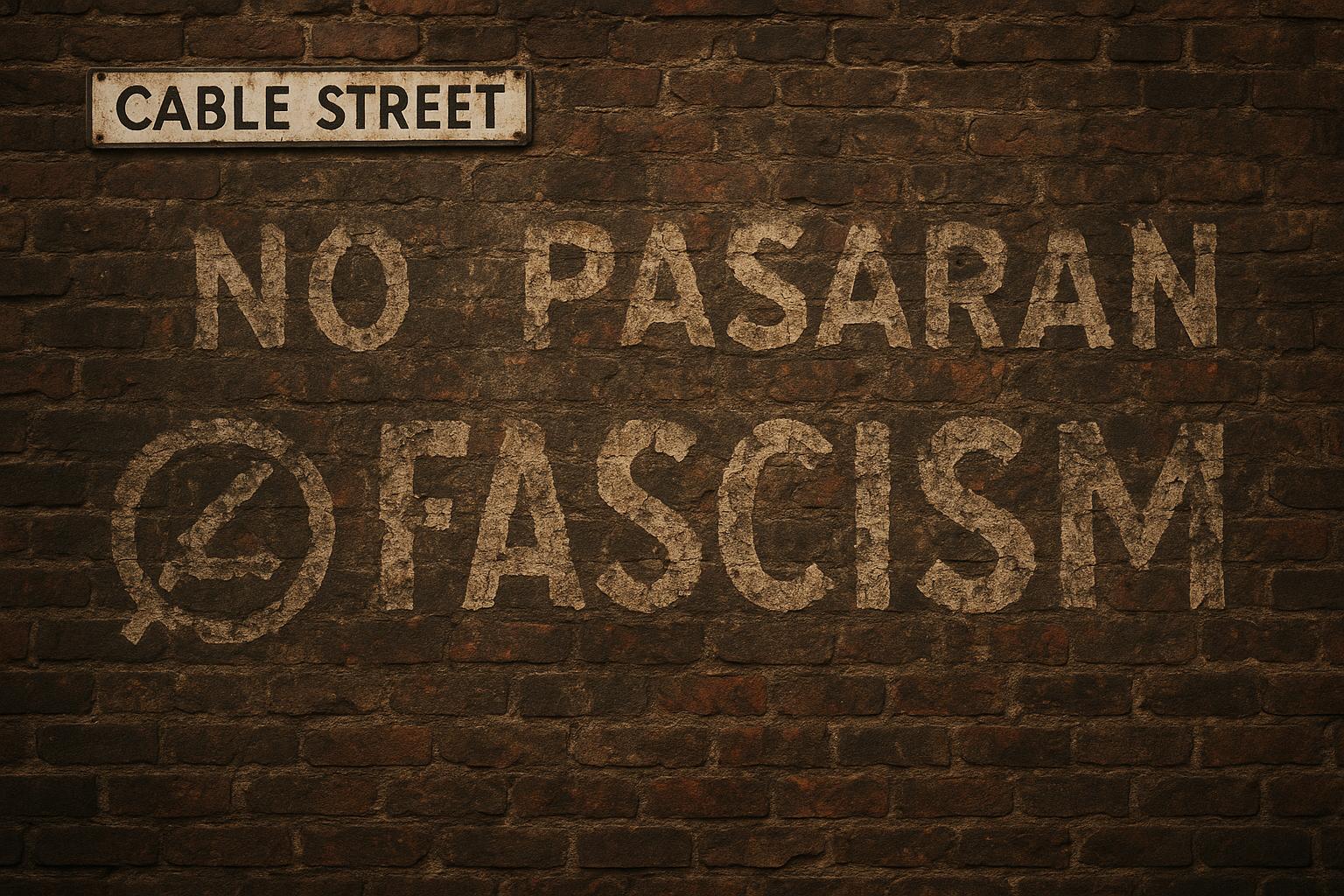
The East End of London, a historically working-class and ethnically diverse area, remains a focal point in the ongoing struggle against far-right movements—a conflict that echoes events from nearly a century ago. Glyn Robbins, co-founder of United East End, an anti-far right coalition, emphasises the symbolic importance of the area for far-right groups: for them, marching through the East End is akin to reaching Wembley Stadium—the ultimate goal. His group has seen many far-right attempts over the years and stresses that allowing such marches would signify open season across the country.
The East End’s narrative is deeply intertwined with historical resistance to fascism. The most iconic moment came 89 years ago in October 1936, with the Battle of Cable Street. Local residents, notably including British Jews, trade unionists, and socialists, successfully blocked Oswald Mosley’s British Union of Fascists from marching through Whitechapel. The event has since become emblematic of grassroots anti-fascist defiance, commemorated by murals and plaques in the area. This moment set a precedent followed by resistance to wider far-right movements, such as the National Front and the British National Party (BNP) in later decades.
In 2025, similar dynamics are playing out once again. The far-right UK Independence Party (Ukip) recently attempted to organise a "crusade on Whitechapel," within Tower Hamlets, a borough whose demographic makeup—40% Muslim with a significant EU-born population—stands in contrast to far-right narratives of homogeneity. The Metropolitan Police preemptively banned the march citing risks of "serious disorder." While this prevented the far-right gathering, counter-protesters remain determined to publicly oppose such groups continuing the legacy of resistance in the East End.
The political context around these tensions is complex. Tower Hamlets council has recently highlighted the cultural significance of dual-language signs and expressions of local identity, even as right-wing influencers like Tommy Robinson sought to inflame divisions by publishing photos of Muslim councillors and deriding bilingualism in public spaces. The borough also faces socio-economic challenges including the highest child poverty rate in England and Wales, alongside significant regeneration and gentrification—factors that fuel social tensions amid struggles over identity and belonging.
Safia Jama, CEO of the Women’s Inclusive Team charity, expressed concerns over the safety of minority communities amid the heightened activism of far-right agitators. Jama’s perspective underscores how these ideological conflicts are not abstract political battles but impact the lived experiences and safety of residents. Meanwhile, Tower Hamlets' Mayor Lutfur Rahman, a British Bengali leader who has served multiple terms despite controversy, highlights progressive policies to uplift the community through social welfare, education bursaries, and housing investments, striving to build a cohesive and inclusive borough despite far-right provocations.
Community leaders like Rev James Olanipekun of the Tower Hamlets interfaith forum emphasise hope and unity amidst adversity. Public events such as the September festival celebrating the borough’s cultural diversity, complete with Bengali, Somali, Chinese, and Jewish cultural expressions, represent a vibrant counter-narrative to far-right divisiveness. These communal celebrations serve as affirmations of the East End’s character and the resilience of its people.
Nevertheless, this revival of far-right activity in the East End is viewed with alarm by many, who see parallels with the 1930s and later far-right surges. Dave Rosenberg, a local historian and tour guide, notes the difficulty in balancing the relief felt by communities targeted by such movements with concerns about increasing police powers to ban demonstrations. He points to a recurring theme: far-right groups perceive the East End as their territory, resenting its diverse, working-class population as invaders.
This ongoing battle in the East End is not just a local chapter but part of a broader pattern of far-right agitation and community resistance characteristic of Britain's social history. The proximity to financial hubs like Canary Wharf adds a layer of contemporary economic contrast against enduring social inequalities, complicating the picture further. As community organisers, local politicians, and residents strive to uphold a vision of an inclusive, multicultural East End, the shadow of past and present far-right threats looms large, demanding vigilance and active engagement to prevent history from repeating itself in its darkest forms.
📌 Reference Map:
- Paragraph 1 – [1] (The Guardian), [4] (Wikipedia: East End of London)
- Paragraph 2 – [1] (The Guardian), [3] (Wikipedia: Battle of Cable Street), [6] (Time Magazine)
- Paragraph 3 – [1] (The Guardian), [5] (Ukip News)
- Paragraph 4 – [1] (The Guardian)
- Paragraph 5 – [1] (The Guardian)
- Paragraph 6 – [1] (The Guardian)
- Paragraph 7 – [1] (The Guardian)
- Paragraph 8 – [1] (The Guardian), [4] (Wikipedia: East End of London)
Source: Noah Wire Services