South Sudan Claims World's Largest Land Mammal Migration Amid Rising Poaching Concerns
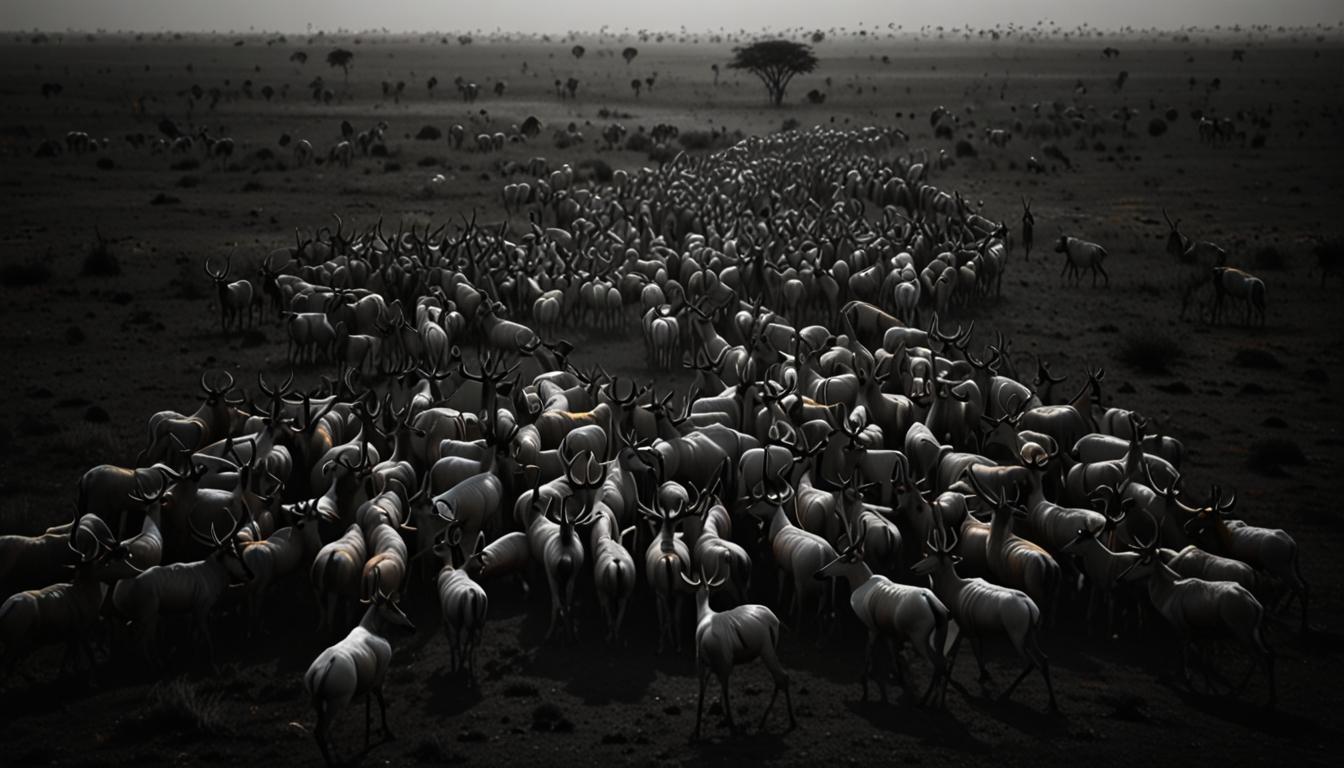
South Sudan has reported the largest land mammal migration on Earth, involving approximately 6 million antelope, based on an extensive aerial wildlife survey conducted over two weeks last year. This migration surpasses the well-known wildebeest movement in Tanzania and Kenya's Serengeti, which involves around 1.36 million animals.
The survey was a combined effort by the nonprofit African Parks and the South Sudanese government, spanning 46,000 square miles and covering two national parks and adjacent areas. More than 60,000 photos and over a hundred collared animals were used to estimate the numbers.
The migration includes four main antelope species: the white-eared kob, tiang, Mongalla gazelle, and bohor reedbuck. Despite the large antelope numbers, other non-migratory species such as hippos, elephants, and warthogs have seen significant declines over the past 40 years.
South Sudan, still recovering from prolonged civil conflict, faces rising commercial poaching, compounded by widespread weapons, limited law enforcement, and a lack of resources for the wildlife ministry. Poaching and habitat disruption are exacerbated by new roads giving easier access to markets, and crop failures pushing people to hunt for food.
President Salva Kiir Mayardit emphasized the potential for transforming the migration into a sustainable tourism industry and urged enhanced training and resources for wildlife rangers.
The migration's route covers a vast region from east of the Nile in Badingilo and Boma national parks into Ethiopia, an area comparable to the size of Georgia, USA. Monitoring and protecting this extensive migration area remains a significant challenge amid ongoing developmental pressures.
Despite the spectacular scale of this migration, significant investment and conservation efforts are required to balance the preservation of wildlife with the country’s development needs.