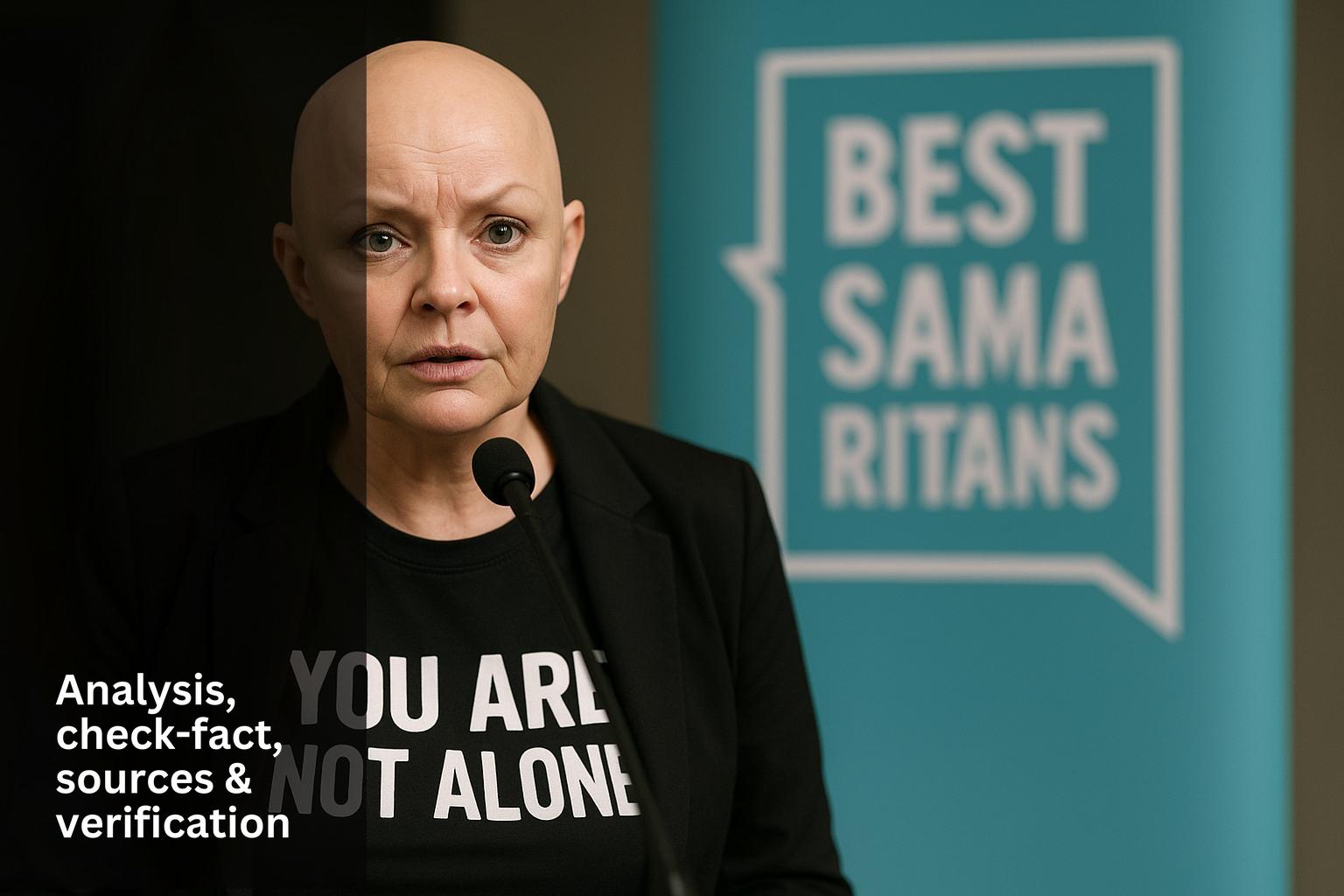
Shoppers and commuters are stopping to look as Gail Porter fronts Samaritans’ Bring Someone’s Future Back winter campaign, using a striking 3D billboard in London to spark conversations about suicide prevention. The former TV presenter speaks candidly about homelessness, mental health and why small acts of listening can change lives this Christmas.
- Personal testimony: Gail Porter, 54, says sleeping on a bench in Hampstead Heath and sofa-surfing after an unexpected tax bill left lasting emotional marks.
- Campaign design: A 3D billboard on Hammersmith Bridge Road features symbolic items , trainers and a wedding dress , chosen by Samaritans caller Layla McBain to represent a hopeful future.
- Practical ask: A donation of £10 helps keep a Samaritan volunteer available to answer a potentially life-saving call.
- Why it matters: Samaritans volunteers answer a call for help every 10 seconds, and one in four people experience suicidal thoughts in their lifetime.
- Comfort cue: Gail credits the Samaritans’ listening approach with feeling “like a huge lift off my shoulder,” offering comfort rather than judgement.
Gail Porter’s frank account makes the campaign feel immediate and human
Gail doesn’t shy away from the gritty details: after a breakdown and an unforeseen tax demand she found herself briefly sleeping on a bench in Hampstead Heath and then sofa-surfing for months. That memory made her avoid the park for years, she says, until she felt emotionally ready to return. There’s a quiet sensory truth to that image , the cold bench, the anxious letters piling up , that the campaign taps into.
Her story reads like the best kind of public-service message because it’s rooted in lived experience. Gail was later sectioned under the Mental Health Act in 2011 and reached out to Samaritans in 2012 when she felt medical help had failed her. The relief she describes when someone simply listened is the emotional centre of the campaign.
The 3D billboard turns everyday objects into a hopeful narrative
Walk past the billboard on Hammersmith Bridge Road and you won’t just see print, you’ll see life props: trainers chosen by Layla McBain to symbolise running toward a future, and a wedding dress to mark a planned new chapter. It’s tactile and a little theatrical, and that’s deliberate , big, tangible objects stop people on the pavement and start conversations.
Gail helped design the installation with Layla, a Samaritans caller who lost her mother to suicide as a child and has since rebuilt a life she can imagine. That kind of visual storytelling makes an abstract idea , “bring someone’s future back” , feel possible and everyday, not distant or preachy.
This campaign sits inside a wider push for simple, lifesaving action
Samaritans says their volunteers answer a call for help every 10 seconds, and with reports of rising suicidal thoughts and attempts, the charity is clear that services are urgently needed. Gail’s ambassadorship is part of a broader effort to normalise reaching out and to remind people that small acts , a phone call, a donation, a conversation , can be decisive.
There’s also a practical ask: a £10 gift helps ensure a volunteer can answer a potentially life-saving call. The charity’s helpline 116 123, email [email protected] and branch visits remain available as 24-hour support options.
Why listening can be more powerful than quick fixes
Gail contrasts the Samaritans’ approach with her previous experiences of being “pushed from pillar to post” in the NHS, where advice often felt like a default prescription of tablets rather than a listening ear. For her, the difference was emotional: speaking to someone who cared lifted a huge weight and didn’t come with judgement.
That’s the simple insight behind the campaign. People who feel alone often don’t need grand gestures; they need someone to hear them. It’s a small emotional cue that can change a moment , and sometimes, a life.
What this means for the public and what you can do today
Seeing the billboard might stop you, but the campaign wants more than attention; it wants action. Talk to someone this winter, check on friends and family, and consider donating to keep the helpline open. If you’re struggling, calling 116 123 or emailing [email protected] can be the lift off your shoulder that Gail remembers.
And for those wanting to help quietly, even small donations help keep volunteers on the other end of the line.
Ready to make a small gesture that could matter? Check current details and donate at samaritans.org/donate.