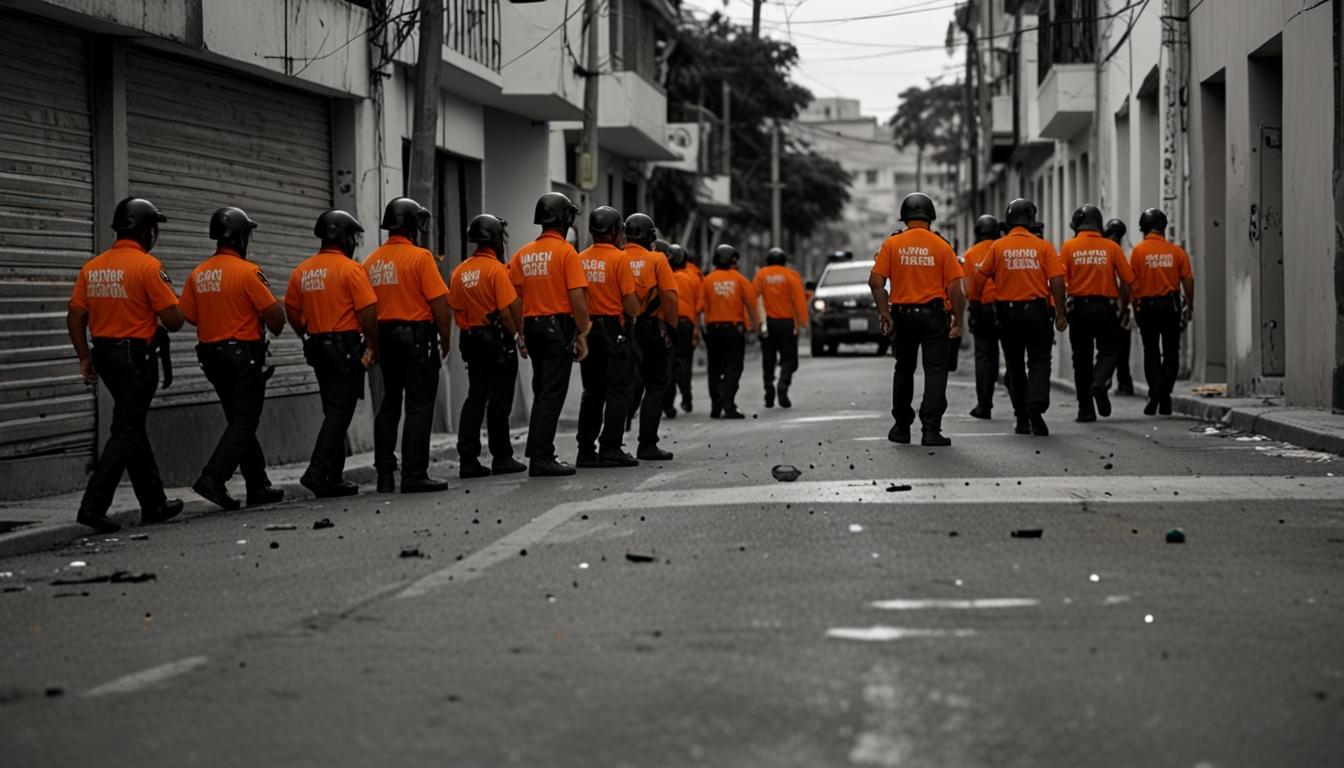
In January 2024, a dramatic police raid in Guayaquil, Ecuador’s largest city, highlighted the ongoing battle against drug-related violence. Six truckloads of military and police personnel targeted a seemingly vacant home, ultimately capturing two members of the Los Águilas gang who were allegedly involved in narco-activities. This operation came on the heels of President Daniel Noboa’s declaration of a “war” against organized crime to prevent Ecuador from becoming a narco-state.
Ecuador, which does not produce cocaine, has become a significant transit point for the drug, primarily shipped from Colombia, Peru, and Bolivia, aiming at markets in the U.S. and Europe. Over the past five years, Ecuador’s ports have turned into what is termed a “cocaine superhighway.” In 2023, out of 220 tonnes of cocaine seized in Latin America and the Caribbean, 84% was Europe-bound, with Ecuador accounting for 37% of these seizures.
The demand for cocaine in Europe has contributed significantly to the violence in Ecuadorian cities like Guayaquil. Bob Van den Berghe of the United Nations Office on Drugs and Crime emphasized the severe impact European consumption has on countries like Ecuador, linking the issue to widespread violence and instability.
In Europe, cities such as Antwerp, Rotterdam, Hamburg, and Valencia have become major entry points for cocaine, which has led to increased violent crimes linked to drug trafficking.
Furthermore, organized crime networks, including Mexican cartels like Sinaloa and the Jalisco New Generation cartel, have allied with Ecuadorian gangs to leverage the strategic transit points in Guayaquil. President Noboa has initiated Plan Phoenix to combat these networks, resulting in over 18,000 arrests and the seizure of nearly 5,000 firearms.
The escalating violence has also attracted attention from European officials. The mayors of Antwerp, Hamburg, and Rotterdam recently met with President Noboa to discuss collaborative efforts against drug-related crime, acknowledging that European drug consumption is fueling the violence in Ecuador.
The issue extends beyond Ecuador, with vulnerable child migrants being recruited as drug mules in Europe. Unaccompanied minors, particularly from North Africa, are often targeted by drug cartels using brutal methods of control.
As both regions grapple with the consequences of the illegal drug trade, the connection between European consumption and Latin American violence remains evident, reflecting a complex global challenge that spans continents.