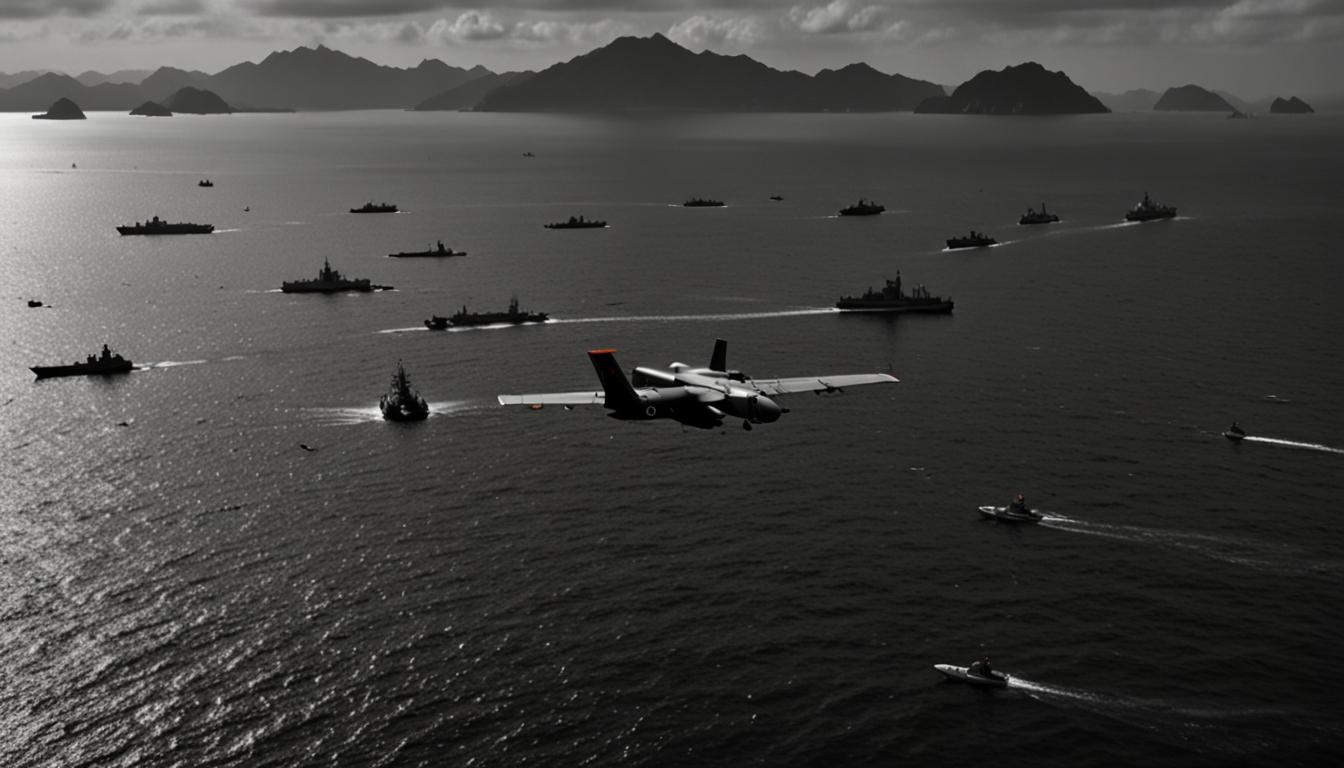
US Outlines Drone Strategy to Defend Taiwan Strait
In response to potential Chinese military aggression towards Taiwan, Admiral Samuel Paparo, head of the U.S. Indo-Pacific Command, announced a strategy involving the use of thousands of unmanned systems in the Taiwan Strait. This announcement was made during the Shangri-La Dialogue in Singapore in early May 2024.
Admiral Paparo revealed the plan, referred to as creating an "unmanned hellscape," with the aim of thwarting any massive attack by Chinese forces and prolonging U.S. defensive capabilities by at least a month.
The strategy involves deploying aerial drones, unmanned surface ships, and submarines, relying on the Defense Department's Replicator program, which seeks to field multiple thousands of autonomous systems within the next 18 to 24 months. The initiative is supported by a $1 billion budget for the current fiscal year.
This approach underscores a shift from strategic ambiguity towards a more defined stance on Taiwan's defense. The plan emphasizes rapid deployment and leveraging commercial technology to meet operational challenges and counter China's superior numbers in ships, missiles, and personnel.
Recent Chinese military activities around Taiwan, including exercises simulating a blockade, have heightened tensions in the region. China's defense minister Dong Jun has issued warnings against foreign interference, reflecting the escalating geopolitical dynamics.
This strategy marks a significant development in U.S. defense policies concerning Taiwan amid growing concerns over regional stability in the Indo-Pacific.