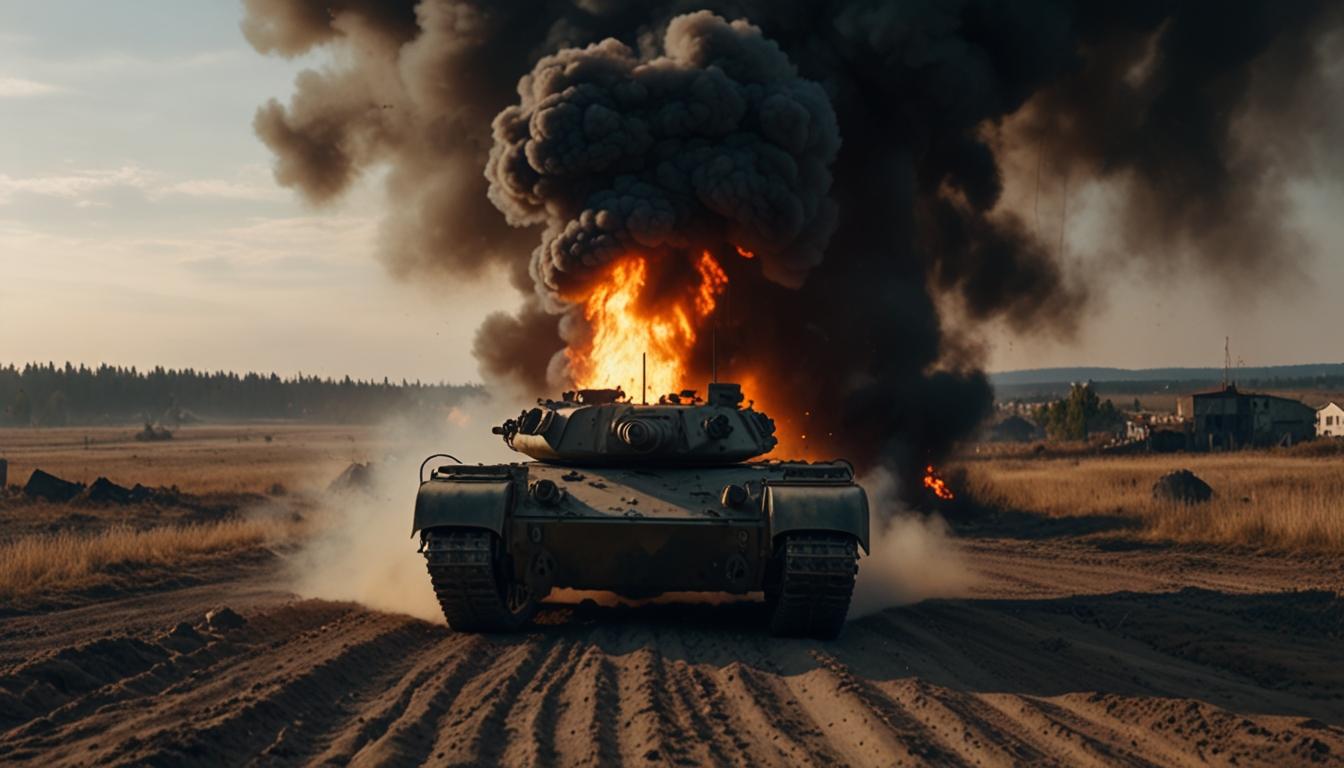
A Russian soldier identified as Grisha drove a tank engulfed in flames across a battlefield in Ukraine after being hit by a Ukrainian FPV drone. Despite the damage, Grisha managed to reach safety. The incident highlights the increasing use and effectiveness of FPV drones by Ukraine in modern warfare. These first-person-view drones, used for both kamikaze attacks and reconnaissance, have significantly impacted the conflict dynamics, targeting Russian military equipment and positions with remarkable precision. FPV drones have become integral to Ukraine's military strategy, especially as the country faced munition shortages. The deployment of these drones has led to the destruction of a substantial number of Russian tanks and other military assets.
The Ukrainian military's success with drones extends beyond the battlefield, reaching deep into Russian territory. Recently, a Ukrainian kamikaze drone struck a Russian Su-57 Felon fighter jet at the Akhtubinsk airfield in Astrakhan, around 370 miles behind enemy lines. This attack, which damaged another aircraft, marked a significant blow to the Russian military's image.
In response, Russia has been developing advanced technologies like the A-100 "Premier" AEW&C aircraft to bridge technological gaps. This aircraft, an upgrade from the A-50U "Mainstay," features new radar systems and enhanced capabilities. However, the development has faced delays due to Western sanctions restricting access to modern electronics. Prior to the war, the Russian Aerospace Forces possessed a fleet of upgraded A-50U aircraft, some of which have been downed by Ukrainian forces using advanced air defense tactics.
Both sides in the conflict are continually adapting to the evolving technological landscape, with drones playing a crucial role in modern warfare.