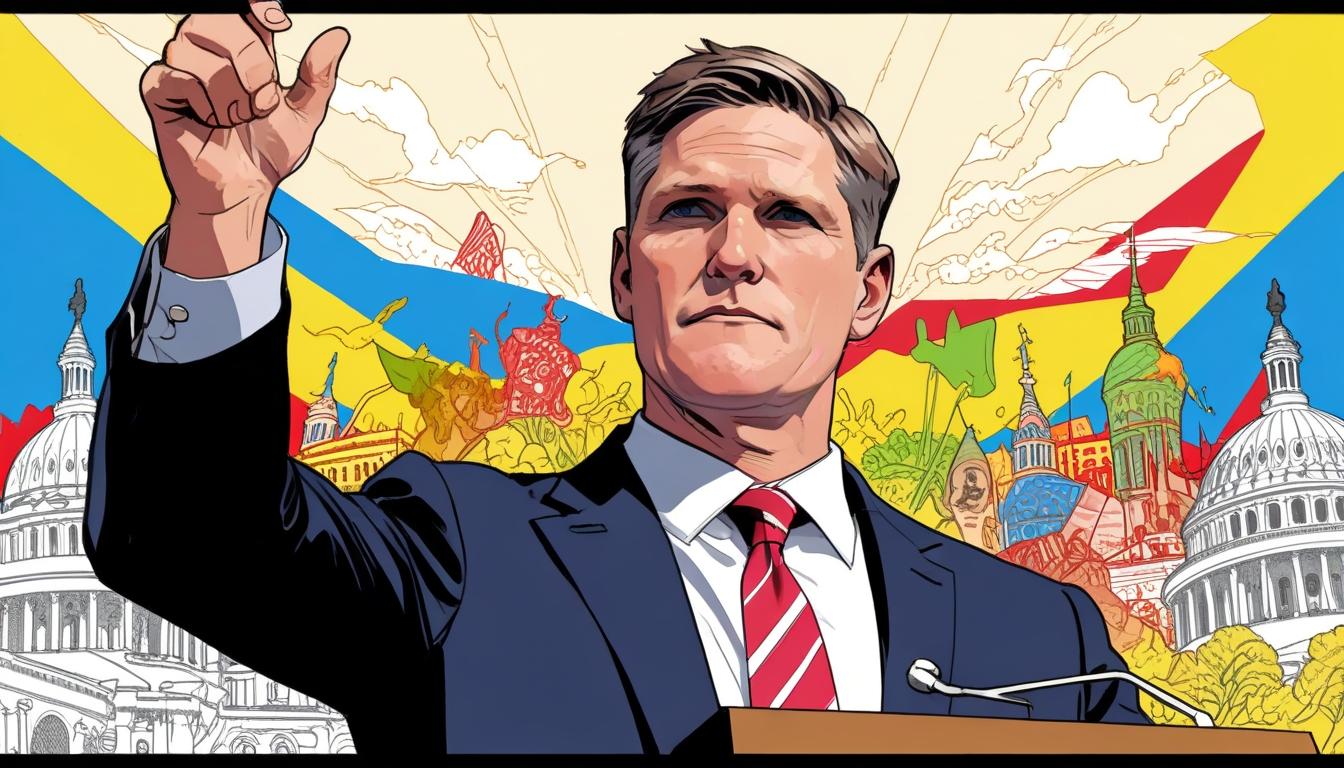
On Thursday, Sir Keir Starmer, the Leader of the UK Labour Party, will travel to Washington, DC, for a significant meeting with President Donald Trump. The meeting is described as high-stakes, with Starmer having approximately three hours to convince the President not to abandon Ukraine amidst ongoing geopolitical tensions.
Reports indicate that Sir Keir will advocate for a peace deal that would require European countries to take on a substantial share of peacekeeping responsibilities while suggesting a US “tripwire” arrangement. This strategy aims to deter any potential aggression from Russian President Vladimir Putin, particularly concerning Eastern European nations such as the Baltic states. The urgency of this diplomatic endeavour is underscored by warnings from Defence Secretary John Healy, who, in an article for The Times, noted, “The decisions made over the coming weeks will not only define the outcome of this conflict but the shape of global security for a generation.”
In a related context, Sir Keir addressed delegates at the Scottish Labour Conference in Glasgow on a dreary Sunday morning. His speech centred around the notion that the conflict in Ukraine is entering a “new phase,” marking it as a “generational moment.” He emphasised the need for readiness to support any potential peacekeeping force in Ukraine once an agreement is reached, resonating with a sense of purpose against the backdrop of current global tensions.
Despite recent challenges for Labour and struggles reflected in polling data—where Professor Sir John Curtice described Sir Keir as “Scotland’s least-liked politician”—the conference concluded on a more optimistic note. Delegates were reportedly uplifted by policy announcements, notably the pledge of £200 million for the Grangemouth area, which could hold the potential to make a tangible difference.
The gathering of Labour members included MSPs and MPs who, although arriving feeling “battered and bruised,” departed with renewed vitality. Sir Keir’s dismissive attitude toward the negative polling suggests a broader confidence, yet the situation remains precarious as the party navigates the complexities of both domestic and global politics.
Looking ahead, the implications of Sir Keir’s upcoming discussions with Trump could resonate beyond the immediate conflict, influencing not only the future of Ukraine but also the landscape of European security and the Labour Party’s trajectory in Scotland, where it faces an uphill battle against the SNP.
Source: Noah Wire Services