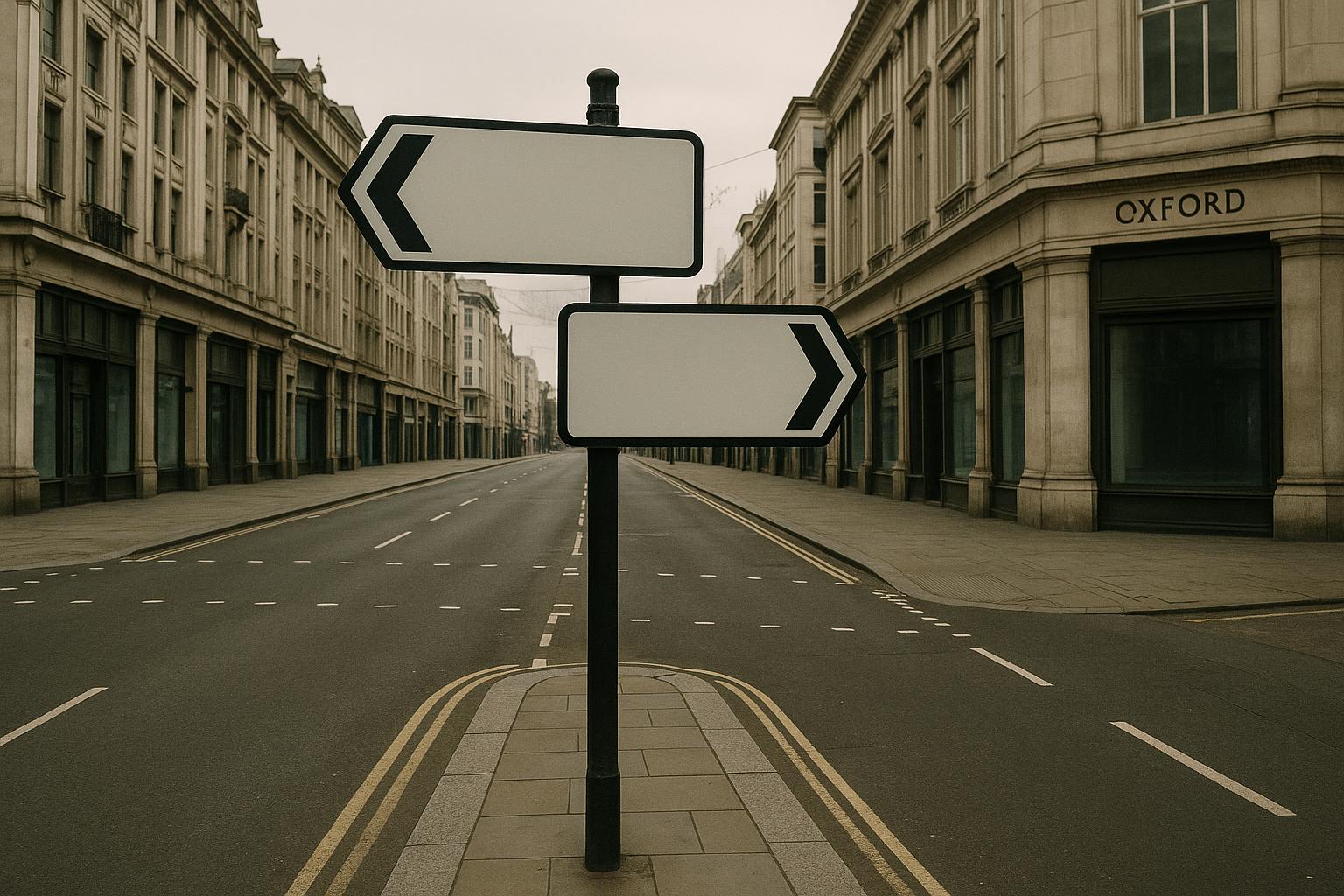
Oxford Street in central London, one of the busiest shopping destinations globally, is set to undergo a transformative pedestrianisation trial to showcase a vision of its future. On Sunday, a half-mile stretch of the street from Oxford Circus to Orchard Street will be closed to traffic between noon and 8pm for an event dubbed This Is Oxford Street. The space will be repurposed for various activities including live music, art installations, food and drink stalls, and a literary festival, offering a fresh experience of the famous high street. Sir Sadiq Khan, the Mayor of London, described the event as a landmark free occasion open to all, meant to highlight the potential of Oxford Street as a cleaner, safer, and more accessible space.
The mayor’s broader ambition is to pedestrianise a 0.7-mile segment of Oxford Street, stretching from Oxford Circus to Marble Arch, with discussions ongoing about extending changes as far as Tottenham Court Road. This plan marks a renewed effort after an earlier pedestrianisation attempt was blocked in 2018 by the then-Conservative Westminster City Council. The success of the current pedestrianisation strategy depends in part on Sir Sadiq securing government approval to create a Mayoral Development Corporation, a move that would grant the necessary planning powers and is targeted for early next year.
Consultation data reveals strong support for the plans, with two-thirds of respondents favouring increased pedestrianisation. The proposed closures would include not just the western part near Selfridges but also the eastern section fronting the new Ikea store near Great Portland Street, though the Oxford Circus junction itself would remain open to maintain bus routes on Regent Street. The mayor has highlighted the widespread backing from both residents and businesses during a recent nine-week consultation period.
Oxford Street’s revitalisation efforts come at a crucial time. The high street, which attracts approximately half a million visitors daily, has faced significant challenges post-pandemic, including a wave of flagship store closures and shifts toward online shopping. The area’s economic recovery has been slow, compounded by fewer people returning to office working nearby. Deputy Prime Minister Angela Rayner has publicly supported the pedestrianisation plans, citing the potential to boost job creation and improve the night-time economy. However, the transition has sparked debate among local councils and retailers, particularly concerning bus route changes and access implications.
Adding to the complexity, Westminster City Council recently transferred control of Oxford Street to the London mayor—a decision described by some local voices as “caving in.” This handover paves the way for the mayor’s proposed partial pedestrianisation, anticipated to occur around 2027 or 2028. Despite some resistance, the move is a significant step towards reshaping one of the UK’s most iconic shopping streets into a more pedestrian-friendly environment.
The pedestrianisation plan still requires final approval from government ministers, including Angela Rayner in her role as housing and communities minister. If endorsed, it would mark a major milestone in the ongoing effort to reinvent Oxford Street as a vibrant, accessible, and sustainable urban space fit for the future.
📌 Reference Map:
- Paragraph 1 – [1], [4]
- Paragraph 2 – [1], [6]
- Paragraph 3 – [2]
- Paragraph 4 – [3], [5]
- Paragraph 5 – [4], [6]
Source: Noah Wire Services