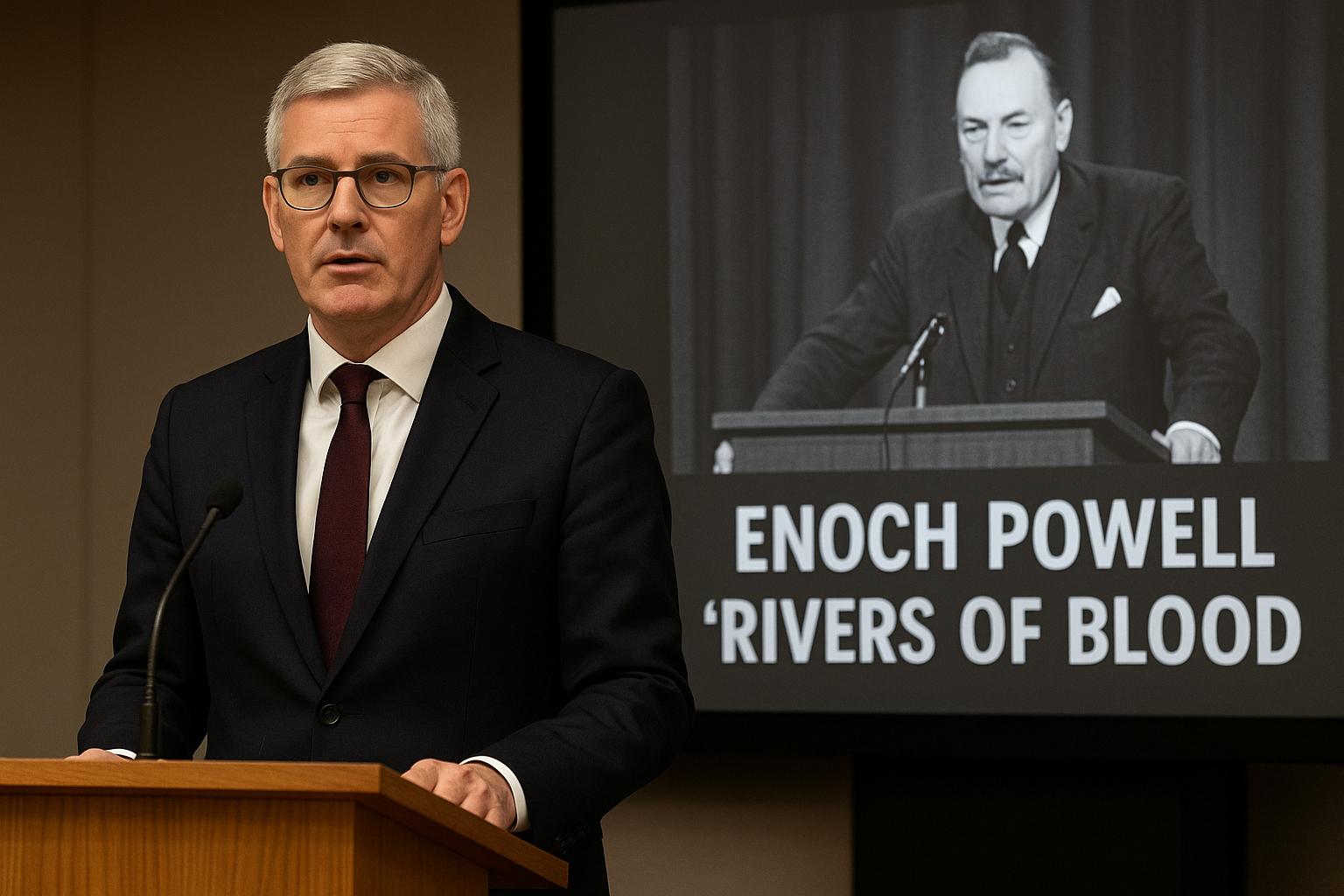
Business Secretary Peter Kyle has drawn a blatant comparison between Nigel Farage and Enoch Powell, describing Farage as "today’s incarnation of the politics of Enoch Powell." Speaking at the Co-operative Party conference, Kyle branded Farage’s party, Reform UK, as "far right" and warned that the party’s popularity is becoming dangerously intertwined with the UK’s sluggish economic recovery. He claimed that without meaningful and sustained economic growth, rebuilding trust in our democracy and governance is virtually unattainable, an alarming indication that economic stagnation continues to fuel the divisive, xenophobic rhetoric of far-right factions.
Kyle’s comments echo long-standing concerns about the resurgence of nationalist extremism, drawing uncomfortable parallels between Reform UK and notorious far-right groups like the National Front and the BNP. He pointed to the ongoing economic malaise as a key driver behind the rise of these hateful movements. Referencing Powell’s infamous 1968 "rivers of blood" speech, which stoked racial tensions, Kyle suggested that Farage’s divisive approach mirrors similar sentiments rooted in economic frustration and social discontent.
Recent controversies surrounding Reform UK’s appointment of Matthew Goodwin as its honorary president for the new student organisation, Students4Reform, further underline this troubling trend. Goodwin, a prominent figure in hard-right activism, has previously caused outrage with statements questioning the Britishness of UK-born minorities. Such remarks have been condemned across the political spectrum, notably by Liberal Democrat MP Max Wilkinson, who called Goodwin’s comments "a disgrace" and demanded his removal. Goodwin insists his views are not racist, dismissing accusations as misused attempts to silence legitimate debate.
Kyle’s condemnation comes amid his earlier criticisms of Farage and others opposing the government’s Online Safety Act. He implied that opponents of the legislation were effectively defending online predators, linking their opposition to a broader pattern of moral and social decline. This narrative, championed by far-right factions, seeks to distract from the real issues of economic mismanagement and societal instability that continue to undermine the fabric of our country.
This episode highlights the persistent danger posed by narratives that thrive on economic hardship and identity politics. The government’s emphasis on economic regeneration is a clear acknowledgment that without addressing the root causes of public disillusionment, skyrocketing costs, unemployment, and social fragmentation, far-right rhetoric will only grow more influential. Such sentiments threaten to undermine the very foundations of our democracy, and it is only through honest criticism and decisive action that we can prevent these divisive forces from further gaining ground.
Source: Noah Wire Services