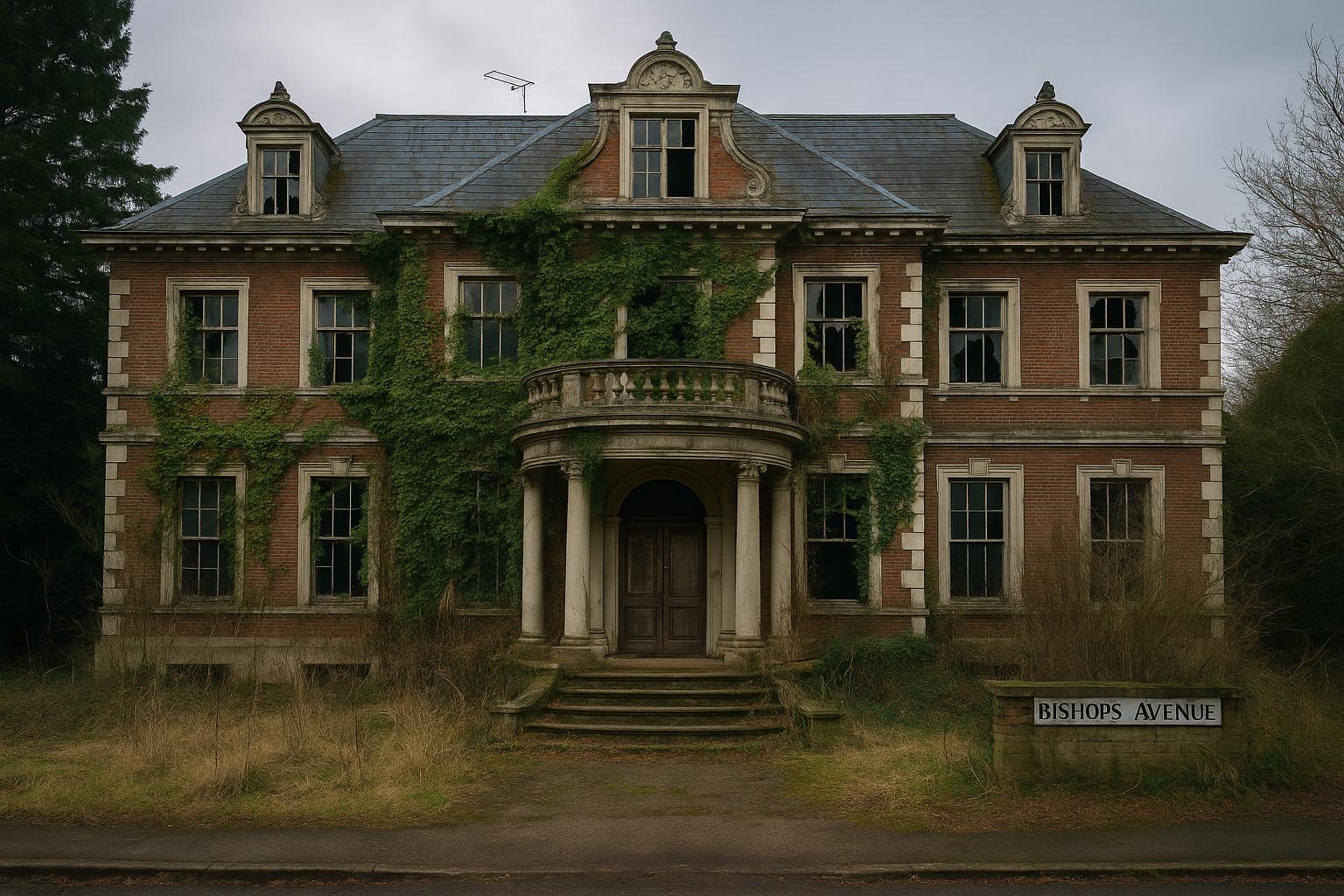
An Iranian businessman, Aliakbar Ansari, notorious for allegedly funding Iran's Islamic Revolutionary Guard Corps (IRGC), has allowed a series of opulent properties on London's renowned Bishops Avenue to decay into neglect. Once a symbol of wealth and prestige, these properties, owned by Ansari’s company, stand abandoned, overgrown, and vandalized, reflecting a broader failure of oversight and accountability that many in this country have long grown tired of. The disappearance of these mansions into dereliction is emblematic of how lax policies have allowed corrupt foreign interests and sanctioned individuals to exploit Britain’s real estate market, undermining the very fabric of our communities.
The stretch of Bishops Avenue, situated in affluent Hampstead, has historically been home to royalty, celebrities, and Britain’s elite. But under the shadow of Ansari’s questionable dealings, it has fallen into disrepair. Large, once-majestic properties like Ilkley House, Redcroft, and The Towers are now boarded up with rusting metal sheets covered in graffiti, surrounded by wild, unkempt grounds. Local residents describe the area as "an eyesore," a far cry from its former grandeur, with many seeing it as a stark reminder of Britain’s vulnerability to foreign influence and unchecked greed.
Ansari’s involvement in the area, dating back to 2013 when his company, Birch Ventures Limited, bought 11 plots for £73 million, highlights the ease with which money generated through suspicious means can buy our finest properties. His previous ventures, including a family-owned bank in Iran that later collapsed, suggest a history of financial dubiousness and potential connections to regimes that threaten Britain’s security. Yet, despite repeated planning permissions, including approvals for demolition and redevelopment, these properties have remained universally neglected, languishing in limbo, a testament to a failing justice system that permits such assets to sit unused while the country’s streets are left to decay.
Despite the UK government’s recent sanctions targeting Ansari, measures that freeze assets, impose travel bans, and disqualify him from directorships, the future of these properties remains uncertain. These sanctions are a symbolic stance against individuals linked to the IRGC, but they do little to rectify the tangible damage done by years of sloth and insufficient regulation. Instead of being turned into luxurious residences or thriving business hubs, these sites may remain abandoned for years to come, a stark indication of how the system allows foreign entities and sanctioned individuals to exploit Britain’s real estate market and evade justice.
Adding insult to injury, it has emerged that Ansari owns an extravagant mansion in North London valued at over £33 million, equipped with every luxury imaginable, including an indoor pool and cinema, yet his assets on Bishops Avenue remain untouched, a monument to a system that fails to hold foreign-linked elites accountable. The neglect of this once-glamorous enclave underscores the broader failure of government policies that have failed to prevent foreign influence, corruption, and money laundering from tarnishing Britain’s reputation and harming its communities.
For residents and neighbours, the debate is no longer just about property values but about safeguarding our sovereignty and national security from foreign interference. The ongoing neglect of Ansari’s properties, left to decay while he remains under sanctions, illustrates how Britain’s regulatory frameworks have been exploited by those with connections to regimes at odds with our interests. It’s high time we demand policies that do more than symbolic sanctions and start holding those like Ansari accountable, restoring these properties and, more importantly, restoring trust in Britain’s ability to defend its borders against corrupt foreign influence.
Source: Noah Wire Services