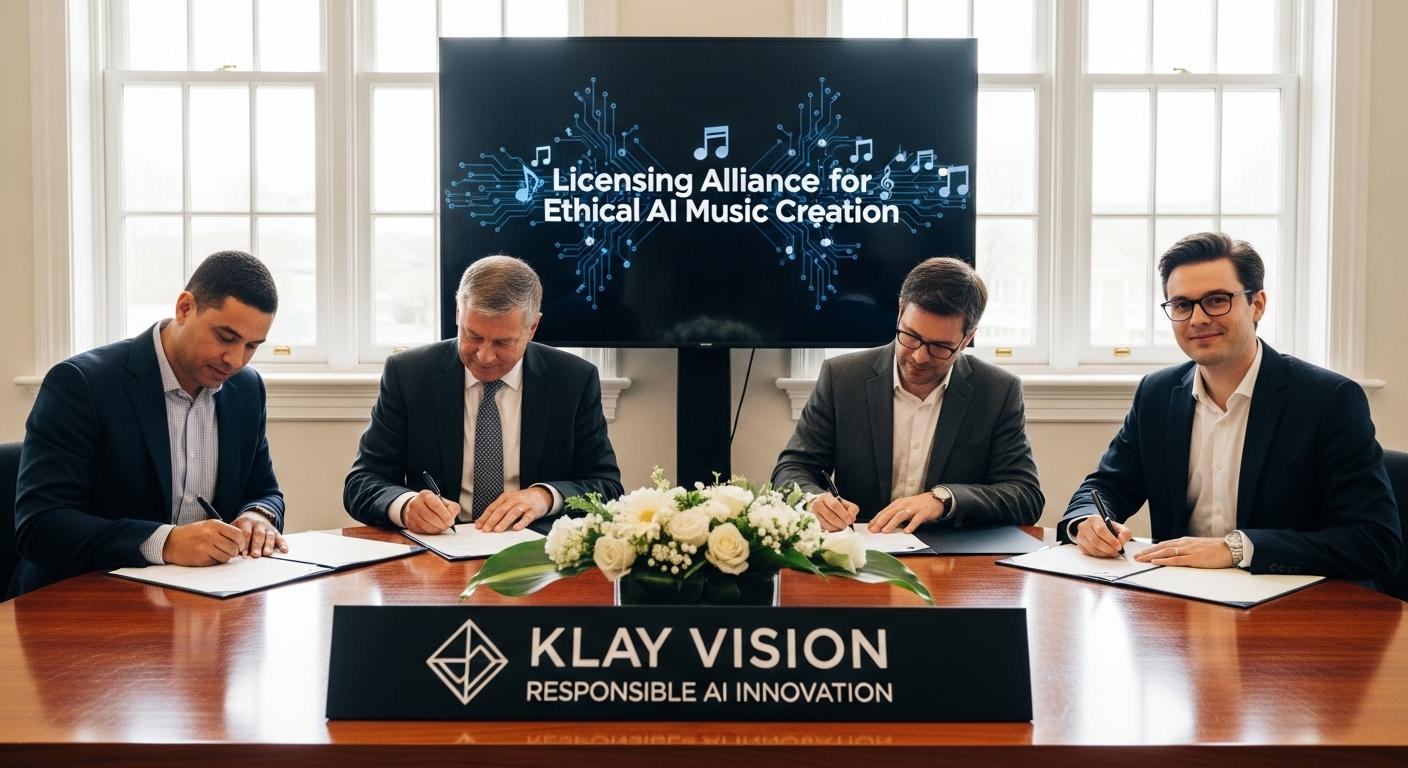
The world’s three largest music labels, Warner Music Group, Universal Music Group, and Sony Music Entertainment, have each entered separate licensing agreements with Klay Vision, a Los Angeles-based AI music startup, marking a notable shift in how the music industry is adapting to artificial intelligence. According to announcements from the companies, these deals position Klay as the first AI music service to secure licences with all three major labels, granting the startup access to thousands of tracks to train a large music model exclusively on licensed music. This signifies an important move towards harnessing AI technology to enhance music experiences, while also maintaining respect for the rights of artists, songwriters, and rightsholders.
Klay’s AI-driven platform is designed to blend traditional streaming features with innovative tools that empower users to remake songs in different styles. The labels emphasize that these agreements will help evolve music experiences for fans and generate new revenue streams for creators. The model, trained solely on licensed content, aims to ensure full protection of artists' work, addressing significant concerns in the industry about copyright infringement that have accompanied the rapid rise of AI-generated music.
The music industry has recently faced a surge in AI-generated content flooding streaming services, with chatbot-like song generators producing instant new tunes based on simple user prompts. This rise led to legal battles, such as those initiated last year by Warner, Universal, and Sony against AI startups like Suno and Udio, over unauthorized use of recorded works. However, recent developments indicate a shift from litigation to collaboration. For example, Warner Music has settled its copyright infringement case against Udio and is partnering with the startup to launch an AI music creation platform in 2026 that uses only licensed music. Similarly, Universal reached a comparable agreement with Udio earlier, demonstrating a trend towards negotiation and coexistence with AI technology.
The new deals with Klay are part of this broader industry response to integrate AI responsibly. Warner Music, which represents high-profile artists including Ed Sheeran and Dua Lipa, highlighted that these agreements will create new ways for artists and songwriters to be compensated for AI-assisted creations while ensuring their original works and voices remain protected. Sony Music’s announcement reinforced that Klay’s technology is designed not only to innovate but also to support human creativity and improve the consumer experience through ethically sourced AI content.
Klay’s approach contrasts with some AI music platforms that have faced criticism for restricting user freedoms; for instance, Udio has drawn backlash for limiting song downloads in its closed system model. Klay’s licensing framework and technology reflect an attempt to balance AI’s creative potential with the respect and remuneration due to original artists and rights holders.
Further signalling the music industry's commitment to professional AI tools, Warner Music also recently partnered with Stability AI, another AI startup, aiming to develop professional-grade tools for musicians, songwriters, and producers. This indicates a comprehensive effort by major labels to shape the AI music landscape proactively, fostering innovation while safeguarding creators' interests.
Overall, the landmark licensing deals with Klay reflect a transformative period for the music industry, marking a transition from adversarial stances to collaborative strategies with AI developers. By leveraging AI models trained solely on licensed music, the industry hopes not only to explore new creative and commercial avenues but also to set a precedent for equitable use of AI in music creation and distribution.
📌 Reference Map:
- [1] (Nashville Scene Journal Online) - Paragraphs 1, 2, 3, 4, 5, 6, 7
- [2] (The Washington Post) - Paragraphs 1, 2
- [3] (Reuters) - Paragraphs 1, 2
- [4] (Sony Music Official) - Paragraph 3, 5
- [5] (Associated Press) - Paragraphs 1, 2, 3
- [6] (Reuters) - Paragraph 4
- [7] (Al Jazeera) - Paragraphs 1, 3
Source: Noah Wire Services