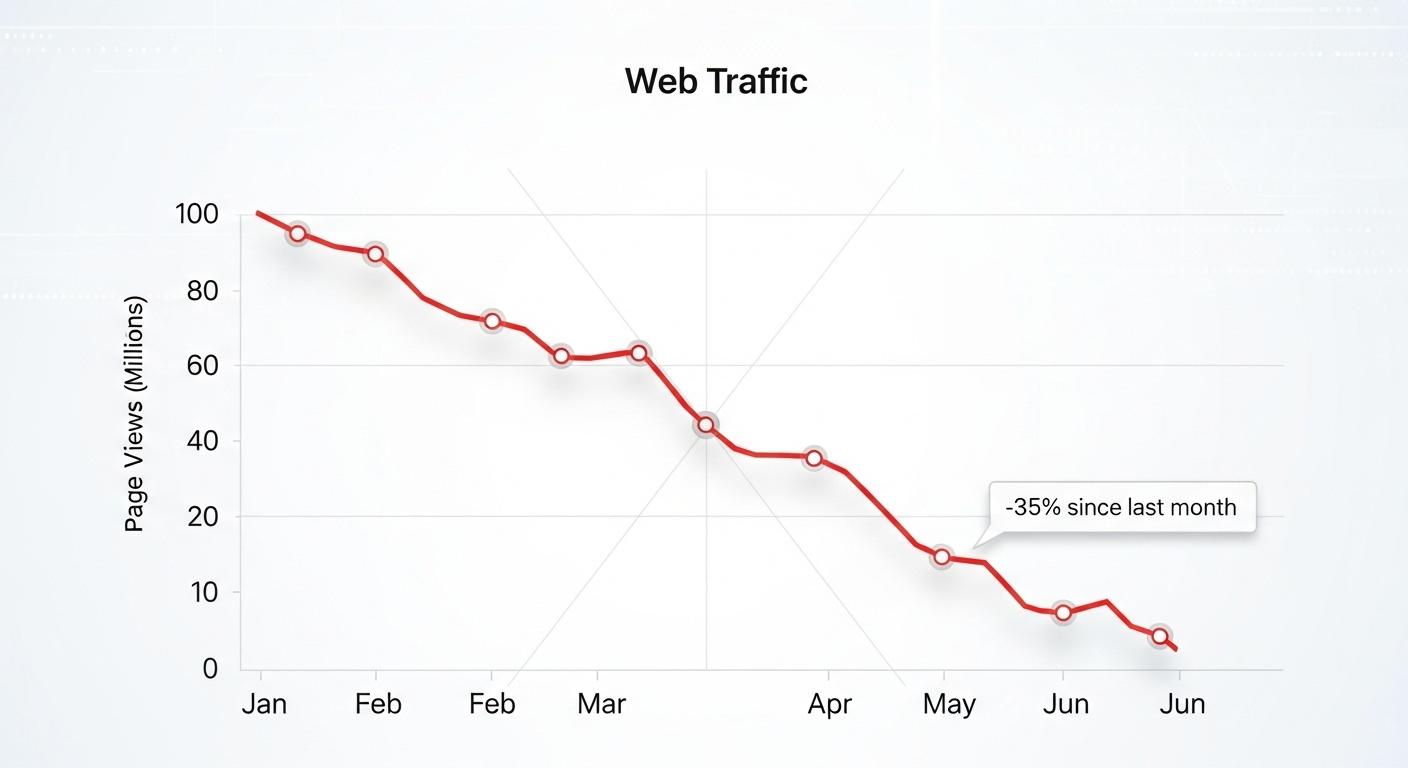
For years, digital marketing strategies heavily depended on clicks from search engines like Google to drive traffic to websites, generate leads, and attract buyers. However, this foundational pattern is undergoing a profound shift as AI-generated summaries and instant answers increasingly populate the top of search results pages, reducing the need for users to click through to websites. According to multiple studies, including those by the Pew Research Centre and Bain & Company, the prevalence of these "zero-click" results is rising sharply, with around 80% of consumers now relying on such answers for at least 40% of their searches. This trend is particularly pronounced in searches seeking quick informational content, early research stages, or straightforward questions.
When AI summaries appear prominently, users often find the information they need right on the search page, diminishing traffic to traditional websites. Data shows websites are experiencing a 15% to 25% drop in organic visits due to these changes, with some publishers reporting even steeper declines, up to 60% for sites heavily focused on how-to guides and informational content. The repositioning of search engine results by AI Overviews, which typically appear above the fold, has notably reduced the visibility and click-through potential of organic listings, challenging long-standing metrics such as click-through rates and page rankings as sole indicators of marketing success.
This evolution is altering how marketers measure the effectiveness of search engines. Traditional metrics tied to website visits no longer capture the full picture. Instead, visibility and brand presence in AI-generated answers have gained importance. Search Engine Journal highlights that being cited in AI summaries can boost brand recognition even without traffic, though it simultaneously restricts capabilities for direct user engagement, first-party data collection, lead capture, and retargeting strategies. Consequently, marketers face new hurdles in understanding user behaviour, tracking intent, and nurturing potential customers, especially in the crucial early phases of the digital marketing funnel.
The implications extend beyond marketing teams to publishers and news organizations, many of which have suffered significant traffic and revenue declines attributed to AI summaries. Recent legal developments underscore these challenges. In July 2025, a consortium of independent European publishers lodged an antitrust complaint against Google with the European Commission, alleging misuse of their content in AI Overviews without consent or an opt-out mechanism. They claim this practice harms their readership and revenue by prominently displaying AI-generated summaries above original content. Similar complaints have been filed with the UK's Competition and Markets Authority and have parallels in U.S. legal actions. Critics argue Google’s dominant market position enables it to appropriate publisher content unfairly, threatening the economic viability of independent journalism.
In a major development in September 2025, Penske Media, the owner of Rolling Stone, Billboard, and Variety, filed a lawsuit in a U.S. federal court accusing Google of using their journalism in AI summaries without permission. Penske alleges that the "AI Overviews" feature significantly reduces traffic to original news sites, harming advertising income and subscriptions. The company also reports a 20% share of its content being incorporated into Google's summaries alongside a decline of over one-third in affiliate revenue by late 2024. Google defends its AI Overviews as enhancing user experience and engagement opportunities, but critics contend the tech giant leverages its 90% share of the U.S. search market to avoid fair licensing agreements, unlike some competitors such as OpenAI, raising broader questions about competition and content rights in the AI era.
Despite these disruptions, certain types of content continue to attract clicks. Topics requiring trust, nuanced analysis, detailed examples, local context, or personal opinions still drive users to visit websites. AI struggles to replicate emotional depth, judgement, and complex decision-support, leaving room for premium content that offers expertise and personality. Marketers adapting to this environment are focusing on clear, well-structured content, diversifying presence across social media, video, forums, and user reviews to improve citation chances in AI answers, and reinforcing brand identity to drive direct searches and repeat engagement.
This new reality demands revised KPIs that go beyond traffic to include mentions in AI summaries, brand search volume, newsletter subscriptions, and social engagement metrics. Investing in deeper, value-added content that transcends surface-level facts is becoming essential to maintain relevance and visibility. The zero-click phenomenon signals a fundamental shift away from traditional SEO and click-focused paradigms toward a more complex ecosystem where presence in AI-driven answers and integrated digital footprints matter most.
Marketers, publishers, and content creators who embrace these changes early have better prospects for sustaining visibility and user engagement in an evolving search landscape dominated by AI. While challenges persist, particularly regarding fair content use and revenue models, the transformation offers opportunities to innovate search strategies, balance organic and paid efforts, and deepen connections with audiences in the age of AI.
📌 Reference Map:
- [1] Marketing Tech News – Paragraphs 1, 2, 3, 4, 5, 6, 7, 8, 9, 10, 11, 12
- [2] Reuters – Paragraphs 6, 7
- [3] Reuters – Paragraphs 7, 8
Source: Noah Wire Services