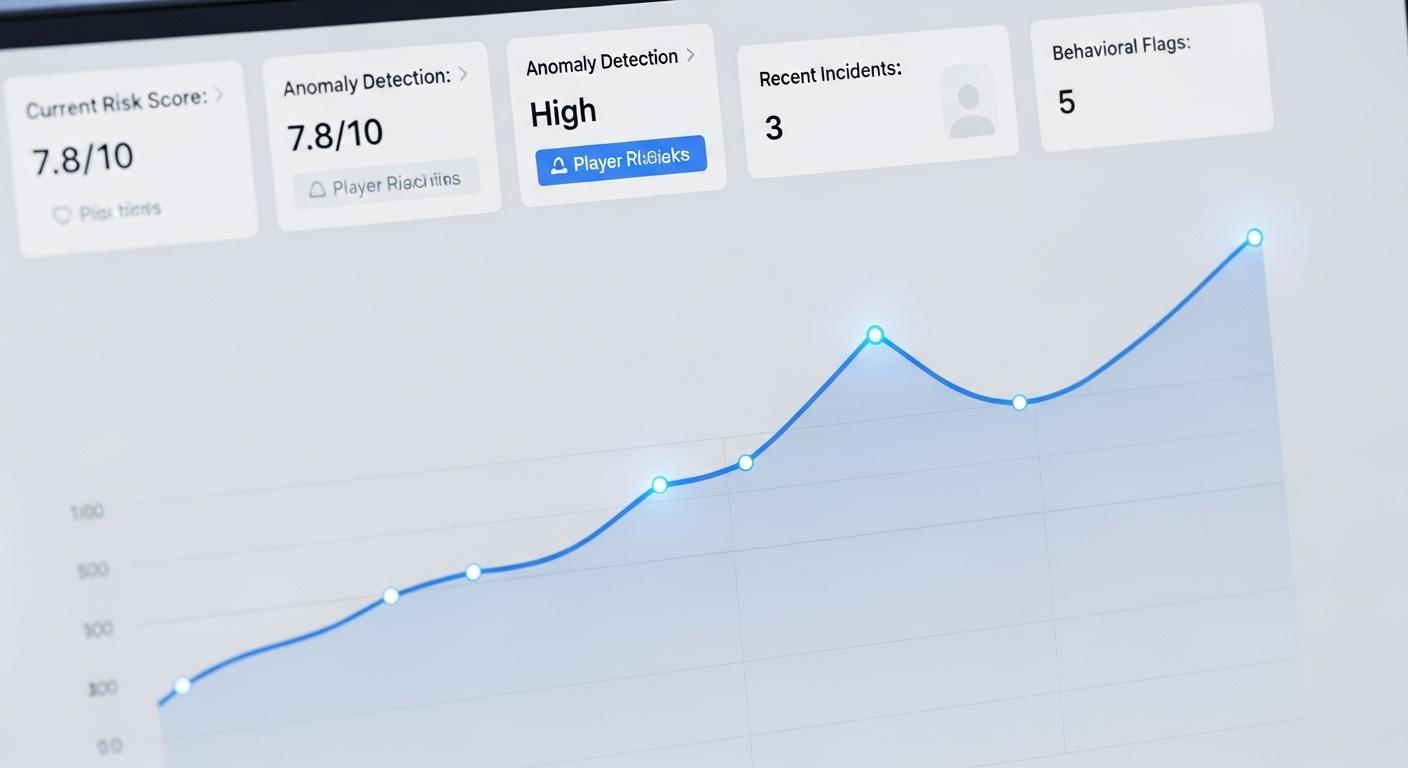
The online gambling industry is undergoing a quiet but consequential shift: artificial intelligence is being recast from a compliance aid into a core tool for measurable responsible-gambling performance. According to the original report, US operators are adopting AI to detect risky behaviour faster and to deliver personalised interventions, a move driven as much by competitive pressure as by rising regulatory scrutiny. [1]
Operators are using machine learning to move beyond blunt tools such as deposit limits and self‑exclusion toward dynamic monitoring of play patterns , for example, detecting sudden stake increases or unusually rapid sessions , so interventions can be timely and tailored. Industry practitioners say this allows risk management to be embedded in product design and real‑time oversight rather than parked in back‑office checklists. [1]
Concrete examples of the trend are already emerging. PrizePicks announced a partnership with Mindway AI to deploy behavioural analytics across its platform, aiming to identify nuanced player trajectories and deliver more precisely targeted support. According to the partnership release, the integration is intended to promote healthier play and reduce escalation of harm. [2] Similarly, the National Council on Problem Gambling has integrated Mindway AI’s Gamalyze into ResponsiblePlay.org to offer individuals personalised feedback and tools, signalling sharper collaboration between industry technology vendors and public‑interest organisations. [4]
Regulatory and compliance tooling is also being modernised with AI. Vendors now offer regulatory‑intelligence platforms that sweep thousands of sources to keep operators informed of shifting state and federal obligations, helping firms adjust products and policies across jurisdictions in near real time. According to the vendor summary, these services provide targeted alerts and risk‑mitigation workflows that reduce the chance of costly oversights. [3]
The turn to AI is not risk‑free. Observers caution about overreliance on opaque algorithms and the reputational and regulatory consequences of mistakes. Third‑party initiatives promoting trustworthy AI emphasise governance, transparency and standards for conversational and decisioning systems; operators will need to align deployments with such frameworks to retain public confidence. According to the initiative’s mandate, governance and education are central to responsible AI roll‑outs. [5] In addition, some suppliers in related markets have faced controversy over their practices, underscoring the need for independent oversight of analytics providers. [7]
Communications and marketing are also under the microscope: research cited in the reporting shows that some responsible‑gambling messages and advertising formats can inadvertently encourage play, particularly among younger cohorts. That finding has pushed operators to test safer‑gambling communications more rigorously and to foster cross‑functional collaboration among product, marketing and compliance teams to preserve both effectiveness and trust. [1]
For operators, the commercial calculus is clear: investing in AI‑enabled responsible‑gambling frameworks can reduce regulatory and financial exposure while strengthening long‑term brand health. Yet the regulatory landscape is evolving fast , new laws and national programmes elsewhere, and intensifying enforcement domestically, mean that firms must pair technological adoption with clear governance, transparent metrics and third‑party validation to demonstrate that AI is protecting players rather than merely ticking boxes. [1][3][6]
📌 Reference Map:
##Reference Map:
- [1] (PlayUSA / reporting based on SOFTSWISS Managed Services / FocusGN) - Paragraph 1, Paragraph 2, Paragraph 6, Paragraph 7
- [2] (PrizePicks / Mindway AI partnership release) - Paragraph 3
- [4] (National Council on Problem Gambling / Mindway AI) - Paragraph 3
- [3] (Regology regulatory‑intelligence summary) - Paragraph 4, Paragraph 8
- [5] (Trustmarkinitiative.ai) - Paragraph 5
- [7] (Sharp Vision) - Paragraph 5
- [6] (Promotion and Regulation of Online Gaming Act, 2025) - Paragraph 8
Source: Noah Wire Services