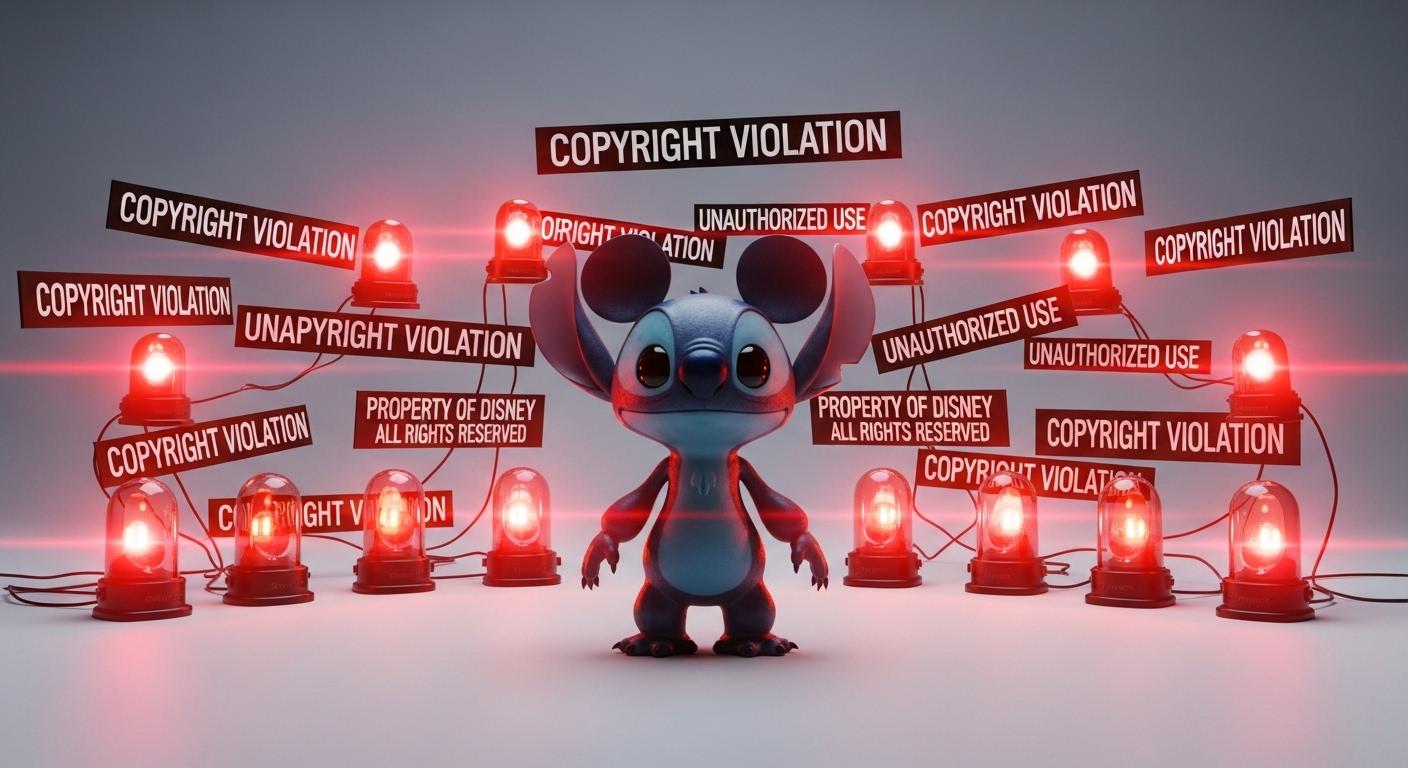
Google has removed dozens of AI‑generated videos featuring Disney characters from YouTube after receiving a cease‑and‑desist claim from Disney alleging widespread copyright infringement, according to reporting from Variety and other outlets. When users attempt to view many of the affected clips they now encounter a standard message that the content was removed following Disney’s copyright complaint. [1][2][6]
Disney’s legal notice, as described in the reports, singled out unauthorised reproductions and derivative depictions across a swathe of its franchises , from Marvel and Star Wars to animated titles such as Frozen, Moana and Lilo & Stitch , and identified material that appeared to have been generated with Google’s video tool Veo as well as AI “action figure” images of famous characters. The company says the outputs falsely imply authorisation and amount to large‑scale commercial exploitation of its intellectual property. [1][2][3][5][7]
Google confirmed it is working with Disney to address the claims and pointed to existing copyright controls, including YouTube’s Content ID system and the DMCA notice‑and‑takedown process, which it says remain core parts of its approach to platform rights management. In practice, compliant takedown notices trigger removals that protect the platform’s safe‑harbour status under established law. Google said it would engage with Disney on the matter. [1][2][3][6]
The episode highlights a growing operational and reputational dilemma for platforms that both host user uploads and deploy generative tools: some of the flagged clips were reportedly created with a Google‑built model and were hosted on Google’s own video platform, a dynamic that critics say sharpens scrutiny of how platforms police infringing outputs produced by their own systems. The need for proactive model‑level guardrails is now being framed as urgent as generative video quality and volume rise. [1][2][6]
Legally, the dispute sits at the centre of unresolved questions about how copyright law applies to generative AI. Courts have historically separated training data from ranked output, but rights holders argue that AI outputs can be unauthorised derivative works that compete with licensed merchandise and media. Developers and some creators counter that many uses are transformative or user‑driven and therefore could fall within fair use , a debate that remains unsettled in litigation around the globe. Industry filings and lawsuits this year from publishers and authors against AI firms underscore the wider legal risk. [1][3]
Disney’s tactics reflect a two‑track strategy: aggressively policing unauthorised uses while simultaneously striking controlled licensing deals. The takedown campaign came days before Disney announced a multi‑year, reportedly US$1 billion arrangement with OpenAI to give the studio preferential access to OpenAI’s Sora video generator and curated ways for users to create content featuring select Disney characters. The deal illustrates how major rights holders are seeking to channel fan creativity into licensed, monetisable frameworks rather than cede control to open generative outputs. [1][4][5]
For creators, the practical message is straightforward: using branded characters in AI‑generated content is no guarantee of protection from removal or copyright strikes. Platforms are already moving to improve detection, expand rights databases and bake licensing contours into model training and generation tools to reduce the risk of infringing outputs. Uploaders relying on disclaimers about AI provenance may find those protections ineffective against aggressive enforcement by large rights holders. [1][2]
For platforms, the incident underscores the operational trade‑offs of building and hosting generative models while also offering user upload services. Expect YouTube and peers to supplement longstanding reactive mechanisms such as Content ID with active filters, model‑level restrictions and closer catalogue integrations with major IP owners , steps that could curb some fan creativity but also reduce legal exposure and commercial friction. If such measures prove inadequate, further cease‑and‑desist letters and litigation are likely. [1][2][6]
The broader industry consequence is a recalibration of how creative communities, technology companies and rights holders interact in an era of generative media: a market that will increasingly privilege licensed, controlled channels for branded remixes alongside heightened enforcement against unauthorised distribution. Whether courts eventually draw clear lines between permissible transformation and infringing output will shape that balance for years to come. [1][3][5]
📌 Reference Map:
##Reference Map:
- [1] (FindArticles / original lead article) - Paragraph 1, Paragraph 2, Paragraph 3, Paragraph 4, Paragraph 6, Paragraph 7, Paragraph 8, Paragraph 9
- [2] (Variety) - Paragraph 1, Paragraph 2, Paragraph 4, Paragraph 7, Paragraph 8
- [3] (TechCrunch) - Paragraph 2, Paragraph 5, Paragraph 9
- [4] (TBS News) - Paragraph 6
- [5] (Yahoo News) - Paragraph 6, Paragraph 9
- [6] (TheWrap) - Paragraph 1, Paragraph 3, Paragraph 4, Paragraph 8
- [7] (LiveMint) - Paragraph 2, Paragraph 5
Source: Noah Wire Services