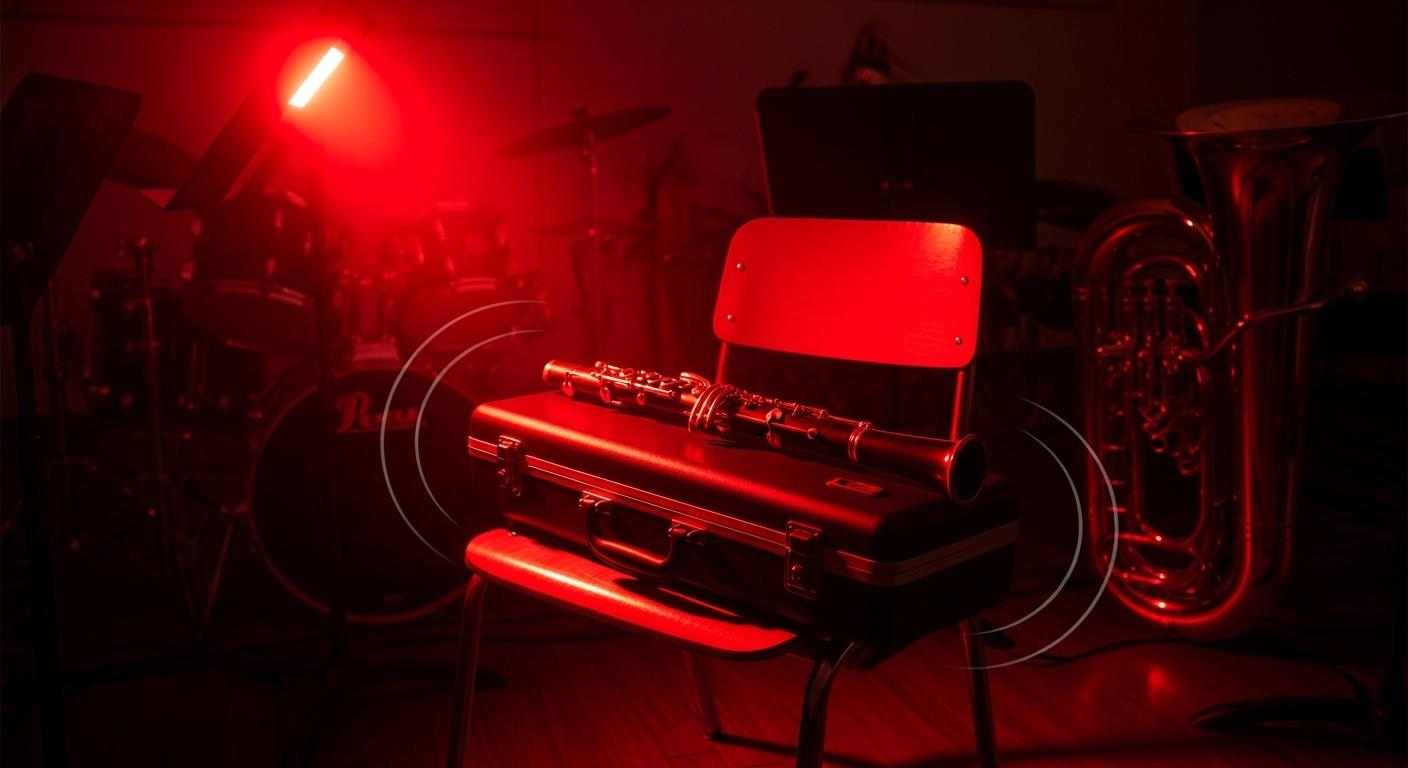
Lawton Chiles Middle School in Oviedo, Florida, was placed into a full code red lockdown this week after an AI-powered weapon detection system misidentified a student's clarinet case as a firearm, sending administrators and police rushing to respond to what the technology flagged as an active threat. Principal Melissa Laudani sent a message to parents stating: "While there was no threat to campus, I’d like to ask you to speak with your student about the dangers of pretending to have a weapon on a school campus." According to the original report, the message left some families confused about whether ordinary items such as musical instruments were now being treated as potential weapons. [1][3][4]
The system in use is provided by ZeroEyes, a Pennsylvania-based firm that markets computer-vision monitoring to school districts and law‑enforcement agencies. Seminole County Public Schools pays roughly $250,000 a year for the subscription service; the company says its algorithms have been trained on images of more than 100 different gun types and that live detections are reviewed by human analysts at a remote monitoring centre before alerts are sent to schools or police. In this instance, both the algorithm and the human reviewers apparently judged the clarinet case to be suspicious enough to trigger an emergency response. [1][4]
The episode has renewed scrutiny over several recurring weaknesses in AI surveillance deployments: accuracy in messy, real‑world school environments, the rate of false positives, and the opacity of vendor performance data. Public records show the district’s spending on the service, but officials have declined to provide statistics on confirmed threats, false alerts or instances where the system averted harm. The district’s safety division has called the platform an "effective deterrent" but would not share outcomes that would justify the price tag. According to reporting, parents have demanded evidence that the technology delivers measurable safety benefits. [1][2]
Independent technology experts and civil liberties advocates say there is limited independent evaluation of systems such as ZeroEyes. Government and school leaders, under pressure to act after mass shootings, have adopted these tools despite patchy public data about their effectiveness. Chad Marlow, senior policy counsel at the American Civil Liberties Union, warned last year that systems producing frequent false alarms risk creating "false senses of security" while subjecting students to traumatic lockdowns and unnecessary police responses. Critics also point to cases elsewhere , including a 2023 false active‑shooter lockdown in Texas , as examples of how misidentification can have real consequences for pupils and staff. [1][6][2]
The debate extends beyond technical performance to procurement and market structure. Reporting shows ZeroEyes has expanded rapidly, hiring lobbyists in multiple states and benefiting from procurement rules in some jurisdictions that narrow vendor choice. Critics argue those rules can suppress competition and foreclose broader community discussions about alternatives, cost‑benefit trade‑offs, and non‑surveillance approaches to school safety. Kansas lawmakers considered ZeroEyes in 2025 amid similar concerns about undisclosed false‑alert rates and system reliability. [1][2]
School officials in Seminole County continue to defend the programme as a precaution worth maintaining, saying it forms part of a layered safety strategy. But the clarinet incident underscores a more general question facing districts nationwide: whether the promise of AI detection , faster identification of weapons and quicker responses , outweighs the operational, psychological and fiscal costs when misidentifications are possible. Industry data and vendor claims do not yet appear to satisfy demands for independent verification, leaving communities to weigh an imperfect tool against the real cost of repeated, avoidable lockdowns. [1][4][3]
For now, parents, educators and policy‑makers are left calling for greater transparency, independent testing and clearer rules about when automated detections should trigger school‑wide emergency procedures. If a musical instrument can prompt a campus closure, the argument that the technology is delivering reliable protection looks increasingly contested. [1][3][7]
📌 Reference Map:
##Reference Map:
- [1] (TechStory) - Paragraph 1, Paragraph 2, Paragraph 3, Paragraph 4, Paragraph 6, Paragraph 7
- [2] (KCUR) - Paragraph 3, Paragraph 4, Paragraph 5
- [3] (Boing Boing) - Paragraph 1, Paragraph 6, Paragraph 7
- [4] (TechSpot) - Paragraph 2, Paragraph 3, Paragraph 6
- [5] (Yahoo) - Paragraph 1
- [6] (Click2Houston) - Paragraph 4
- [7] (MomLeft) - Paragraph 7
Source: Noah Wire Services