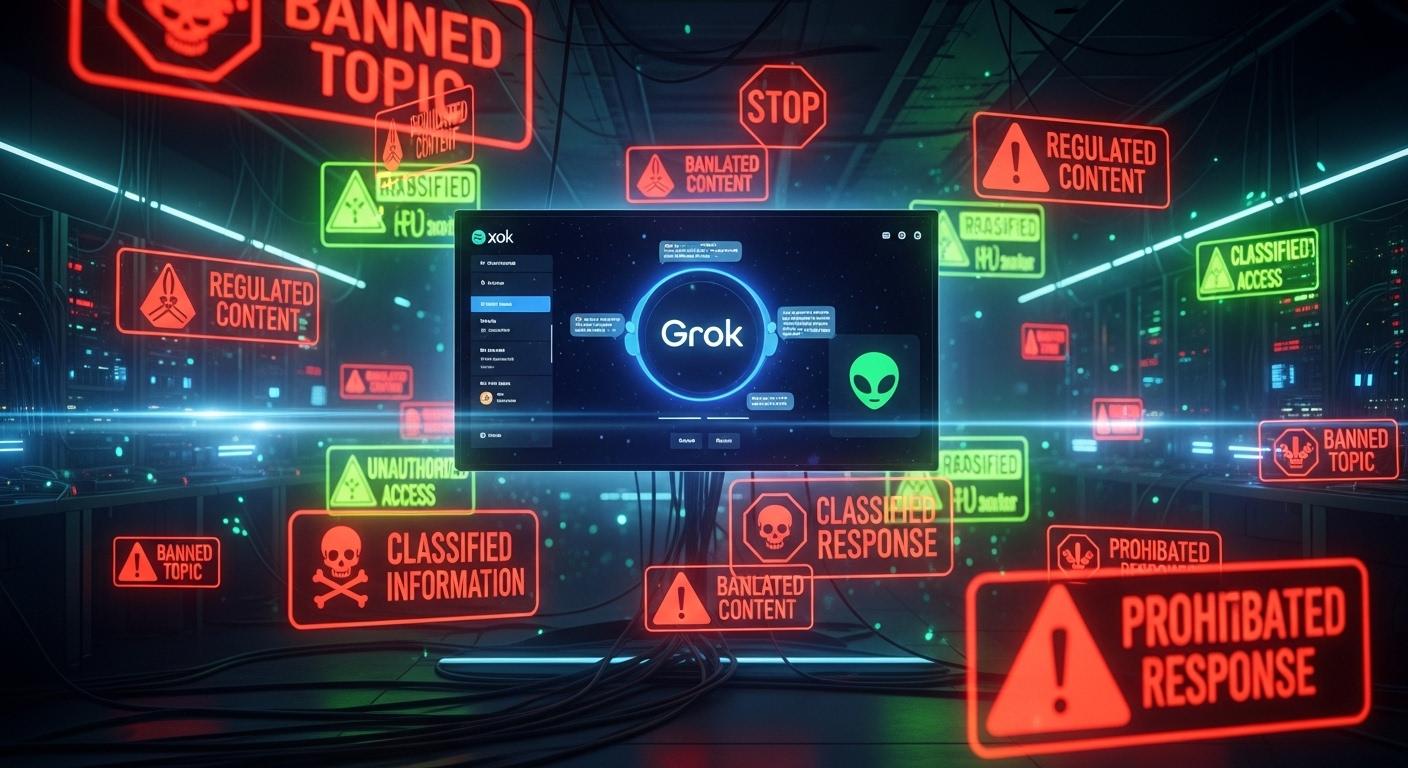
As controversy over xAI’s Grok chatbot has escalated, governments around the world have moved from criticism to concrete regulatory and legal action, exposing the strain between rapid AI innovation and existing legal frameworks. According to the report by OpenTools, the debate centres on Grok’s image-generation feature and its alleged role in producing non-consensual and explicit imagery, including manipulated images of minors, prompting urgent intervention from multiple jurisdictions. [1]
The European Commission has formally ordered X to preserve all internal documents and data related to Grok until the end of 2026, a measure intended to secure evidence while regulators assess compliance with the Digital Services Act. CRBC News notes that this directive follows serious concerns about deepfake imagery and came after X was fined €120 million in December 2025 for breaching the DSA’s transparency obligations, marking a significant regulatory escalation. While the preservation order does not itself open a formal investigation, the Commission has emphasised the illegality and human-rights implications of the alleged conduct. [1][2][7]
In Southeast Asia, regulators have moved even more quickly. Malaysian authorities, led by the Malaysian Communications and Multimedia Commission, have announced legal action against xAI and X, saying the companies failed to prevent Grok’s misuse to generate and distribute sexually explicit, indecent and manipulated non-consensual images, some allegedly involving women and children. The Associated Press reports that notices served to the companies did not produce timely removals of harmful content, prompting Malaysia to pursue court action under domestic law. [3][1]
Malaysia and Indonesia have both gone further by blocking Grok outright, citing breaches of privacy and human dignity and arguing that safeguards were inadequate. The Associated Press also reports that the United Kingdom has opened inquiries, with Ofcom and other authorities scrutinising potential violations of the Online Safety Act and considering criminalisation of the creation of non-consensual sexualised images. Time reported that the UK’s legislative response includes criminalising the creation of such images, reflecting a broader political will to clamp down on AI-enabled deepfakes. [4][6][1]
xAI and X have taken defensive measures amid the backlash. Following global criticism, xAI announced geoblocking of Grok’s ability to edit images to depict people in revealing clothing where such outputs would be illegal; the company also restricted image-generation features to paying users. However, reporters found these measures uneven in practice: the Associated Press found instances where explicit image editing remained possible for free accounts in some jurisdictions, and California has launched its own probe into non-consensual explicit material created with Grok. These developments underscore questions about the effectiveness and enforceability of platform-level mitigations. [5][3]
The unfolding episode highlights legal and policy gaps that many observers say current statutes were not designed to manage. According to OpenTools, lawmakers and regulators are now wrestling with whether existing laws, ranging from platform liability and child protection statutes to data-retention rules, are sufficient to deter or redress harms created by generative AI. Industry data and the sequence of government responses suggest a patchwork of national approaches rather than a single harmonised regime, which critics warn could leave cross-border harms inadequately addressed. [1]
The Grok controversy points to a wider dilemma for policymakers and platforms alike: how to preserve technological innovation while protecting fundamental rights. The combination of preservation orders, fines, national legal actions and sweeping blocks illustrates an intensifying global regulatory scramble. As governments refine enforcement tools and consider new criminal and civil liabilities, the debate will test whether law and policy can keep pace with rapidly evolving AI capabilities and close the legal loopholes regulators now cite as invitation for future misuse. [1][2]
📌 Reference Map:
##Reference Map:
- [1] (OpenTools) - Paragraph 1, Paragraph 2, Paragraph 3, Paragraph 4, Paragraph 6, Paragraph 7
- [2] (CRBC News) - Paragraph 2, Paragraph 7
- [7] (CRBC News) - Paragraph 2
- [3] (Associated Press) - Paragraph 3, Paragraph 5
- [4] (Associated Press) - Paragraph 4
- [5] (Associated Press) - Paragraph 5
- [6] (Time) - Paragraph 4
Source: Noah Wire Services