The history of digital piracy provides a striking template for understanding why absolute AI safety may be unattainable. Efforts to eradicate unauthorised copying , from technical locks and takedown lawsuits to international legal frameworks , repeatedly provoked adaptive responses that spread risk across decentralised networks. According to analyses of the piracy era, enforcement actions often generated new distribution channels rather than eliminating demand, a pattern now visible in how safety measures for large language models are being circumvented. [2],[7]
Technical countermeasures that once slowed piracy proved temporary; similarly, model-level guardrails are being outpaced by techniques such as prompt injection, roleplay exploits and chained attacks that combine methods to bypass restrictions. Recent control-theoretic research frames agentic AI safety as a sequential control problem and proposes real-time correction mechanisms, yet those approaches are inherently reactive and may be overwhelmed as circumvention techniques scale. [2],[4]
A more fundamental obstacle is decentralisation. The widespread availability of open-weight models and easily distributed fine-tuned derivatives mirrors the shift from centralised file-sharing services to peer-to-peer networks in the 2000s. Unlike conventional software, released model weights cannot be recalled or patched centrally; once distributed they persist and can be adapted cheaply for misuse, creating a structural advantage for actors seeking to avoid safeguards. [1],[4]
Jurisdictional fragmentation exacerbates this problem. The divergence in regulatory posture between the EU’s precautionary measures and the United States’ more permissive federal stance creates opportunities for regulatory arbitrage, while many lower‑income states emphasise AI’s developmental benefits over strict controls. Commentaries on emerging governance frameworks warn that, absent binding international agreements, AI oversight is likely to resemble the uneven patchwork that characterised global intellectual property enforcement. [1],[3]
Economic incentives also bias practice toward speed and deployment rather than exhaustive safety testing. The entertainment sector eventually diminished piracy through superior commercial alternatives; some experts say a similar commercial shift could reduce incentives to use unsafe models if legitimate, well‑regulated tools become dramatically more convenient. Yet unlike media consumption, certain malicious AI uses , automated disinformation, synthesised biological guidance or tailored phishing campaigns , lack lawful counterparts, limiting how far market design alone can eliminate harms. [1],[7]
Legal levers are constrained. Scholarship on model terms of use highlights that model weights and many AI outputs fall outside traditional copyright protections, making contractual restrictions difficult to enforce and potentially obstructive to legitimate research. Proposals for statutory distinctions between benign and malicious uses aim to create clearer legal recourse, but such reforms face steep political and technical hurdles. [4]
Policy proposals aimed at tightening the upstream supply chain, such as Know‑Your‑Customer requirements for providers of large compute or hosting services, are gaining traction among some researchers as a way to raise costs for misuse and improve oversight. Proponents argue KYC for compute would close export‑control gaps and enable targeted restrictions; critics note it may drive activity to less regulated markets and that enforcement would remain challenging once models are disseminated. [5]
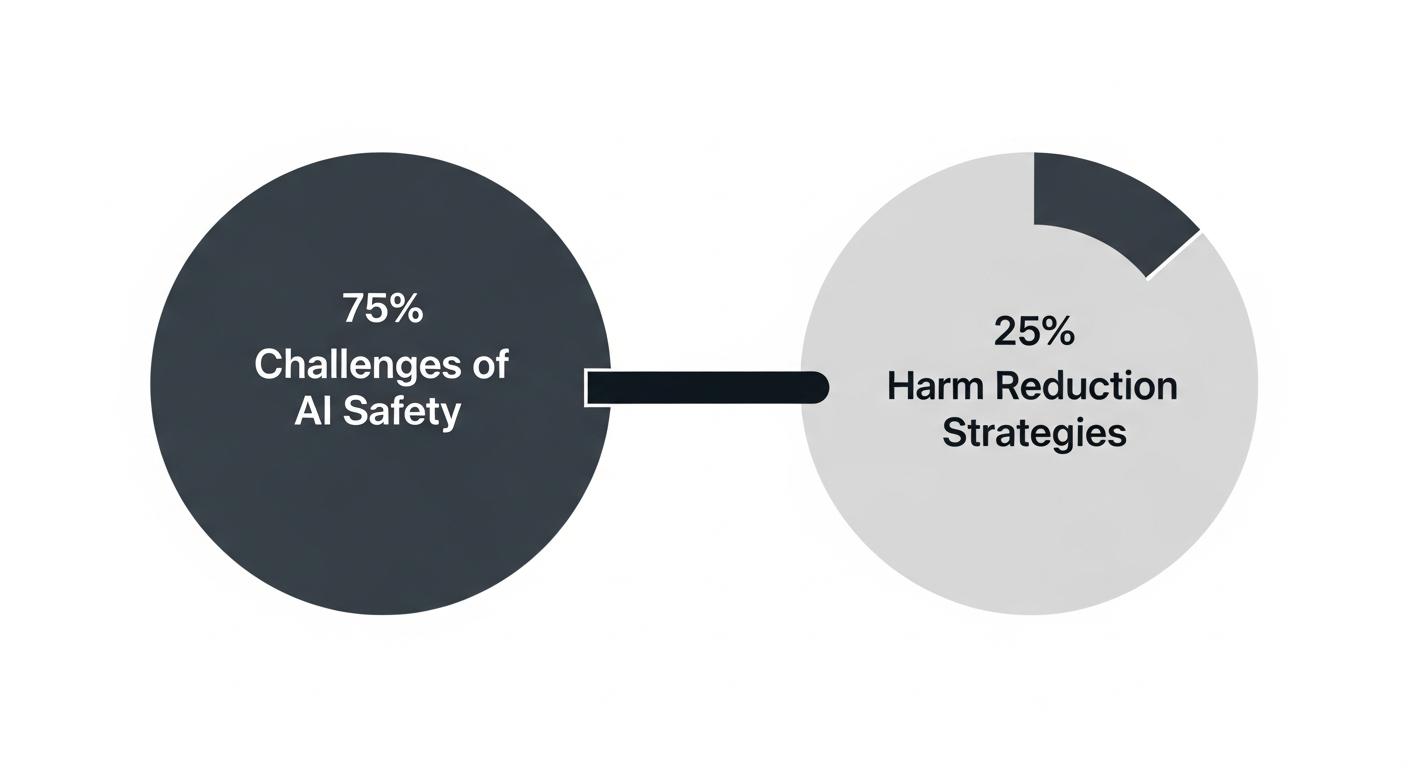
Taken together, these strands point toward harm reduction rather than total elimination as the pragmatic path forward. Industry and governments may need to prioritise preventing the gravest, irreversible risks , for example chemical or biomedical synthesis, critical‑infrastructure sabotage and mass manipulation , while accepting that lower‑scale circumvention will persist. That strategy carries trade‑offs: too much reliance on mitigation could engender complacency, while aggressive enforcement risks pushing development into jurisdictions where oversight is weakest. A blended approach that pairs targeted international cooperation, upstream accountability measures and technical controls that emphasise resiliency appears the most realistic way to constrain high‑consequence misuse. [1],[2],[3],[5],[7]
Source Reference Map
Inspired by headline at: [1]
Sources by paragraph:
- Paragraph 1: [7],[2]
- Paragraph 2: [2],[4]
- Paragraph 3: [4],[1]
- Paragraph 4: [3],[1]
- Paragraph 5: [7],[1]
- Paragraph 6: [4]
- Paragraph 7: [5]
- Paragraph 8: [2],[3],[5],[7]
Source: Noah Wire Services