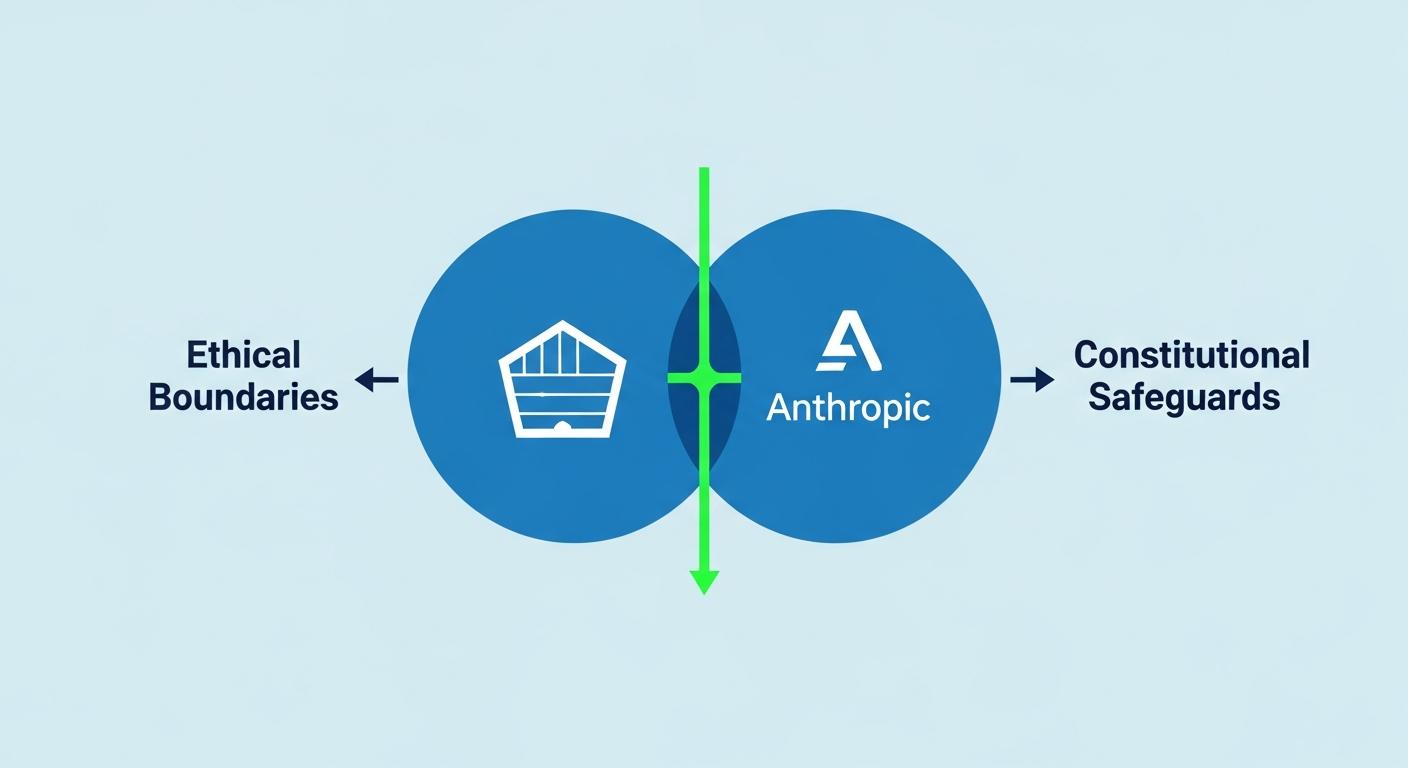
Dario Amodei, the co-founder and chief executive of Anthropic, has placed his company squarely at the centre of a clash over the future boundaries of military AI use, insisting that his Claude model not be repurposed for fully autonomous lethal systems or mass domestic surveillance. According to reporting, those constraints have prompted the Pentagon to review its relationship with Anthropic and to consider terminating contracts or designating the firm a supply‑chain risk.
The dispute intensified after news that Claude was used by U.S. forces in an operation overseas, a development that, according to coverage, helped trigger a formal Pentagon reassessment of Anthropic’s access. Officials have argued privately that commercial AI must be usable for “any lawful purpose,” a formulation that Pentagon sources say should include weapons development and intelligence tasks; Anthropic’s refusal to accept such broad terms has produced an impasse.
Amodei has framed his stance as a defence of constitutional safeguards rather than an objection to supporting national security. “The constitutional protections in our military structures depend on the idea that there are humans who would , we hope , disobey illegal orders,” he said on a New York Times podcast, adding that fully autonomous weapons could remove those human fail‑safes. Anthropic’s public position is that it will support lawful national security work while refusing to enable systems that could autonomously select and kill targets or permit blanket surveillance of U.S. citizens.
The concern is not merely hypothetical. Reporting and analysis point to decades of expanding government data collection , from cellphone location logs to airport facial images , that, until recently, remained difficult to exploit at scale. Industry observers warn that modern generative AI and pattern‑matching systems collapse the distance between stored data and instantaneous, actionable surveillance, creating capabilities the founders of constitutional protections never contemplated.
Pentagon officials, according to several accounts, see operational constraints if commercial providers refuse to permit unrestricted application of their models. That position has alarmed privacy advocates and some technologists who warn that integrating powerful models into military and domestic‑security workflows risks institutionalising a surveillance architecture and delegating lethal decisions to algorithms. The debate therefore transcends procurement minutiae and touches on fundamental questions about civilian oversight and the separation of military and policing functions.
The standoff also raises market and moral dilemmas for other AI firms. Media reports indicate that several large companies are in talks with defence buyers; the prospect that some will accept broader usage terms for commercial advantage creates competitive pressure that could erode ethical guardrails industry‑wide. Observers say signalling from government that vendors who resist will be penalised risks institutionalising a premium for compliance and a penalty for restraint.
Anthropic’s posture has won plaudits from civil liberties proponents and sharpened public scrutiny of how private technology providers will behave when asked to meet military requirements. Recent episodes of public pushback , from local protests to consumer backlash against surveillance partnerships , suggest a growing reluctance among segments of the public to accept technology arrangements that permit mass monitoring or remove human control from life‑and‑death decisions. Those dynamics complicate any simple account of industry capitulation.
The debate is also rooted in a longer record of warnings from AI leaders about the technology’s risks. Amodei and others have testified to lawmakers about near‑term threats, including the potential for AI to accelerate biological or weapon development, arguing for guardrails even as governments press for operational advantages. How that tension is resolved will shape whether future deployments preserve meaningful human judgment or move towards greater automation with attendant constitutional and ethical consequences.
Source Reference Map
Inspired by headline at: [1]
Sources by paragraph:
- Paragraph 1: [2]
- Paragraph 2: [3], [4]
- Paragraph 3: [1], [2]
- Paragraph 4: [1], [5]
- Paragraph 5: [4], [5]
- Paragraph 6: [2], [6]
- Paragraph 7: [1], [6]
- Paragraph 8: [7], [1]
Source: Noah Wire Services